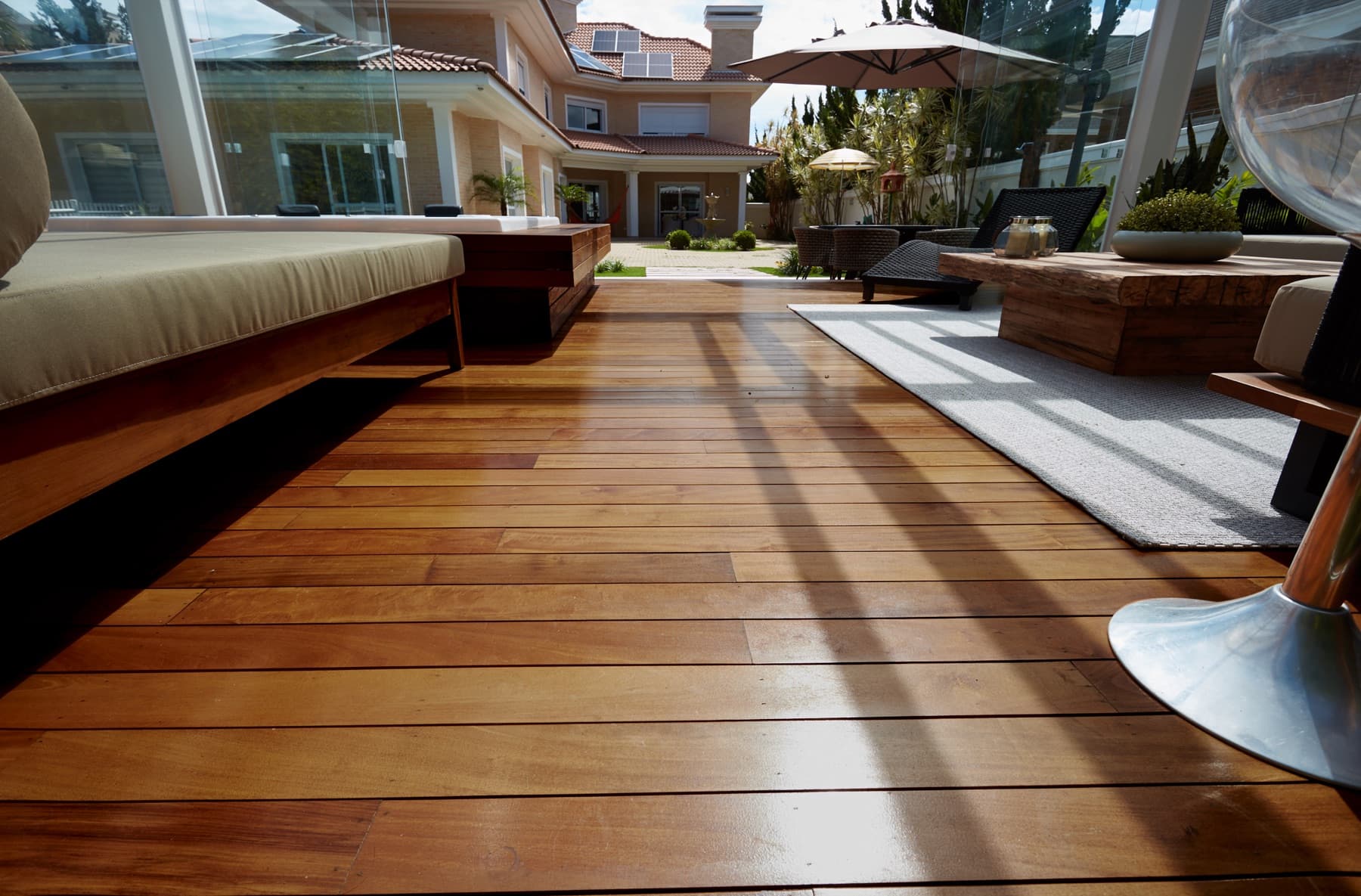
Why Sablewood for Commercial Patios?
Sablewood hardwood is a pre-finished material designed for outdoor surfaces such as decks, pergolas, boardwalks, and patios. For a commercial setting like a restaurant patio, its pre-finished nature means a consistent appearance from installation, reducing on-site finishing decisions and potential delays. The material aims to provide the character of real wood while offering a simpler care plan than some traditional hardwoods.
Choosing Sablewood allows a restaurant to achieve an authentic hardwood look without the demanding upkeep often associated with raw timber. This can be a key factor in reducing operational costs and ensuring the patio remains presentable with regular commercial use. It provides a substantial hardwood feel suitable for architectural applications.
Lumber Plus offers Sablewood hardwood, and can assist in matching profiles, quantities, and finishes to specific project requirements.
Planning Your Restaurant Patio Layout
A restaurant patio layout must consider seating capacity, traffic flow for staff and patrons, accessibility, and the placement of planters, heaters, or other amenities. The decking material forms the foundation of this space, so its characteristics should inform the layout.
Consider the typical table and chair configurations. Will tables be fixed or frequently rearranged? High-traffic pathways for servers carrying trays, or for guests moving to and from restrooms, should be identified. These areas will experience more wear, highlighting the need for a durable surface. For a 24-inch wide Sablewood board, for instance, a layout might align seating zones with board direction to visually expand the space or create distinct sections.
Ensure that the layout allows for adequate spacing between tables, considering local fire codes and accessibility requirements. The modular nature of decking boards can sometimes be used to delineate zones, or a picture-frame border can define the perimeter of the dining area.
Maintenance Considerations for Commercial Use
For a restaurant patio, maintenance is crucial. Spills, heavy foot traffic, and exposure to food debris are daily occurrences. Sablewood is described as a low-maintenance, pre-finished hardwood, which can simplify daily cleaning routines compared to unfinished wood.
Regular cleaning to remove food particles, grease, and general dirt is important. While the pre-finish helps, it's advisable to understand the specific cleaning recommendations for the selected finish. In a high-traffic commercial environment, a maintenance schedule should be established to ensure the patio remains clean and inviting. This might include daily sweeping or blowing, and periodic washing.
Before ordering, ask about the maintenance guidance for the selected finish and confirm compatibility with any cleaning products you intend to use. This proactive approach helps manage expectations and ensures the longevity of the patio's appearance.
Specifying Profiles and Dimensions
Sablewood is available with custom milling options, allowing for profiles and dimensions to be matched to specific project drawings and installation approaches. This flexibility is valuable for commercial projects that may have unique design requirements or existing structural constraints.
When specifying, consider the desired board width and length. Wider boards can create a sense of expanse, while narrower boards might offer more visual texture. Discuss with Lumber Plus the available profiles, such as those suitable for hidden fasteners or face-fastening, and how these choices impact the overall aesthetic and installation process.
For fascia and edge details, ensure that complementary profiles are chosen to provide a finished look. These details are particularly visible on a patio and contribute to the overall impression of quality. Specifying the surface, profile, and finishing plan together helps ensure a cohesive design.
Hypothetical Project Example: A 20x15 Foot Patio
Consider a hypothetical restaurant patio project measuring 20 feet by 15 feet, resulting in a total area of 300 square feet. We'll plan for a straight lay parallel to the 20-foot dimension.
To cover the 15-foot width: 15 feet / (5.5 inches / 12 inches/foot) = approximately 32.7 boards. We would round up to 33 boards. To cover the 20-foot length, each 12-foot board would need to be cut, resulting in one 12-foot section and one 8-foot section. Assuming the 8-foot section is reusable for another row, we would need 20 feet / 12 feet per board = 1.67 boards per row length, meaning 2 boards per row length to avoid excessive short pieces. Thus, 33 boards * 2 boards per row = 66 boards.
This is a simplified calculation and does not account for waste from cuts, pattern matching, or specific installation requirements. A typical waste factor of 5-10% is often added for cuts and unforeseen issues. For this project, adding 10% waste: 66 boards * 1.10 = 72.6 boards. Round up to 73 boards. Always confirm exact dimensions, profiles, and installation methods to get a precise material takeoff, and consult with a professional for your specific project.
Before you order
- Confirm local code requirements for commercial outdoor dining surfaces.
- Map out seating arrangements and traffic flow to identify high-wear areas.
- Review Sablewood's specific maintenance guidelines for commercial use.
- Determine desired board width, length, and profile (e.g., for hidden fasteners).
- Plan for fascia and edge finishes to complete the patio design.
- Calculate material quantities with an appropriate waste factor.
- Consider the impact of weather exposure on the patio's appearance and maintenance.
- Discuss custom milling options with Lumber Plus for unique design elements.
Confirm installation details, approved uses and warranty terms in the current instructions for the exact product and profile. Your installer should verify the substrate, structure and applicable project requirements.
Questions to help you decide
Is Sablewood suitable for high-traffic commercial areas?
Sablewood hardwood is designed for outdoor surfaces including patios and boardwalks, indicating its suitability for areas with foot traffic. Its pre-finished nature and hardwood composition contribute to its durability for commercial applications. However, specific traffic levels and maintenance practices will influence its long-term appearance.
What kind of maintenance is required for a Sablewood restaurant patio?
Sablewood is described as a low-maintenance, pre-finished hardwood. For a restaurant patio, this generally means regular cleaning to remove food debris, spills, and dirt. The exact maintenance schedule and recommended cleaning products should be confirmed with the finish specifications to ensure the patio remains in good condition.
Can Sablewood be custom-milled for specific patio designs?
Yes, Sablewood is available with custom milling through Lumber Plus. This allows for specific profiles and dimensions to be matched to your project drawings and installation approach, which can be beneficial for unique commercial patio designs or to integrate with existing structures.
Request a Material Quote for Your Restaurant Patio Project
Planning a restaurant patio with Sablewood decking? Provide your project dimensions, desired profile, and ZIP code to request a material quote. We can help confirm current availability and service options for your commercial decking needs. Explore our full range of decking options, including Ipe Hardwood and Composite Decking, for comparison.
Request a material quote →