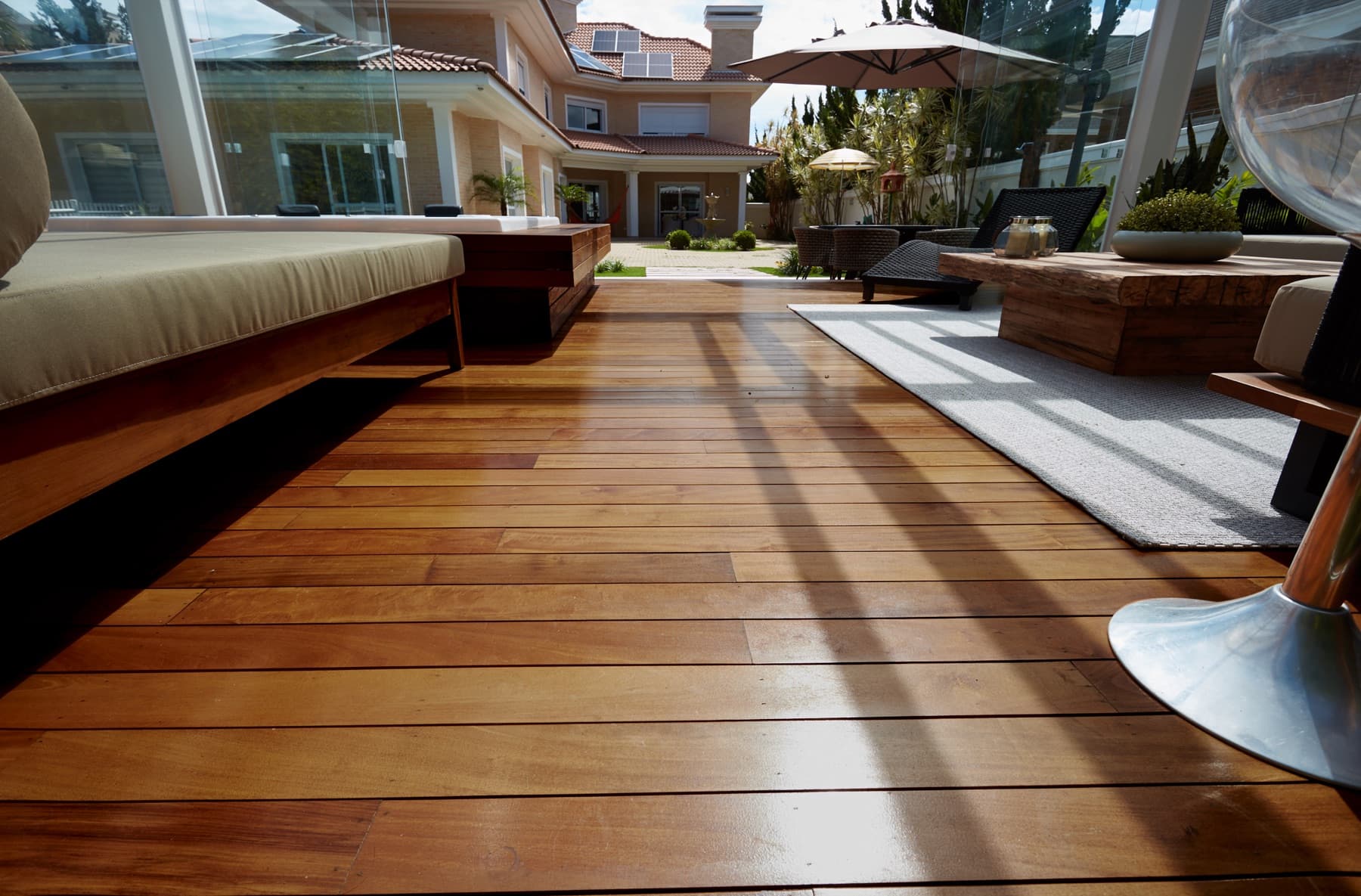
Why Exact Product Identification Matters for Repairs
Sablewood decking, known for its pre-finished, low-maintenance hardwood characteristics, is available in various profiles and finishes. Even subtle differences in board dimensions, edge profiles, or the factory finish can create a noticeable contrast when new boards are installed alongside aged ones. An exact match helps preserve the uniform appearance and performance of your deck.
Mismatched profiles can lead to uneven surfaces, creating trip hazards or drainage issues. Differences in finish can result in new boards weathering at a different rate or having a distinct initial sheen compared to the existing deck. Accurate identification is the foundation for a repair that looks and performs as intended.
Identifying Your Sablewood Decking: A Step-by-Step Checklist
Before ordering replacement boards, gather as much information as possible about your existing Sablewood deck. This checklist will guide you through the key details to record:
1. **Original Purchase Documentation:** Check your initial order forms, invoices, or project specifications. These documents often contain the most accurate information regarding the Sablewood collection, board dimensions, profile (e.g., grooved for hidden fasteners, smooth for face fastening), and finish.
2. **Board Dimensions:** Precisely measure the width and thickness of an existing board. Use a caliper for accuracy if possible. Even a fraction of an inch can impact fit.
3. **Board Profile:** Examine the edges and underside of an existing board. Is it a square-edge profile, or does it have a tongue-and-groove or grooved edge designed for hidden fasteners? Note any specific milling details.
4. **Species/Collection:** While all Sablewood is hardwood, different collections might feature specific wood species or treatments that influence appearance and density. If original documentation is unavailable, visual inspection might offer clues, though this is less precise.
5. **Finish Type:** Sablewood comes pre-finished. Observe the current finish – is it a natural oil, a stain, or a clear coat? While aging will alter its appearance, knowing the original finish helps anticipate how new boards will integrate over time.
This impacts the profile needed for replacement boards.
Understanding Batch Variation and Aging Effects
Even with an exact product match, new Sablewood boards will likely exhibit slight differences from aged ones. Hardwood is a natural material, and variations in grain pattern, color, and density are inherent. Additionally, exposure to sunlight, weather, and foot traffic causes the existing deck to age and develop a patina.
New boards will typically appear brighter and have a more uniform finish. Over time, these new boards will begin to weather and blend with the existing deck. This process can take several months to a year, depending on environmental factors. When planning repairs, consider if a slight initial difference in appearance is acceptable, or if a more extensive replacement (e.g., replacing an entire section or a full run of boards) is preferable for immediate uniformity.
For critical areas, such as the main visible expanse of a deck, it may be prudent to order a few extra boards to allow for selection of the best match or to accommodate future minor repairs. Lumber Plus can assist in matching the profile, quantity, and finish based on the information you provide.
For custom milling requests, be aware that lead times may apply. Plan your repair project with sufficient time to allow for sourcing and potential custom orders.
Worked Example: Replacing Damaged Sablewood Boards
Imagine a 12-foot by 20-foot Sablewood deck where a 4-foot by 4-foot section, due to prolonged exposure to a leaky planter, has three damaged boards. The homeowner has no original documentation, so they need to identify the existing product.
**Step 1: Measurement.** The homeowner measures an undamaged board. It is 5.5 inches wide and 0.75 inches thick. The board edges are grooved for hidden fasteners.
**Step 2: Visual Inspection.** The deck has a rich, medium-brown tone that has weathered slightly to a silver-gray in some areas, but the underlying color is still visible when a small section is cleaned. The grain is dense and consistent, typical of tropical hardwoods.
**Step 4: Contacting Lumber Plus.** The homeowner contacts Lumber Plus with the measured dimensions (5.5" wide, 0.75" thick), the grooved profile, and a description of the deck's appearance and age. They also mention the use of hidden fasteners. Lumber Plus confirms that the description matches the Maximo Sablewood 5.5-inch grooved profile, pre-finished.
**Step 5: Ordering.** Three boards are damaged, but the homeowner decides to order four 12-foot boards to have an extra for potential future repairs or to select for the best visual match, considering the aging of the existing deck. They understand the new boards will initially look slightly different but will blend over time.
This example highlights the importance of detailed measurements and a clear description to ensure the correct replacement material is sourced.
Complementary Materials for Deck Repairs
Beyond the Sablewood decking boards themselves, consider these complementary materials that might be needed for your repair project:
* **Hidden Fasteners:** If your deck uses a hidden fastening system, ensure you have compatible fasteners for the replacement boards. These are essential for maintaining the clean, unblemished surface of Sablewood decking. Review options at our general decking accessories page: [https://www.lumberplus.com/decking](https://www.lumberplus.com/decking)
* **Structural Lumber:** For more extensive repairs where the sub-structure might be compromised, you may need pressure-treated lumber for joists or beams. While Sablewood is the decking surface, the integrity of the frame beneath is paramount. Explore hardwood options for structural elements that may be exposed: [https://www.lumberplus.com/decking/hardwood](https://www.lumberplus.com/decking/hardwood)
* **Cleaning and Finishing Products:** After replacing boards, you might consider cleaning the entire deck to help new and old boards blend. Use cleaning products compatible with Sablewood's pre-finish. For alternative decking materials, consider options like Ipe: [https://www.lumberplus.com/decking/hardwood/ipe](https://www.lumberplus.com/decking/hardwood/ipe)
* **Alternative Decking Options:** If the damage is extensive or you're considering a material change for a section, explore other low-maintenance decking solutions such as composite or PVC decking: [https://www.lumberplus.com/decking/composite](https://www.lumberplus.com/decking/composite) and [https://www.lumberplus.com/decking/pvc](https://www.lumberplus.com/decking/pvc)
Before you order
- Have you located original purchase documentation for your Sablewood deck?
- Have you precisely measured the width and thickness of an existing Sablewood board?
- Have you identified the exact profile of your Sablewood boards (e.g., square-edge, grooved for hidden fasteners)?
- Do you know the original finish type of your Sablewood decking?
- Have you determined the fastening method used on your deck (hidden vs. face fastening)?
- Are you aware of potential color and grain variations between new and aged boards?
- Have you accounted for any necessary complementary materials, such as fasteners or structural lumber?
- Are you prepared for potential lead times if custom milling is required for an exact match?
Confirm installation details, approved uses and warranty terms in the current instructions for the exact product and profile. Your installer should verify the substrate, structure and applicable project requirements.
Questions to help you decide
Can I just replace a single Sablewood board without it looking different?
While you can replace a single board, new Sablewood boards will typically have a slightly different appearance compared to aged boards due to natural weathering and UV exposure. Over time, the new board will weather and begin to blend with the existing deck, but an initial difference is common. Exact product identification helps minimize this contrast.
What if I don't have the original purchase documents for my Sablewood deck?
Without original documents, focus on precise physical measurements and detailed visual descriptions. Measure the width and thickness of an existing board, examine its profile (edges and underside), and note the fastening method. Take clear photos if possible. This information will help Lumber Plus identify the closest available match.
Is custom milling available for Sablewood replacement boards?
Yes, custom milling is available through Lumber Plus for Sablewood. If your existing deck has a unique profile or specific dimensions that are not standard, inquire about custom milling services. Be aware that custom orders may have longer lead times.
Ready to Repair Your Sablewood Deck?
Provide your project dimensions, desired profile, and ZIP code to request a material quote. Our team can help confirm current availability and service options for your Sablewood decking repair needs.
Request a material quote →