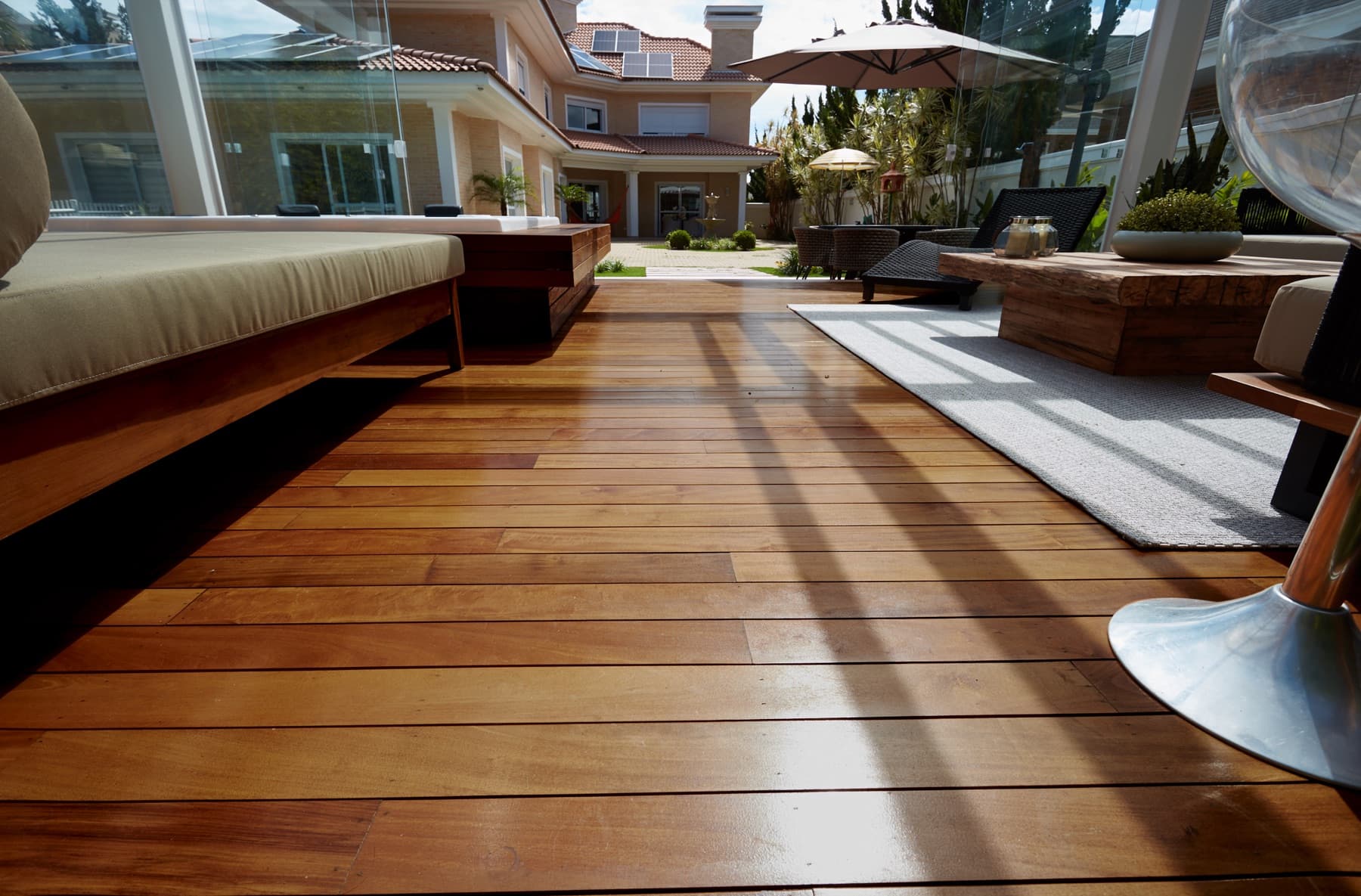
Understanding the Picture-Frame Concept
A picture-frame border, also known as a perimeter border or race track border, involves laying decking boards perpendicular or at an angle to the main field of decking. This creates a distinct visual edge, often highlighting the deck's shape or separating different areas of a larger deck. For Sablewood decking, known for its pre-finished, low-maintenance hardwood, a picture frame can draw attention to the material's natural character and consistent appearance.
The primary benefit of a picture frame is its ability to create a polished, finished look, concealing cut ends of the main decking boards. It also offers opportunities for contrasting colors or textures if you choose a different material for the border, though for Sablewood, the focus is typically on showcasing the hardwood itself. This design choice requires careful planning from the outset to ensure proper support and a cohesive aesthetic.
Structural Blocking for Picture-Frame Borders
Implementing a picture-frame border necessitates specific structural blocking beneath the deck surface. This means adding extra joists or blocking members parallel to the rim joists and perpendicular to the main field joists.
For a single picture-frame border board, a blocking joist should be installed directly beneath it, running parallel to the rim joist. These additional structural elements ensure that the border boards are adequately supported, preventing sagging and providing stable fastening points. Proper blocking is critical for the longevity and performance of your Sablewood deck, especially along the edges that will experience foot traffic.
Selecting Sablewood Boards for the Border
Sablewood hardwood is available in various profiles and dimensions, which are important to consider when planning your picture frame. The selection of boards for the border should complement the main decking field. Sablewood's pre-finished nature means a consistent starting appearance, which is beneficial for maintaining a uniform look across your entire deck, including the border.
When choosing board widths, consider how the border will visually interact with the main deck. A common approach is to use the same width Sablewood boards for both the field and the border for a seamless transition. However, some designs might opt for a wider board for the picture frame to create a more pronounced visual separation. Always confirm the exact profile and dimensions available for Sablewood to ensure they meet your design and structural needs. Lumber Plus can assist in matching profiles to your drawings.
Related Product: Explore the full range of Sablewood decking options at <a href="/products/sablewood">Lumber Plus Sablewood Decking</a>.
Integrating Fascia with Your Picture Frame
Fascia boards are used to cover the exposed rim joists and provide a clean finish to the deck's edges. When you have a picture-frame border, the fascia needs to be coordinated to create a cohesive look. The picture-frame boards themselves form the top edge, and the fascia will typically sit below them, covering the structural components.
Consider the thickness of your Sablewood decking and fascia boards to ensure a flush or appropriately offset appearance. The color and finish of the fascia should match or complement your Sablewood decking. Using Sablewood for fascia can create a unified aesthetic, extending the hardwood look to the deck's vertical edges. Discuss compatible profiles and the finishing plan with Lumber Plus when ordering to ensure a consistent result.
Related Product: Explore general decking options at <a href="/decking">Lumber Plus Decking</a>.
Worked Example: Single Picture-Frame Border
Let's consider a hypothetical 10-foot by 12-foot rectangular deck where the Sablewood decking boards are 5.5 inches wide and will be laid parallel to the 12-foot length. We want a single picture-frame border around the entire perimeter.
1. **Main Decking Field:** The main field will run 12 feet in length.
2. **Border Board Placement:** The two 12-foot side border boards will run parallel to the main decking. The two 10-foot end border boards will run perpendicular to the main decking, capping off the ends. These end border boards will meet the side border boards at the corners, requiring mitered or butt joints depending on preference and recommended installation practice.
This provides support for the 12-foot border boards. Crucially, where the end border boards meet the main field, a joist or blocking running perpendicular to the main field joists will be needed to support the inner edge of these end border boards.
4. **Quantity Calculation (Illustrative):** For the perimeter, you would need two 12-foot Sablewood boards and two 10-foot Sablewood boards for the border. For the main field, with an effective width of 8 feet 10.75 inches (106.75 inches) and 5.5-inch wide boards, you would need approximately 106.75 / 5.5 = 19.4 boards. Allowing for cuts and waste, you might plan for 20 boards, each 12 feet long. This calculation is illustrative; always consult product documentation for specific spacing and cutting allowances. This example assumes full-length boards for simplicity and does not account for specific cut plans or offcut reuse, which would be part of a detailed material takeoff.
Before you order
- Determine if a single or double picture frame is desired.
- Verify Sablewood board dimensions (width, thickness) for both field and border.
- Plan the precise layout, including expansion gaps between border and field boards.
- Confirm structural blocking requirements with your deck frame design for all border edges.
- Select appropriate fasteners compatible with Sablewood and the border design.
- Choose fascia material and ensure it coordinates with the Sablewood border.
- Account for corner joint types (mitered, butt) and their impact on material cuts.
- Calculate material quantities for border boards, field boards, and fascia, allowing for waste.
Confirm installation details, approved uses and warranty terms in the current instructions for the exact product and profile. Your installer should verify the substrate, structure and applicable project requirements.
Questions to help you decide
What is the main benefit of a picture-frame border?
The primary benefit of a picture-frame border is aesthetic, providing a clean, finished edge to the deck. It conceals the cut ends of the main decking boards, defines the deck's perimeter, and can enhance the overall design by highlighting the shape or separating deck areas. For Sablewood, it showcases the consistent, pre-finished look of the hardwood.
Do I need special joists for a picture-frame border?
Yes, a picture-frame border typically requires additional blocking or joists. The perimeter boards need continuous support, so extra framing members will be installed parallel to the rim joists and perpendicular to the main field joists to provide solid fastening points along all edges of the border boards.
Can I use different Sablewood board widths for the border?
While using the same Sablewood board width for both the field and the border creates a seamless look, you can choose a different, often wider, board width for the border to create a more distinct visual separation. Ensure that the chosen widths are compatible with your structural framing and maintain appropriate expansion gaps.
Ready to Plan Your Sablewood Deck with a Picture Frame?
Request a material quote with your project dimensions, exact Sablewood profile, and ZIP code. Confirm current availability and service options with Lumber Plus to get started on your hardwood deck project.
Request a material quote →