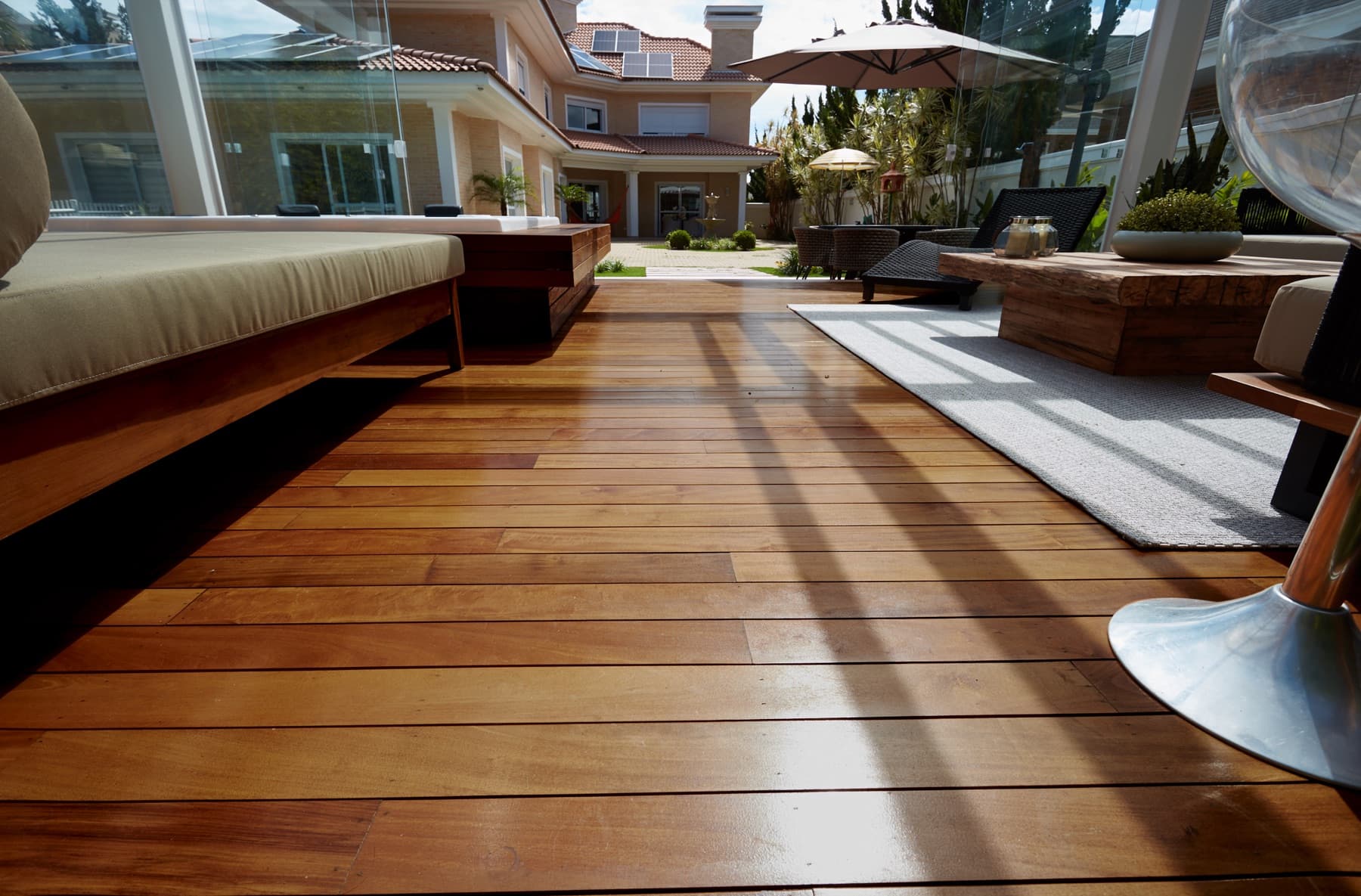
Visual Impact and Design Considerations
A diagonal layout immediately sets a deck apart, offering a contemporary or custom look. The angled lines can draw the eye across the space, creating an illusion of greater depth or width. This can be particularly effective on smaller decks, where a straight layout might emphasize the limited dimensions. For larger decks, diagonal patterns can break up expansive surfaces, adding visual interest and defining different zones without physical dividers.
Consider the direction of the diagonal in relation to your home and yard features. A 45-degree angle is common, but slight variations can be explored. The goal is to complement the existing architecture and landscape, not compete with it. Sablewood, with its authentic hardwood character and pre-finished appearance, provides a strong foundation for such a design choice, allowing the grain and tone of the wood to contribute to the visual flow. Maximo Sablewood is a pre-finished option designed for various outdoor applications, including decks.
When planning, visualize how the diagonal lines will interact with any steps, railings, or built-in features like benches or planters. A picture-frame border, for instance, can provide a clean edge to contain the diagonal pattern, offering a polished transition to the deck perimeter.
Increased Material Waste and Ordering
One of the most significant practical implications of a diagonal decking layout is the increased material waste. When boards are laid perpendicular or parallel, cuts are often straightforward, and offcuts can frequently be used for shorter sections. With a diagonal layout, especially at a 45-degree angle, nearly every board end will require an angled cut, resulting in more unusable scrap.
Typically, a diagonal layout can increase material waste by 15-20% or more compared to a straight layout. This percentage can fluctuate based on the deck's dimensions, board lengths, and the specific angle chosen. It is crucial to factor this into your material order to avoid running short during installation. Always round up your estimates and consider purchasing extra boards to account for waste, potential miscuts, or future repairs.
When ordering Sablewood decking, consider the available board lengths. Longer boards may reduce the number of end joints, but they also mean larger angled offcuts that may not be easily repurposed. Work with your supplier to understand the most efficient lengths for your specific diagonal layout plan. Sablewood is offered with custom milling, which can sometimes help optimize board lengths for specific project dimensions.
Substructure and Joist Spacing Adjustments
A diagonal decking layout changes how the deck boards bear on the substructure. Traditional decking runs perpendicular to the joists, distributing weight directly across them. When boards are laid diagonally, they span across multiple joists at an angle, which can affect the effective span of the board and how loads are transferred.
To ensure adequate support, it is often necessary to reduce the joist spacing when installing decking diagonally. This provides more frequent points of contact for the angled boards, preventing excessive deflection or movement.
Always consult the manufacturer's specific installation guidelines for Sablewood decking, as well as local building codes, to confirm the appropriate joist spacing for diagonal applications. This is a critical step for structural integrity and longevity of the deck. Your local Lumber Plus representative can help clarify product specifications and recommend compatible profiles and installation approaches for Sablewood hardwood.
Fastening and Stability for Diagonal Boards
The fastening method also needs careful consideration for diagonal layouts. Hidden fasteners are popular for their clean aesthetic, but their effectiveness can vary with angled installations. Ensure the chosen hidden fastener system is compatible with diagonal applications and provides sufficient hold across the angled boards.
Face-fastening, where screws are driven through the face of the board into the joists, can offer robust stability for diagonal installations. If face-fastening, plan the screw pattern to maintain visual consistency. Regardless of the method, ensure that each board end and any mid-span points receive adequate fastening to prevent movement or warping.
Proper gapping between diagonal boards is essential for drainage and ventilation, especially for hardwood decking like Sablewood. The manufacturer's recommended spacing should be strictly followed to allow for natural expansion and contraction of the wood. This also contributes to the overall stability and appearance of the deck.
Worked Example: Calculating Material for a Diagonal Deck
Let's consider a hypothetical rectangular deck measuring 10 feet by 12 feet (120 square feet). If we were laying Sablewood decking boards straight, parallel to the 12-foot dimension, we might estimate 10% waste for a simple layout.
For a diagonal layout at 45 degrees, we need to account for increased waste. Instead of 10%, we might budget for 20% waste. Therefore, for a 120 square foot deck, we would calculate:
Base area: 120 sq ft. Waste factor: 20%. Total material needed: 120 sq ft * 1.20 = 144 sq ft.
If Sablewood boards are typically 5.5 inches wide (0.458 feet) and available in 16-foot lengths, each board covers approximately 0.458 ft * 16 ft = 7.328 sq ft. To cover 144 sq ft, you would need 144 / 7.328 = 19.65 boards. Rounding up, you would order 20 boards.
This example simplifies the calculation, as actual waste can vary. For precise planning, it's always recommended to sketch out the layout on graph paper or use design software to optimize board placement and minimize waste. Remember to confirm the exact dimensions and profiles of Sablewood hardwood with Lumber Plus.
Before you order
- Have I accounted for at least 15-20% extra material for waste in a diagonal layout?
- Have I verified the manufacturer's recommended joist spacing for diagonal decking installations?
- Is my chosen fastening system compatible and effective for angled board installation?
- Have I planned for a picture-frame border or other edge treatment to finish the diagonal pattern?
- Have I confirmed the exact board dimensions and profiles of Sablewood decking with my supplier?
- Will the diagonal pattern complement the surrounding architecture and landscape?
- Have I considered the impact of the diagonal layout on any deck stairs or built-in features?
Confirm installation details, approved uses and warranty terms in the current instructions for the exact product and profile. Your installer should verify the substrate, structure and applicable project requirements.
Questions to help you decide
Why does diagonal decking create more waste?
Diagonal decking creates more waste because most cuts at the perimeter of the deck are angled, often 45 degrees. These angled offcuts are typically not long enough or appropriately shaped to be reused elsewhere in the project, leading to a higher percentage of unusable material compared to straight layouts where more offcuts can be salvaged.
Do I need special tools for diagonal Sablewood decking?
While standard decking tools are generally sufficient, a high-quality miter saw is essential for making precise, consistent angled cuts required for a diagonal layout. Depending on the complexity of your design, a jigsaw may also be useful for intricate cuts around obstacles. Always ensure your blades are sharp to achieve clean cuts on hardwood like Sablewood.
Can I use hidden fasteners with a diagonal Sablewood deck?
Many hidden fastener systems can be used with diagonal decking, but it's crucial to verify compatibility with the specific product. Some systems are designed primarily for straight installations and may not provide adequate hold or alignment when boards are angled. Always consult the manufacturer's installation guide for both the Sablewood decking and the chosen fastener system to confirm suitability and any specific installation instructions for diagonal applications.
Ready to Plan Your Sablewood Deck?
Request a material quote with your project dimensions, desired Sablewood profile, and ZIP code. We can help you confirm current availability and service options for your diagonal decking project.
Request a material quote →