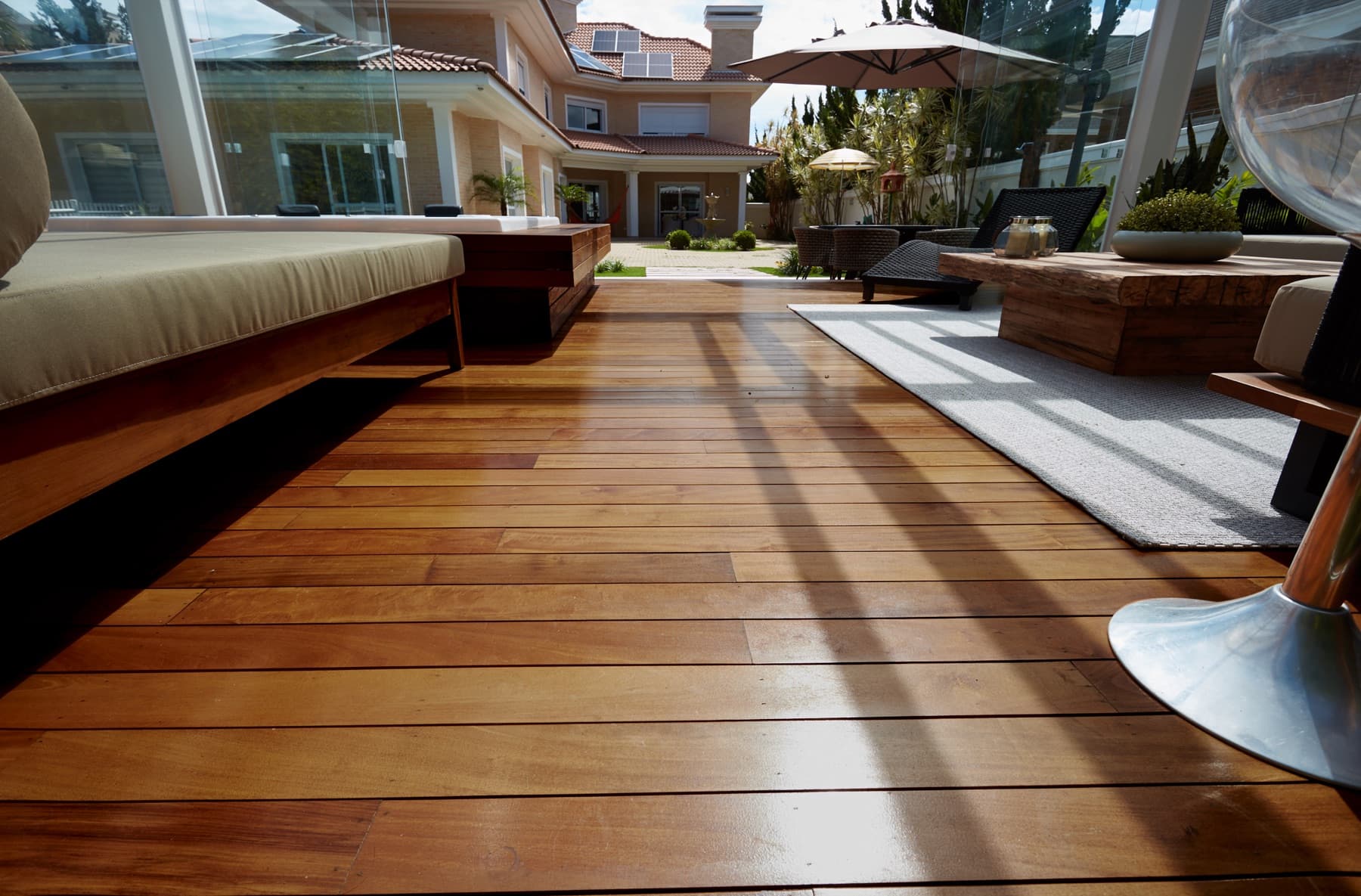
Understanding Coastal Conditions and Their Impact on Decking
Coastal environments are characterized by several factors that influence material performance. Salt spray can be corrosive to certain metals and can leave residue on surfaces. High humidity can contribute to moisture absorption in wood, and intense UV radiation from the sun can cause fading and surface degradation.
When selecting decking for a coastal home, it's crucial to consider how a material will respond to these conditions over time. This includes not only the decking boards themselves but also the fasteners, substructure, and any finishes applied.
Sablewood Hardwood: Features and Pre-Finish Benefits
Maximo Sablewood hardwood offers an authentic wood appearance with a pre-finished surface. This pre-finish is designed to provide a ready-to-spec finish, which can streamline installation by reducing the need for immediate on-site finishing decisions. It aims to offer a consistent starting aesthetic for the project.
The material is positioned as a lower-maintenance alternative to some natural hardwoods, while still retaining the character of real wood. Its substantial feel is intended for outdoor surfaces and architectural applications where genuine hardwood is desired.
Lumber Plus can assist with matching profiles, quantities, and finishes to specific project drawings and installation methods. Custom milling may also be an option for unique design requirements.
Evaluating Sablewood for Salt Exposure
While Sablewood's pre-finish offers a protective layer, direct and prolonged exposure to salt spray will require regular cleaning. Salt deposits can accumulate on any surface, and while the finish helps, routine rinsing with fresh water is a practical step to minimize buildup and maintain the deck's appearance in a coastal setting.
The pre-finish on Sablewood is designed for general outdoor use. For specific performance against highly corrosive salt exposure, consulting the manufacturer's detailed guidance on the specific finish is recommended. The pre-finish helps to provide an initial barrier, but consistent maintenance will be a factor in coastal areas.
Choosing Compatible Hardware for Coastal Sablewood Decks
The selection of fasteners and structural hardware is critical for any deck, especially in coastal areas where corrosion is a concern. For Sablewood decking, as with most outdoor wood applications in proximity to salt water, it is generally recommended to use corrosion-resistant fasteners.
Stainless steel (typically grades 305 or 316 for enhanced corrosion resistance) is often preferred for coastal applications. Confirm the specific grade and compatibility with Sablewood and its pre-finish with the manufacturer's installation guidelines. Using inappropriate fasteners can lead to unsightly staining, loosening, or structural compromise over time.
For substructure components, consider galvanized or stainless steel connectors and hangers, and ensure any pressure-treated lumber used is rated for ground contact and has appropriate corrosion resistance for the fasteners chosen.
Maintenance Considerations for Coastal Sablewood Decking
A regular maintenance plan is essential for any decking in a coastal environment. For Sablewood, this would typically involve periodic cleaning to remove salt residue, dirt, and organic debris. A gentle wash with fresh water and a mild, pH-neutral cleaner, followed by thorough rinsing, can help preserve the finish and appearance.
Inspect the deck periodically for any signs of wear on the finish, especially in high-traffic areas or spots exposed to persistent salt spray. While the pre-finish aims for simpler care, understanding the specific re-coating or re-finishing recommendations from the manufacturer for coastal exposure is important for long-term protection. Address any localized damage or wear promptly to prevent further degradation.
Worked Example: A Coastal Deck Project
Consider a hypothetical coastal home owner planning a 12-foot by 20-foot deck. The homeowner desires the look of real wood but is concerned about the upkeep in a salty, humid environment. They are considering Maximo Sablewood decking boards, which are available in a 1x6 inch profile (actual dimensions approximately 0.75 inches thick by 5.5 inches wide) and various lengths.
For a 12x20-foot deck, the total area is 240 square feet. If using 5.5-inch wide Sablewood boards, approximately 2.18 boards are needed per linear foot of deck width (12 feet * 12 inches/foot / 5.5 inches/board). This means for a 20-foot length, roughly 44 linear feet of Sablewood would be needed for each 1-foot increment of width. For the entire 12-foot width, this translates to 240 square feet / (5.5 inches / 12 inches/foot) = approximately 523.6 linear feet of decking.
To account for cuts, waste, and specific board lengths (e.g., ordering 12-foot and 16-foot boards to minimize seams), an additional 10-15% should be added to the linear footage calculation. For example, 523.6 linear feet * 1.15 = 602.14 linear feet. The homeowner would then select appropriate board lengths from available stock to meet this quantity, minimizing cuts and waste where possible.
The homeowner would also plan for a quarterly rinse with fresh water and a mild cleaner, followed by an annual inspection of the finish and fasteners, as part of their long-term maintenance strategy.
Before you order
- Assess the level of salt exposure: Is the deck directly exposed to ocean spray or further inland?
- Review Sablewood's specific pre-finish documentation for coastal performance and maintenance.
- Consider the substructure material and its resistance to coastal conditions.
- Establish a regular cleaning schedule to remove salt residue and debris.
- Understand re-finishing or re-coating recommendations for the Sablewood pre-finish in a coastal environment.
- Budget for long-term maintenance, including cleaning supplies and potential re-application of protective coatings.
- Confirm local building codes for decking materials and fasteners in coastal zones.
Confirm installation details, approved uses and warranty terms in the current instructions for the exact product and profile. Your installer should verify the substrate, structure and applicable project requirements.
Questions to help you decide
Can Sablewood decking withstand direct salt spray?
Sablewood's pre-finish provides a protective layer against general outdoor elements. In areas with direct salt spray, regular rinsing with fresh water is recommended to prevent salt accumulation and maintain the deck's appearance. While the finish offers a degree of protection, consistent exposure to corrosive elements requires proactive maintenance.
What type of fasteners should I use for Sablewood in a coastal area?
For coastal applications, it is generally recommended to use corrosion-resistant fasteners. Stainless steel, particularly grades like 305 or 316, is often preferred due to its enhanced resistance to salt and moisture. Always confirm the specific fastener requirements and compatibility with Sablewood's installation guidelines.
How often should I clean Sablewood decking in a coastal environment?
In coastal environments, periodic cleaning is advisable to remove salt residue, sand, and other debris. A general guideline would be to rinse the deck with fresh water quarterly, and perform a more thorough cleaning with a mild, pH-neutral cleaner as needed, or at least annually. Adjust frequency based on the level of exposure and local conditions.
Plan Your Coastal Deck with Sablewood
Ready to bring the beauty of Sablewood hardwood to your coastal home? Request a material quote today by providing your project dimensions, desired profile, and ZIP code. We can help confirm current availability and service options for your location. Explore Sablewood and other decking options like Ipe hardwood, composite, or PVC at Lumber Plus.
Request a material quote →