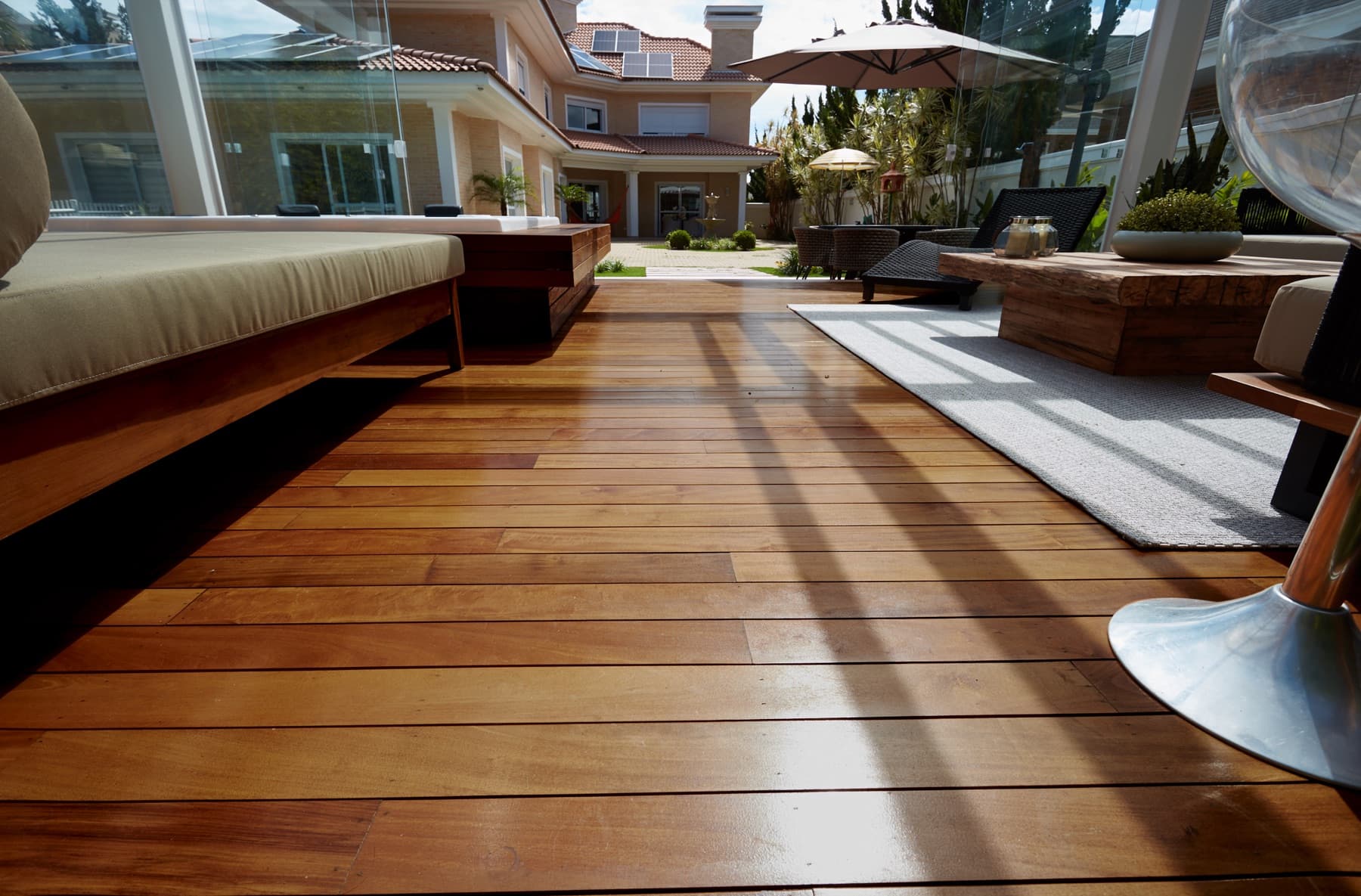
Sablewood Decking: Available Profiles and Dimensions
Sablewood is a pre-finished, low-maintenance hardwood decking option designed for decks, pergolas, boardwalks, and patios. It is available in various standard profiles, and custom milling may also be an option for specific project needs. While exact dimensions should always be confirmed at the time of order, common Sablewood decking board widths typically include narrow, standard, and wider profiles.
Narrower boards can create a busier, more intricate pattern, often suitable for smaller spaces or designs where a detailed texture is desired. Standard widths offer a balanced look that works well in most applications. Wider boards can make a deck appear more expansive and modern, reducing the number of visible seams and creating a bolder, more contemporary aesthetic. Always refer to the specific product documentation for precise measurements of available profiles.
The pre-finished nature of Sablewood means that the chosen width will contribute to a consistent starting appearance, simplifying on-site decisions related to finishing.
Visualizing the Impact of Board Width on Your Deck Layout
The width of your Sablewood decking boards plays a crucial role in how your deck will be perceived. Consider a large deck area: using narrower boards might create a sense of movement and detail, but could also make the space feel cluttered if not balanced with other design elements. Conversely, wider boards can lend a sense of calm and spaciousness, making a large deck feel even more expansive.
For smaller patios or balconies, narrower boards can sometimes help the space feel larger by creating more lines and a sense of depth. However, very wide boards in a compact area might overwhelm the space, making it feel disproportionate. It's often helpful to sketch out your deck plan with different board widths or use masking tape on the ground to simulate the effect.
The direction of the boards also interacts with their width. Boards laid parallel to the longest dimension of the deck can emphasize length, while those laid perpendicular might emphasize width. A diagonal layout, regardless of board width, can introduce dynamic movement and make a space feel larger and more interesting.
Planning for Consistent Board Widths and Seams
Maintaining consistent board widths is fundamental for a professional and aesthetically pleasing deck. While Sablewood is a hardwood, variations can occur, so it's important to work with consistent material. Planning for seams is also critical, especially with longer decks. The goal is to minimize the visual impact of board ends meeting.
When using a single board width, the rhythm of the deck surface is uniform. If you choose to mix board widths, which is possible with custom milling, careful planning is essential to ensure the pattern is intentional and balanced. This could involve creating specific zones with different widths or alternating widths in a repeating pattern.
Consider how board ends will align over joists. Proper joist spacing is crucial for supporting board ends and ensuring a flat, stable surface. For longer spans, staggering seams across different joists helps distribute stress and improves the overall structural integrity and appearance of the deck.
Worked Example: Estimating Sablewood Board Quantities for a 12' x 16' Deck
Let's consider a hypothetical 12-foot by 16-foot rectangular deck. We will compare two common Sablewood board widths: a 4-inch nominal width and a 6-inch nominal width. We will also assume boards are laid parallel to the 16-foot length.
Number of boards needed across the 12-foot width = (12 feet * 12 inches/foot) / 3.625 inches/board = 144 inches / 3.625 inches/board ≈ 39.7 boards. Round up to 40 boards.
Each board will be 16 feet long. Total linear footage = 40 boards * 16 feet/board = 640 linear feet.
Number of boards needed across the 12-foot width = (12 feet * 12 inches/foot) / 5.625 inches/board = 144 inches / 5.625 inches/board ≈ 25.6 boards. Round up to 26 boards.
Each board will be 16 feet long. Total linear footage = 26 boards * 16 feet/board = 416 linear feet.
This example demonstrates that using wider boards significantly reduces the total number of boards and linear footage required, which can impact both material cost and installation time. Always add a percentage (e.g., 5-10%) for cuts, waste, and future repairs.
Considering Fastening Systems and Board Width
The choice of fastening system can also interact with board width. Hidden fastening systems, often preferred for a clean, uninterrupted surface, may have specific requirements or limitations based on board width and thickness. Some systems are designed for particular board profiles and may not be universally compatible with all widths.
Face-fastening, while more visible, offers flexibility across various board widths and can be a robust option. Regardless of the method, ensure that the chosen fasteners are compatible with Sablewood and the specific board width you select. Proper fastening is critical for the stability and longevity of your deck, preventing issues like cupping or warping.
Always consult the manufacturer's recommendations for both the Sablewood decking and the chosen fastening system to ensure proper installation and performance.
Sourcing Sablewood Decking and Custom Milling
When you have determined your preferred Sablewood board width, the next step is to source the material. Lumber Plus offers Maximo Sablewood hardwood for various outdoor applications. It is important to specify the desired surface, profile, and finishing plan together when ordering.
For projects requiring specific or non-standard board widths, custom milling options may be available. This can be particularly useful for unique designs or to match existing architectural elements. Inquire about custom milling services and lead times during the planning phase of your project. Confirming the exact profile and dimensions with your supplier ensures you receive the material best suited for your design and installation approach.
Explore the full range of Sablewood products and discuss your project needs with a Lumber Plus representative to ensure your specifications are met.
Before you order
- Have you considered the overall size of your deck and how board width will affect its perceived scale?
- Have you sketched out your layout with different board widths to visualize the aesthetic impact?
- Are the chosen board widths available as standard profiles, or will custom milling be required?
- Have you accounted for board spacing and calculated the number of boards needed for your project dimensions?
- Is your chosen fastening system compatible with the selected Sablewood board width?
- Have you factored in extra material for cuts, waste, and future repairs?
- Have you confirmed the precise actual dimensions of the Sablewood profiles you intend to order?
Confirm installation details, approved uses and warranty terms in the current instructions for the exact product and profile. Your installer should verify the substrate, structure and applicable project requirements.
Questions to help you decide
Can I mix different Sablewood board widths on one deck?
Mixing board widths is possible, especially with custom milling options, but it requires careful design and planning to ensure a cohesive and intentional look. Without a clear pattern, it could appear haphazard. Discuss your design ideas with your supplier to confirm feasibility and material availability.
Does board width affect installation difficulty or time?
Generally, wider boards mean fewer individual boards to install, which can potentially reduce installation time. However, wider boards may also require more careful handling to ensure proper alignment and fastening. The overall difficulty largely depends on the installer's experience and the complexity of the deck design.
How do I ensure I order the correct quantity of Sablewood boards?
Measure your deck area accurately, then calculate the number of boards needed based on your chosen board width and the required spacing between boards. Always add a waste factor (typically 5-10%) to account for cuts, mistakes, and future replacements. It is best to confirm actual board dimensions and consult with your supplier for precise quantity estimates.
Request a Material Quote for Sablewood Decking
Ready to select Sablewood decking for your project? Contact us for a material quote. Provide your project dimensions, desired Sablewood profile (including width), and your ZIP code to confirm current availability and service options. Our team can assist with quantity estimates and custom milling inquiries.
Request a material quote →