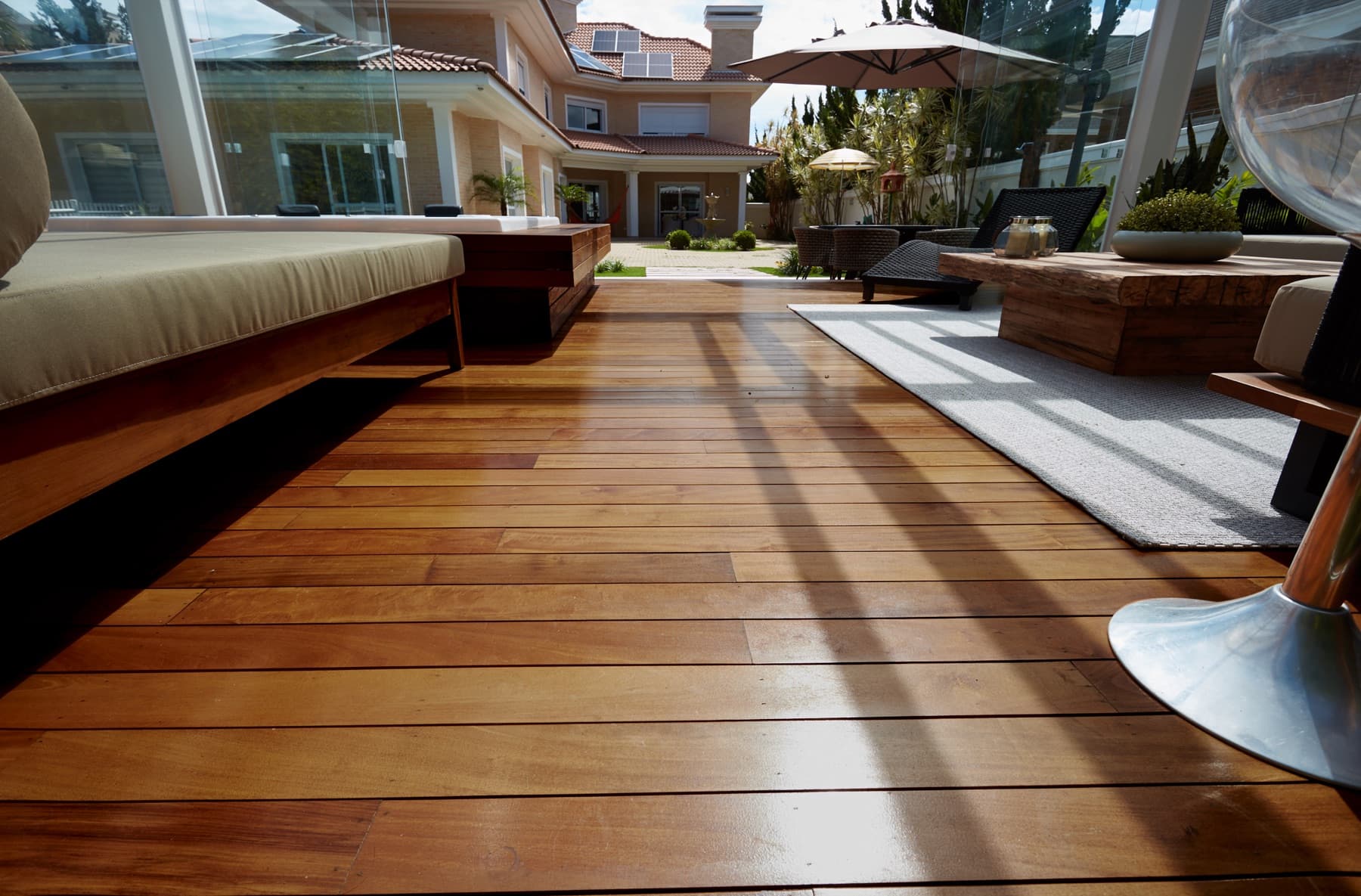
Understanding Sablewood Board Length Options
Sablewood hardwood for decking is available through Lumber Plus with options for custom milling. This means that while there may be common stock lengths, you have the opportunity to specify dimensions that align more closely with your project's needs. This flexibility is particularly valuable for large or unusually shaped decks where standard lengths might lead to excessive waste or an undesirable number of seams.
The ability to request custom milling allows for greater design freedom, potentially enabling longer, uninterrupted runs of decking or precise cuts to fit specific areas without visible joints. Always confirm the available lengths and custom milling lead times with Lumber Plus before finalizing your design.
The Importance of a Thoughtful Seam Layout
Seams in decking boards are inevitable for larger projects, but their placement can significantly affect the deck's visual appeal. A well-planned seam layout creates a sense of continuity and minimizes visual distraction. Conversely, poorly placed seams can break up the deck's flow, drawing unwanted attention.
Consider staggering seams in a random or offset pattern rather than lining them up in a straight line across the deck. This technique, often referred to as a "random pattern" or "staggered joint" layout, helps distribute the visual impact of the seams and can make the deck appear larger and more cohesive. For Sablewood, the natural grain and pre-finished appearance can help blend seams, especially when boards are carefully selected and cut.
Developing a Cut List for Your Sablewood Project
A detailed cut list is essential for efficient material use and accurate installation. This involves measuring your deck area precisely and then determining the exact length of each board needed. When creating a cut list, account for any necessary expansion gaps between boards and at the perimeter, as well as any overhangs.
Start by sketching your deck layout, noting all dimensions, obstructions, and desired seam locations. Then, calculate the number of full boards required for each run, and identify where cuts will be necessary. The goal is to maximize the use of each purchased board, minimizing waste by utilizing offcuts for shorter sections where possible. Remember that custom milling can reduce the need for many short cuts, but precise measurements are still crucial.
Worked Example: Planning a 12x18-foot Sablewood Deck
Let's consider a hypothetical 12-foot by 18-foot rectangular deck where Sablewood boards will run along the 18-foot dimension. For this example, we'll assume a standard board width of 5.5 inches (actual width may vary; always confirm product specifications) and a desired staggered seam pattern.
Option 1: Using standard 12-foot and 18-foot lengths (if available). The 12-foot width would require approximately 26 boards (12 feet / 5.5 inches per board = 26.18 boards, rounding up). This would mean 26 boards of 18 feet each. If 18-foot lengths are not feasible or desired, a staggered pattern using shorter lengths is an alternative.
Option 2: Using custom-milled 10-foot and 8-foot lengths for a staggered pattern. For the next row, you could reverse the order (8-foot then 10-foot) to create a staggered seam. This approach would require 26 (10-foot) boards and 26 (8-foot) boards for the main deck area. This method introduces more seams but allows for optimized material usage if custom lengths are cost-effective for your project.
Always factor in a small percentage for cuts, mistakes, or future repairs, typically 5-10% extra material. For this 12x18-foot deck, with 26 runs of 18 feet equivalent, the total linear footage is 468 feet. With a 10% waste factor, you would plan for approximately 515 linear feet of Sablewood decking.
Considering the Impact of Fascia and Borders
Decking projects often include fascia boards or picture-frame borders, which can influence your main deck board length decisions. Fascia boards are typically installed along the perimeter of the deck to cover the exposed ends of the joists and decking boards, creating a finished look. These can be chosen in lengths that match or complement your main decking boards.
If you plan a picture-frame border, the main decking boards will terminate against this border rather than running to the edge of the deck. This can affect the required lengths of your inner deck boards and offers another opportunity to conceal cut ends, contributing to a polished final appearance. Coordinate the lengths and profiles of all these components when placing your order for Sablewood.
Before you order
- Measure your deck area accurately, including any angles or curves.
- Determine the desired direction of your decking boards.
- Consider the aesthetic impact of seam placement and choose a staggered or linear pattern.
- Investigate available Sablewood board lengths, including custom milling options from Lumber Plus.
- Create a detailed cut list, accounting for expansion gaps, overhangs, and waste factor.
- Plan for fascia boards or picture-frame borders and their impact on main board lengths.
- Confirm lead times for custom-milled lengths if applicable.
Confirm installation details, approved uses and warranty terms in the current instructions for the exact product and profile. Your installer should verify the substrate, structure and applicable project requirements.
Questions to help you decide
Can I mix different Sablewood board lengths on my deck?
Yes, mixing different Sablewood board lengths is a common practice, especially when creating a staggered seam pattern. This approach can help optimize material usage and create a more natural, less uniform appearance. Ensure that all boards are from the same product batch to maintain consistent color and grain, especially with pre-finished materials.
How do I account for expansion and contraction when planning board lengths?
Sablewood, like other hardwood decking, will experience some expansion and contraction with changes in humidity and temperature. It is crucial to follow the manufacturer's recommended spacing between boards and at the ends where they meet other structures or fascia. This spacing allows the wood to move naturally without buckling or cracking. Always confirm the specific spacing requirements for Sablewood with Lumber Plus.
Is custom milling for Sablewood decking always necessary for specific lengths?
Custom milling for Sablewood decking is not always necessary, but it offers significant advantages for projects with unique dimensions or those aiming for minimal seams. If your project dimensions align well with standard stock lengths, custom milling might not be required. However, for larger projects or specific design aesthetics, custom milling can reduce waste and improve the overall visual flow of the deck. Discuss your project details with Lumber Plus to determine the most cost-effective and aesthetically pleasing approach.
Request a Quote for Sablewood Decking
Ready to plan your Sablewood deck? Contact Lumber Plus for a material quote. Provide your project dimensions, desired Sablewood profile, and ZIP code to confirm current availability and service options. We can help you explore custom milling possibilities to achieve your ideal deck design.
Request a material quote →