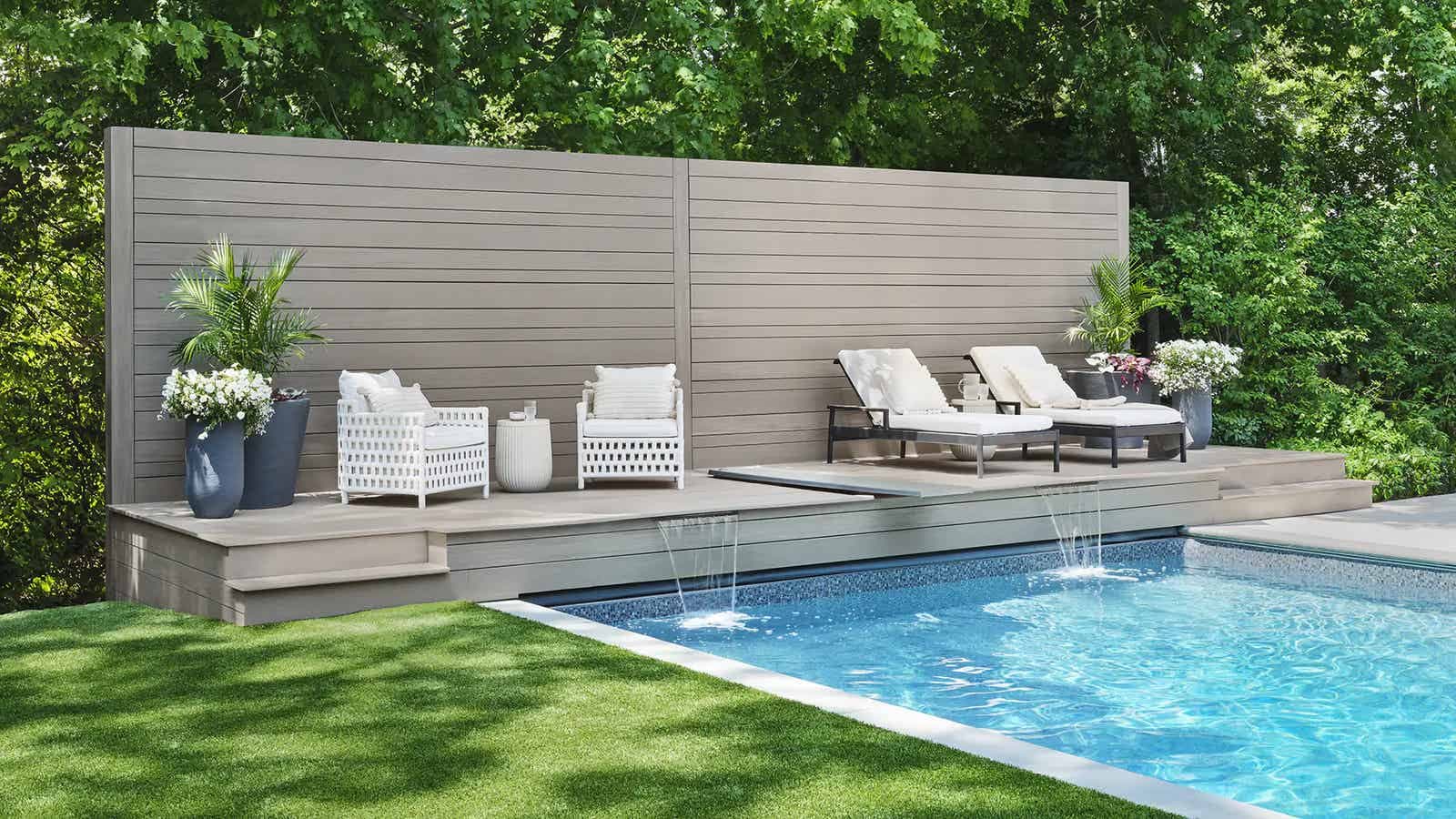
Understanding PVC Decking for Wet Environments
PVC decking is engineered from 100% synthetic materials, containing no wood fibers. This fundamental difference sets it apart from traditional wood or even wood-composite decking when considering its performance in consistently wet conditions. Its waterproof core means that exposure to standing water, splash zones, or even salt spray will not cause the material to swell, stain, or rot.
This makes PVC decking a suitable choice for pool surrounds, docks, and other applications where boards are frequently wet. The material's resistance to moisture also contributes to its low-maintenance profile, as it is less susceptible to issues like mold or mildew that can affect wood-based products in damp environments. Certain PVC decking lines, like those from TimberTech Azek, feature advanced capping for enhanced durability and stain resistance. (S1)
Key Benefits for Pool Terraces
The primary benefit of PVC decking for a pool terrace is its inherent waterproof nature. This characteristic directly addresses the challenges posed by continuous exposure to pool water, preventing common issues such as warping, splintering, or decay that can occur with less suitable materials. Its resistance to staining from common poolside spills, like chlorine water or sunscreen, is another practical advantage.
Additionally, PVC decking is known for its lighter weight compared to hardwood or composite options. This can simplify handling and installation, especially for larger projects or those involving elevated structures. The material is also designed to be resistant to fading and staining, helping to maintain its appearance over time with appropriate care. (S1)
Appearance and Design Considerations
Modern PVC decking offers a range of aesthetic options, including collections that mimic the deep wood looks found in natural timber. Lines such as the Vintage, Landmark, and Harvest collections from TimberTech Azek provide diverse color palettes and grain patterns, allowing you to achieve a desired visual style for your pool terrace. These options can integrate seamlessly with various architectural styles, from contemporary to more traditional.
When planning your design, consider how the decking color will interact with the pool's water color, surrounding landscaping, and your home's exterior. Some PVC decking options also include heat-mitigating color choices, which can be a consideration for surfaces exposed to direct sunlight, helping to keep the deck more comfortable underfoot.
Installation Planning and Substructure
Proper installation is critical for any decking project, especially around a pool. While PVC decking is lighter, the substructure must still be robust and comply with local building codes. Ensure that the joist spacing and support system are appropriate for the specific PVC decking product you choose. Adequate ventilation beneath the deck is also important to prevent moisture buildup, even with waterproof materials.
Consider the layout of the boards to minimize cuts and create a clean aesthetic. Planning for proper drainage around the pool area is essential, ensuring that water runs off the deck surface and away from the substructure and home foundation. Always consult the manufacturer's specific installation guidelines for board spacing, fastening methods, and edge finishing to ensure optimal performance and longevity.
Maintenance and Care for Your Pool Terrace
One of the key advantages of PVC decking for a pool terrace is its low-maintenance nature. The capped polymer surface is designed to shed grease and wine, and typically cleans with soap and water. Regular cleaning, such as sweeping or rinsing with a hose, can help remove debris and prevent buildup. For more stubborn stains, follow the manufacturer's recommendations for compatible cleaning products.
Avoid using abrasive cleaners or high-pressure washers, which can damage the surface finish. While PVC decking is highly resistant to many common issues, routine inspection for any debris lodged between boards or minor surface marks can help maintain its appearance over time. Always refer to the specific cleaning and care instructions provided by the decking manufacturer.
Before you order
- Assess your pool terrace dimensions and shape for accurate material quantity.
- Consider the desired aesthetic: choose PVC decking colors and grain patterns that complement your home and pool.
- Verify local building codes and substructure requirements for decking around a pool.
- Plan for adequate drainage and ventilation beneath the deck surface.
- Review manufacturer-specific installation guidelines for board spacing and fastening.
- Evaluate heat-mitigating color options if your deck will be in direct sunlight.
- Understand the recommended cleaning and maintenance procedures for your chosen PVC decking.
- Consider edge finishing options and any necessary trim pieces for a complete look.
Confirm installation details, approved uses and warranty terms in the current instructions for the exact product and profile. Your installer should verify the substrate, structure and applicable project requirements.
This is a planning guide for projects in Traverse City, MI. Ask our team to confirm availability, delivery to your ZIP code and which branch can support your order.
Questions to help you decide
Is PVC decking slippery when wet?
The degree of slip resistance can vary between product lines and finishes. Always exercise caution on any wet surface. For specific product information, refer to the manufacturer's specifications for the exact decking profile you are considering.
How does PVC decking withstand winter conditions in Traverse City, MI?
PVC decking is engineered to be durable in various climates, including those with cold winters. Its synthetic composition means it does not absorb moisture, which helps prevent issues like freezing and thawing damage that can affect wood. It is resistant to cracking and warping from temperature fluctuations. However, ensure proper installation, including adequate substructure and drainage, to support its performance through winter.
Can I install PVC decking myself around my pool?
While PVC decking is often considered homeowner-friendly due to its lighter weight, installing it around a pool requires careful planning and adherence to manufacturer instructions. This includes precise measurements, proper substructure construction, correct fastening, and ensuring adequate drainage. If you are not experienced with deck construction, consider consulting a professional installer to ensure the project is completed safely and correctly, especially given the proximity to water.
Ready to Plan Your PVC Pool Terrace?
Request a material quote with your project dimensions, exact profile preferences, and ZIP code to confirm current availability and service options for your Traverse City, MI, project. We can help you explore the range of PVC decking options available.
Request a material quote →