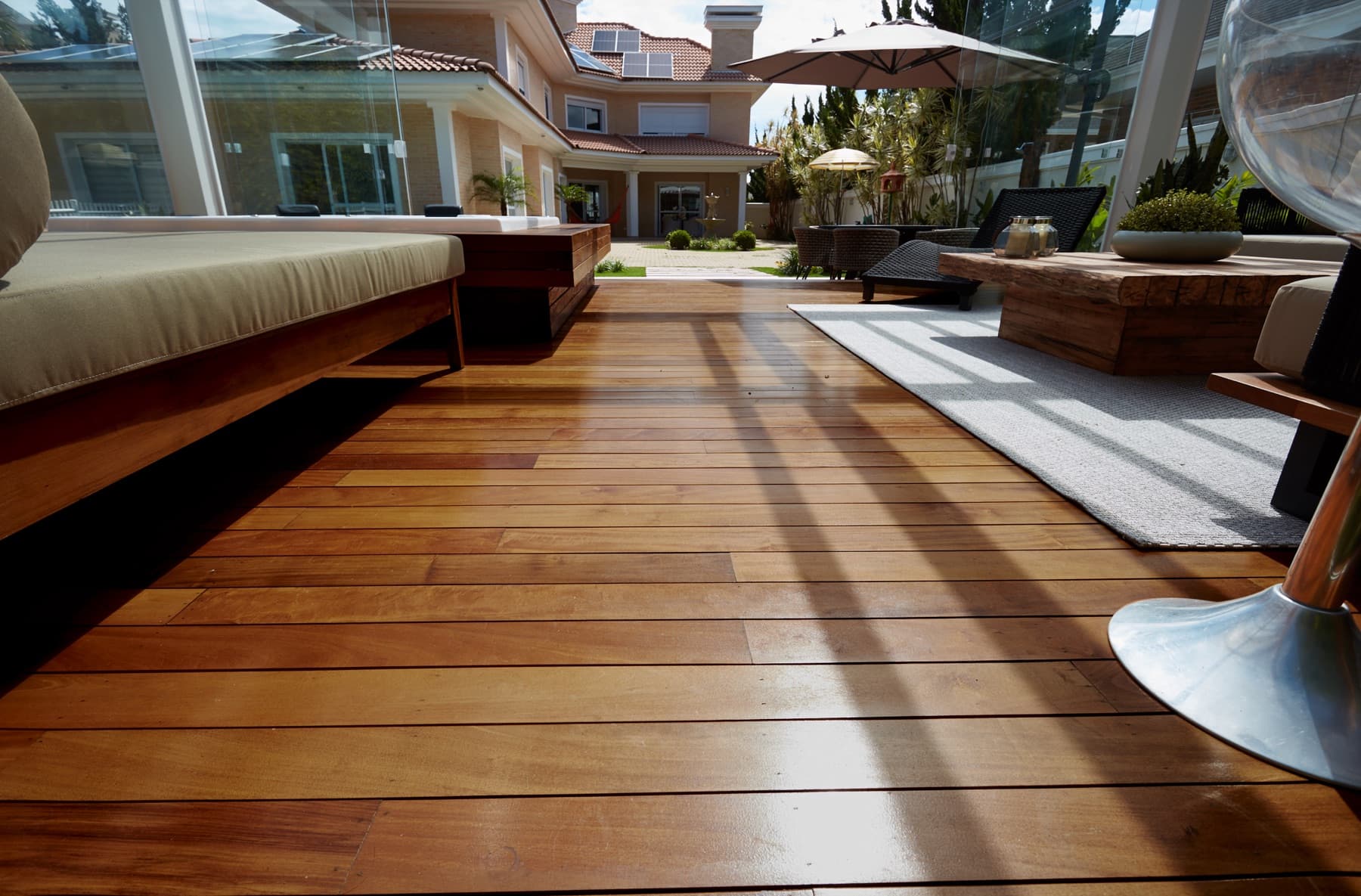
Assessing Your Existing Deck Frame for Hardwood
Before investing in new hardwood decking, a comprehensive inspection of your existing deck frame is essential. Hardwood, particularly dense species like Ipe or Cumaru, is heavier than many composite or softwood alternatives. Your frame must be structurally sound and adequately spaced to support the increased load.
Begin by checking the footings for stability and signs of settlement or erosion. Inspect posts for rot, insect damage, or cracks, especially at ground level. Beams and joists should be level, free from significant deflection, and without signs of decay or splitting. Pay close attention to fasteners; rusted or loose connections can compromise structural integrity. If any part of the frame shows significant wear or damage, it will need repair or replacement before new decking can be installed. This step ensures safety and the longevity of your new hardwood surface.
Why Choose Hardwood Decking for Traverse City Renovations?
Traverse City's climate, with its distinct seasons, benefits from decking materials that can withstand temperature fluctuations, moisture, and snow. Hardwood decking, particularly tropical species, offers inherent durability and resistance to these conditions. Unlike some materials that may degrade or warp under harsh weather, dense hardwoods are known for their stability.
Species like Ipe and Cumaru are naturally resistant to rot, insects, and mold, reducing the need for chemical treatments. They can also endure significant snow loads and freeze-thaw cycles without compromising structural integrity. While requiring occasional cleaning, hardwood decks can maintain their appearance and performance for decades, offering a long-term value proposition for your renovation project.
For example, Ipe wood, also known as Brazilian walnut, is a dense and durable hardwood. It is notable for its minimal movement post-installation and natural resistance to weather changes, mold, and termites. Cumaru is another very durable tropical hardwood, resistant to termites and weather changes, known for its stiffness, strength, and extreme hardness. These characteristics make them suitable for demanding outdoor applications.
Hardwood Species Spotlight: Ipe and Cumaru
When considering hardwood decking for a renovation, Ipe and Cumaru are two prominent choices known for their performance and aesthetic appeal.
Ipe (Handroanthus spp.), often called Brazilian walnut, is a benchmark hardwood. It features a reddish-brown to olive-brown color. Ipe is noted for its exceptional strength and natural resistance to rot, insects, and mold. It also resists warping after moisture exposure, and its natural oils help protect it from cracking or warping. With proper care, Ipe decking can last for many decades. It is available in various dimensions, typically 1"x2" through 6"x6", and lengths from 3 to 24 feet, in both air-dried (AD) and kiln-dried (KD) options. If left untreated, Ipe will weather to a silvery-gray patina; applying a UV-blocking sealer can help preserve its original color.
Cumaru (Dipteryx odorata) is another very durable tropical hardwood. It is resistant to termites and weather changes, making it suitable for a wide range of applications. Cumaru offers stiffness, strength, and extreme hardness. It is naturally resistant to insects, rot, and fungi. When worked, Cumaru can emit a scent of cinnamon and vanilla. Like Ipe, it can be left untreated to weather to a silvery-gray or maintained with an oil to retain its natural brown tones.
Planning for Decking Installation and Board Layout
Once your frame is ready and you've selected your hardwood, planning the installation and board layout is the next step. Hardwood decking requires specific installation techniques due to its density and natural characteristics. Professional installation is often recommended.
Consider the board width and length options available. Standard profiles for species like Ipe can range from 1"x2" up to 6"x6", with lengths varying. Planning your layout carefully can minimize waste and create a visually appealing surface. For instance, a straight lay pattern is common, but diagonal patterns or picture-frame borders can add design interest. Ensure adequate spacing between boards to allow for natural movement and drainage, as specified by the product manufacturer. Proper ventilation beneath the deck is also crucial, particularly in Traverse City where moisture can accumulate.
Worked Example: Renovating a 10x12 Foot Deck
Let's consider a hypothetical deck renovation project for a 10-foot by 12-foot elevated deck, totaling 120 square feet.
For this example, we will use Ipe decking boards, assuming a standard profile of 1x6 inches (actual dimensions approximately 0.75 inches thick by 5.5 inches wide). To calculate the number of boards needed, we first determine how many 5.5-inch wide boards fit across the 10-foot (120-inch) width. 120 inches / 5.5 inches per board = approximately 21.8 boards. We will round this up to 22 boards to ensure full coverage and account for potential cuts.
Each board needs to cover the 12-foot length. If we assume boards are available in 12-foot lengths, we would need 22 boards of 12 feet each. Total linear footage would be 22 boards * 12 feet/board = 264 linear feet. For a 1x6 Ipe board, this translates to roughly 121 board feet (264 linear feet * 0.5 board feet/linear foot for a 1x6). Always add an extra 10-15% for cuts, waste, and future repairs. So, for this project, you might plan to purchase around 300 linear feet of 1x6 Ipe.
This calculation is an estimate; actual quantities depend on precise board dimensions, specific layout plans (e.g., staggering seams), and how cuts are managed to minimize waste. Always confirm board availability and lengths with your supplier.
Before you order
- Inspect existing deck frame (footings, posts, beams, joists) for damage, rot, or instability.
- Verify joist spacing is adequate for chosen hardwood decking weight and span requirements.
- Determine if any frame repairs or reinforcements are necessary before decking installation.
- Select hardwood species (e.g., Ipe, Cumaru) based on durability, appearance, and maintenance preferences.
- Measure deck dimensions accurately to calculate required linear footage, adding 10-15% for waste.
- Consider board width and length options for optimal layout and minimal cuts.
- Plan for proper board spacing and under-deck ventilation to ensure longevity.
- Confirm compatible fastening methods (hidden fasteners or face-fastening) with your chosen hardwood.
- Research local building codes or permit requirements for deck renovations in Traverse City, MI.
- Plan for delivery, storage, and job site access for dense hardwood materials.
Confirm installation details, approved uses and warranty terms in the current instructions for the exact product and profile. Your installer should verify the substrate, structure and applicable project requirements.
This is a planning guide for projects in Traverse City, MI. Ask our team to confirm availability, delivery to your ZIP code and which branch can support your order.
Questions to help you decide
How does hardwood decking perform in Traverse City's winters?
Hardwood species like Ipe and Cumaru are known for their excellent performance in varied climates, including cold winters. Their natural density and resistance to moisture help prevent warping, cracking, and decay often associated with freeze-thaw cycles. They can also withstand snow loads effectively. While they are durable, proper installation with adequate ventilation and drainage is key to their long-term performance.
What maintenance is required for hardwood decking in Traverse City?
Hardwood decking is relatively low maintenance. A wash once a year is generally sufficient to keep it clean. If you prefer to maintain the wood's original rich brown color, an annual application of a UV-blocking oil or sealer is recommended. If left untreated, the wood will naturally weather to a beautiful silvery-gray patina, which does not affect its structural integrity.
Can I install hardwood decking myself for a renovation project?
While it is possible to install hardwood decking yourself, species like Ipe and Cumaru are very dense and require specialized tools and techniques. Professional installation is often recommended to ensure proper fastening, spacing, and a durable finish. Incorrect installation can lead to issues with board movement, drainage, and overall deck longevity. If you plan a DIY approach, ensure you have the correct tools and thoroughly research manufacturer installation guidelines.
Ready to Renovate Your Traverse City Deck with Hardwood?
Contact us today for a material quote. Provide your project dimensions, desired hardwood profile, and ZIP code to confirm current availability and service options for your Traverse City, MI deck renovation.
Request a material quote →