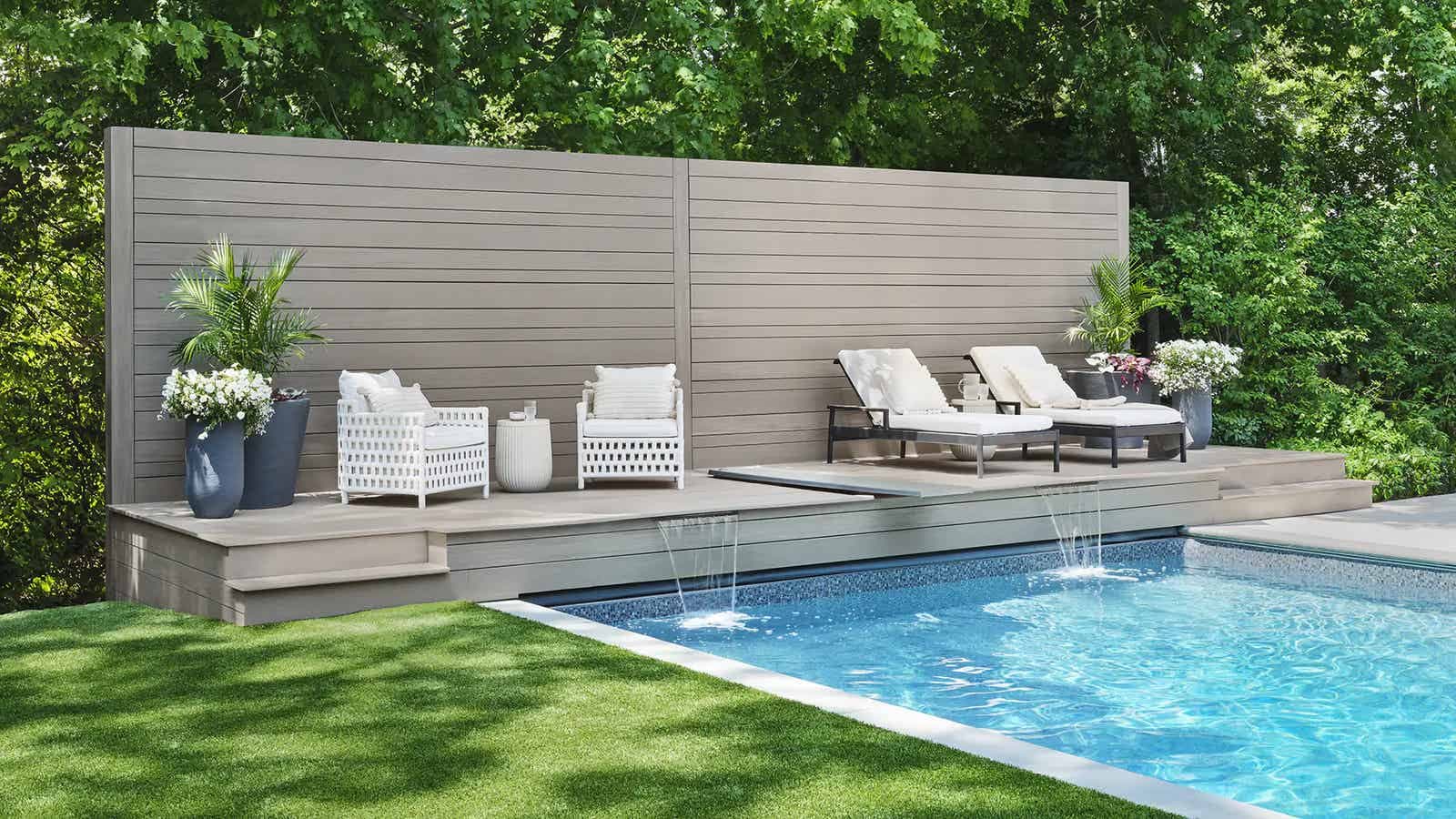
Why PVC Decking for Pool Terraces?
PVC decking is a 100% synthetic material, meaning it contains no wood fiber. This composition is key to its performance in high-moisture environments like pool surrounds. Unlike wood or composite materials that contain organic components, PVC boards are engineered to be waterproof to the core.
This inherent water resistance means PVC decking is less susceptible to issues commonly associated with prolonged water exposure, such as swelling, staining, or rot. It is often considered a standard choice for applications where boards are frequently wet, including pool decks, docks, and covered porches that experience weather from multiple directions. The synthetic nature also contributes to its ease of cleaning, as spills like grease or wine tend to shed easily and can be wiped clean with soap and water.
Additionally, PVC decking generally weighs less than hardwood and some composite options. This can simplify handling during installation and potentially reduce structural load requirements, which may be a consideration for certain terrace designs.
Understanding PVC Decking Profiles and Appearance
PVC decking is available in various collections that offer different aesthetic profiles. For example, lines such as Vintage, Landmark, and Harvest collections are designed to replicate the look of natural wood with deep, textured finishes. These options allow for a sophisticated appearance while providing the benefits of a synthetic material.
When selecting PVC decking for a pool terrace, consider how the color and finish will complement your home's exterior and landscaping. Some PVC decking options also feature heat-mitigating color technology, which can be a practical consideration for surfaces exposed to direct sunlight, helping to keep the deck surface cooler underfoot.
Planning for Water Management and Drainage
While PVC decking is waterproof, proper planning for water management and drainage around a pool terrace remains essential. Even though the boards themselves won't swell or rot from standing water, ensuring adequate drainage prevents water from pooling on the surface and can help keep the area cleaner and safer.
Consider the slope of the underlying structure and the spacing between boards. While PVC itself doesn't absorb water, water can still sit on the surface or flow into gaps. Consult the manufacturer's specific installation guidelines for recommended board spacing to allow for proper drainage and ventilation beneath the deck surface. This is particularly important in Saint Paul, where seasonal changes can bring significant precipitation.
Edge Finishes and Fascia for a Polished Look
The perimeter of a pool terrace often requires specific attention to detail for both aesthetics and safety. PVC decking systems typically offer coordinating fascia and trim boards to create a finished edge. These components can conceal the ends of the deck boards and provide a clean, continuous look.
When planning your pool terrace, consider how the edge profile will interact with the pool coping and any surrounding landscaping. A well-chosen fascia board can enhance the overall design and provide a smooth transition from the deck to other elements of your outdoor space.
Maintenance and Cleaning for Poolside Environments
One of the key benefits of PVC decking for a pool terrace is its low-maintenance nature. The advanced capping on many PVC boards helps them shed common spills and dirt. For routine cleaning, soap and water are generally sufficient to keep the surface looking its best.
For specific cleaning instructions, always refer to the manufacturer's guidelines for your chosen PVC decking product. This ensures you use compatible cleaning agents and methods, preserving the appearance and performance of your deck. Regular cleaning helps prevent the buildup of pool chemicals, sunscreen, and other common poolside residues.
Before you order
- Confirm the specific PVC decking product's suitability for continuous wet-area exposure (pool surround rating).
- Review available color options and heat-mitigating properties for direct sun exposure.
- Plan for adequate sub-surface drainage and ventilation to manage water runoff.
- Select coordinating fascia and trim boards for a finished edge around the pool.
- Verify manufacturer-recommended cleaning procedures for poolside maintenance.
- Consider overall project dimensions and required quantities, accounting for cuts and waste.
- Request a material quote with exact profiles and your Saint Paul, MN ZIP code.
Confirm installation details, approved uses and warranty terms in the current instructions for the exact product and profile. Your installer should verify the substrate, structure and applicable project requirements.
This is a planning guide for projects in Saint Paul, MN. Ask our team to confirm availability, delivery to your ZIP code and which branch can support your order.
Questions to help you decide
Is PVC decking slippery when wet?
While PVC decking is designed for wet environments, all surfaces can be slippery when wet, especially with pool chemicals or other residues present. It's important to maintain a clean deck surface and always exercise caution around wet areas. Specific slip resistance data can vary by product and finish; always check manufacturer specifications if this is a primary concern.
Can PVC decking withstand Saint Paul's winter weather?
PVC decking is engineered to be durable and resistant to environmental factors. Its synthetic composition means it will not absorb water and is less prone to issues like freezing and thawing damage that can affect wood. However, proper installation, including adequate drainage and ventilation, is crucial for performance in any climate, including the varied winter conditions in Saint Paul, MN. Always refer to manufacturer guidelines for cold weather performance and installation.
How do I calculate the amount of PVC decking needed for my pool terrace?
To calculate the required quantity, first measure the total length and width of your pool terrace area. For example, if you have an 18-foot by 12-foot rectangular area, this is 216 square feet. Then, consider the dimensions of the PVC decking boards you plan to use. If boards are typically sold in specific lengths (e.g., 12, 16, 20 feet) and widths (e.g., 5.5 inches), you'll need to plan a layout to minimize waste. It's often recommended to add 10-15% extra material for cuts, waste, and any potential future repairs. For a precise takeoff, sketch your deck layout and mark out board placements, accounting for any picture-framing or diagonal patterns. Always round up to full board lengths for purchase, as offcuts are only reusable if they meet minimum length requirements for your layout.
Ready to Plan Your PVC Pool Terrace?
For your Saint Paul, MN pool terrace project, request a material quote for PVC decking. Provide your project dimensions, desired profile, and ZIP code to confirm current availability and service options. Explore our full range of decking options, including hardwood and composite, to find the perfect fit for your outdoor living space.
Request a material quote →