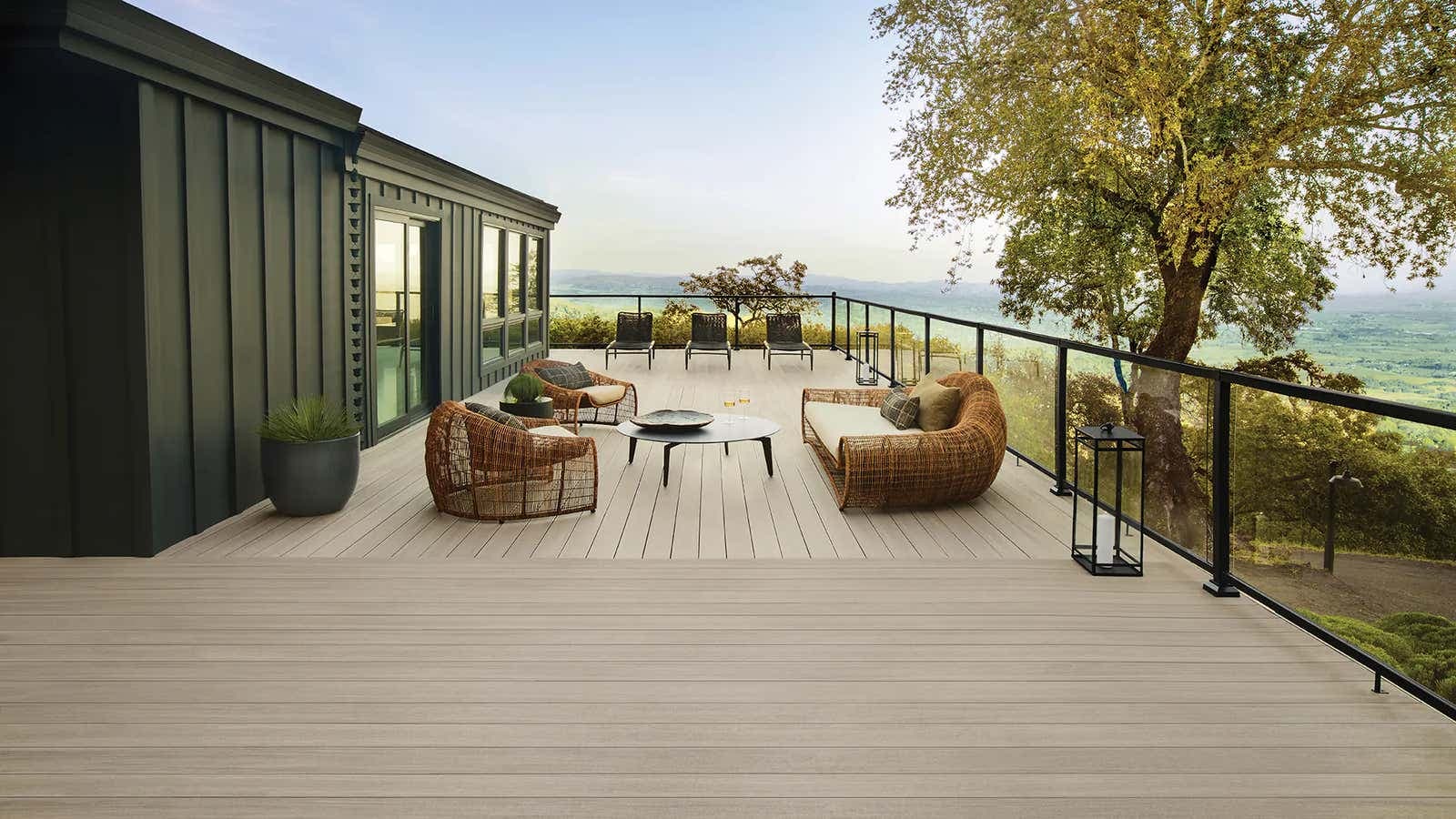
Maximizing Usable Space with Board Selection
In compact outdoor settings, the dimensions of your decking boards can influence the perceived size and overall functionality of the space. Wider boards might reduce the number of visible seams, creating a more expansive look, while narrower boards can add a sense of intricate detail and allow for more creative patterns. When space is at a premium, consider how board length impacts cuts and waste, especially if you have an irregularly shaped area.
Some composite decking collections offer different board widths within the same line, which can be combined to create custom patterns or to visually define zones within a small area. For instance, using a wider board for the main area and a narrower board for a border can add visual interest without overwhelming the space. Always review the available profiles and dimensions from manufacturers like Trex, TimberTech, and Fiberon to find options that align with your design goals and space constraints.
Considerations for Balconies and Elevated Decks
For balconies and elevated decks common in multi-story homes or urban settings, structural support and weight distribution are paramount. Composite decking is often lighter than some traditional hardwoods, which can be an advantage. However, the existing structure's capacity must always be verified by a qualified professional before installation. Confirm that the chosen composite decking system, including joists and fasteners, is compatible with the existing or planned substructure.
Access for material delivery and installation can also be a challenge for elevated spaces. Planning for smaller board lengths or understanding how materials will be transported to the site is essential. Additionally, ensure proper drainage is designed into the deck system to prevent water accumulation, which is particularly important for structures above living spaces or adjacent to building facades.
Integrating Decking with Small Patios and Yards
In small ground-level patios or backyards, composite decking can define a distinct zone for dining, lounging, or a small garden. Consider how the decking will transition to adjacent hardscaping, lawn, or planting beds. Using a picture-frame border with your composite decking can create a clean, finished edge that visually separates the deck from other elements.
For ground-level applications, ensuring adequate ventilation beneath the deck is important for the longevity of the composite material and the substructure. This is especially true in areas like Saint Paul where humidity levels can fluctuate. Proper spacing and airflow help prevent moisture buildup. Some composite decking is designed with capped shells that resist humidity, offering an advantage in such conditions.
Maintenance and Longevity in Saint Paul's Climate
Saint Paul's climate, with its warm summers and cold, snowy winters, means outdoor materials must withstand significant temperature fluctuations and moisture. Composite decking is known for its low maintenance requirements, typically needing only an annual soap-and-water wash.
Unlike natural wood, composite decking does not require oiling, sanding, or staining. This can be a significant advantage in compact spaces where access for such maintenance tasks might be difficult. Manufacturers like Trex, TimberTech, and Fiberon offer products with fade and stain warranties, providing peace of mind regarding the material's long-term appearance. Selecting options that are designed to resist moisture and temperature changes is particularly relevant for Minnesota's seasonal weather patterns.
Worked Example: A 10x8-Foot Balcony Deck in Saint Paul
Imagine you are planning to deck a 10-foot by 8-foot balcony in a Saint Paul apartment building. The balcony is currently concrete, and you want to install composite decking. You decide on standard 12-foot long, 5.5-inch wide composite boards for a clean, linear look. You want to run the boards parallel to the 10-foot dimension to visually elongate the space.
First, calculate the deck area: 10 ft * 8 ft = 80 square feet. Next, determine how many boards are needed. Each 12-foot board at 5.5 inches wide covers approximately 5.5 inches * 12 feet = 0.458 feet * 12 feet = 5.5 square feet. However, for purchase, it's more accurate to consider the width coverage across the 8-foot dimension. You would need 8 feet / 5.5 inches (0.458 feet) = approximately 17.45 board widths. Rounding up, you'd need 18 boards to cover the 8-foot width.
Since each board is 12 feet long and your deck is 10 feet long, you will cut 2 feet off each board. This means you will need 18 boards, each 12 feet long. The offcuts (18 pieces of 2-foot length) could potentially be used for a small border or other decorative elements if feasible with the product's installation guidelines, but are generally considered waste for the main decking area. Remember to account for a small installation gap between boards as specified by the manufacturer.
This example assumes a simple layout. For more complex designs or for accounting for joist spacing and waste from cuts, a detailed material takeoff is recommended. Always confirm manufacturer-specific installation requirements for board spacing and fastening systems.
Before you order
- Verify existing structural capacity for balconies/elevated decks.
- Measure the exact dimensions of your compact space, noting any irregular angles.
- Consider board width: wider for fewer seams, narrower for intricate patterns.
- Evaluate board length options to minimize waste for your specific dimensions.
- Plan for material delivery and access, especially for elevated or tight spaces.
- Choose a composite decking collection with fade and stain warranties for longevity.
- Ensure proper ventilation is planned for ground-level installations.
- Review manufacturer guidelines for board spacing and fastening specific to your chosen product.
- Consider transition details to adjacent landscaping or hardscaping.
Confirm installation details, approved uses and warranty terms in the current instructions for the exact product and profile. Your installer should verify the substrate, structure and applicable project requirements.
This is a planning guide for projects in Saint Paul, MN. Ask our team to confirm availability, delivery to your ZIP code and which branch can support your order.
Questions to help you decide
Can composite decking be installed directly over an existing concrete patio?
Generally, composite decking cannot be installed directly onto a concrete patio without a proper substructure. A framework of joists is typically required to provide ventilation, allow for drainage, and create a level surface for fastening the decking boards. This also helps prevent moisture buildup between the concrete and the composite material. Always consult the specific manufacturer's installation guidelines for their recommended methods.
What are the best composite decking options for small balconies?
For small balconies, look for composite decking that offers a good balance of aesthetics, durability, and manageable board lengths. Brands like Trex, TimberTech, and Fiberon offer various collections. "Cooler-underfoot" options can be beneficial for sun-exposed balconies. Prioritize materials with strong fade and stain warranties, as these spaces often experience direct sun and weather exposure. Always confirm the weight of the decking system to ensure it is within the balcony's structural capacity.
How much space should be left between composite deck boards?
The exact spacing between composite deck boards is critical and varies by manufacturer and product line. It is essential to follow the specific installation instructions provided by the composite decking manufacturer. These gaps are necessary for drainage, ventilation, and to accommodate the natural expansion and contraction of the material due to temperature changes. Incorrect spacing can lead to warping, buckling, or other performance issues.
Ready to Plan Your Composite Decking Project in Saint Paul?
Request a material quote today. Provide your project dimensions, desired composite decking profile, and project ZIP code to confirm current availability and service options. Explore our full range of composite decking options at /decking/composite, or consider alternatives like /decking, /decking/hardwood, /decking/hardwood/ipe, and /decking/pvc.
Request a material quote →