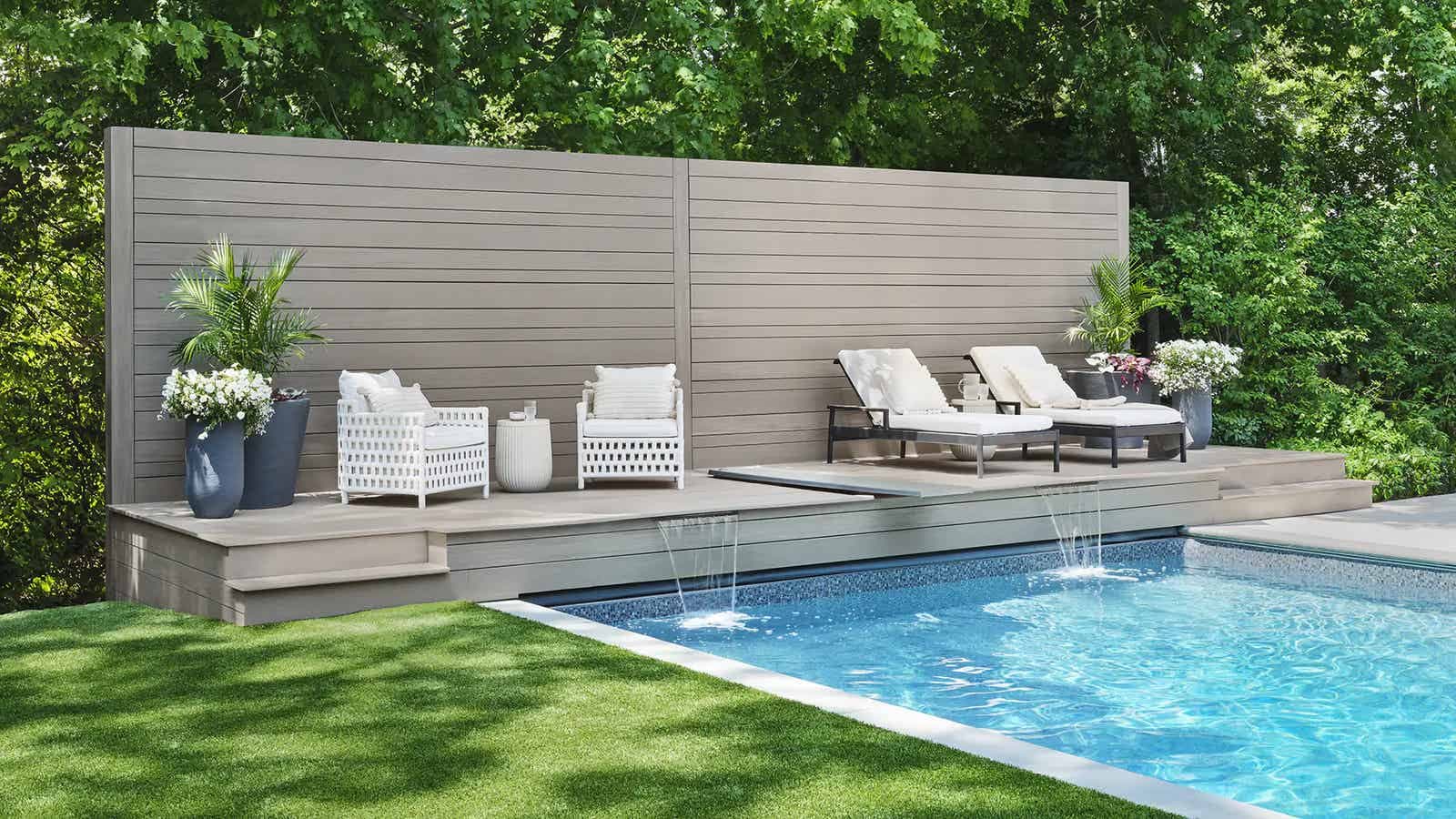
Why PVC Decking for Pool Terraces?
PVC (Polyvinyl Chloride) decking is a 100% synthetic material, meaning it contains no wood fiber. This composition is a key advantage for pool terraces, as it makes the boards inherently waterproof to the core. Unlike wood or even some composite materials, PVC decking is not susceptible to swelling, staining, or rot when exposed to standing water, splash zones, or salt spray.
This characteristic makes it a strong contender for environments where boards will consistently be wet, such as around pools, hot tubs, or even docks. Its resistance to moisture also contributes to its low-maintenance profile, as it sheds grease and wine and can typically be cleaned with soap and water.
Understanding PVC Decking Profiles and Appearance
PVC decking is available in various collections, offering different aesthetics. For instance, lines like TimberTech Azek's Vintage, Landmark, and Harvest collections feature deep wood looks with advanced capping. This capping technology enhances the board's resistance to fade and stain, while still providing an authentic appearance.
When planning your pool terrace, consider how the decking's profile and color will complement your home's exterior and landscaping. Heat-mitigating color options are also available, which can be a practical consideration for decks exposed to direct sunlight, helping to keep the surface cooler underfoot.
Installation Considerations for Wet Environments
While PVC decking is waterproof, proper installation is still crucial for longevity and performance. The framing underneath must be designed to allow for adequate drainage and ventilation. Even though the boards themselves won't rot, stagnant water beneath the deck can lead to other issues.
PVC boards are lighter than hardwood and often lighter than composite decking, which can make handling and installation faster. However, it's essential to follow the manufacturer's specific installation guidelines regarding board spacing, fastening methods (hidden fasteners are common), and substructure requirements to ensure proper performance and to maintain any applicable warranties.
Maintenance for a Cape May Pool Terrace
A significant benefit of PVC decking for a pool terrace is its low maintenance. The capped polymer surface is designed to shed common spills like grease and wine, making clean-up straightforward with just soap and water. This is particularly advantageous for a pool area where spills from food, drinks, or sunscreen are common.
Regular cleaning will help maintain the appearance of your deck. For specific stains or tougher grime, always refer to the manufacturer's recommended cleaning products and methods to avoid damaging the surface or voiding any warranty. Avoid abrasive cleaners or tools that could scratch the capping.
Hypothetical Project Example: A 150 Square Foot Pool Terrace
Consider a hypothetical pool terrace project in Cape May, NJ, measuring 10 feet by 15 feet, resulting in 150 square feet. For this example, we'll assume using standard PVC decking boards that are 5.5 inches wide and available in 12-foot, 16-foot, and 20-foot lengths. The goal is to minimize waste while ensuring a clean aesthetic.
If running boards parallel to the 15-foot dimension, you would need 15-foot lengths. Since 15-foot boards are not a standard offering, you would typically purchase 16-foot lengths and cut 1 foot off each. The number of boards needed would be (10 feet * 12 inches/foot) / 5.5 inches/board = approximately 21.8 boards. Therefore, you would need to purchase 22 boards of 16-foot length. The offcuts, being 1 foot long, would likely be too short for significant reuse in this layout.
Alternatively, if running boards parallel to the 10-foot dimension, you would need 10-foot lengths. Again, assuming 12-foot standard lengths are purchased, you would cut 2 feet off each. The number of boards needed would be (15 feet * 12 inches/foot) / 5.5 inches/board = approximately 32.7 boards. You would purchase 33 boards of 12-foot length. The 2-foot offcuts might be usable for smaller sections, picture framing, or stair risers, depending on the overall project plan. This example highlights the importance of precise measurements and considering available board lengths to optimize material usage and minimize waste.
Before you order
- Confirm the exact dimensions of your pool terrace area.
- Research PVC decking collections for desired aesthetic and color (consider heat-mitigating options).
- Review manufacturer's installation guides for specific substructure and fastening requirements.
- Plan for proper drainage and ventilation beneath the deck.
- Verify manufacturer-recommended cleaning and maintenance products.
- Consider the warranty details, including fade and stain coverage.
- Account for board lengths and potential waste in your material estimate.
- Plan for any required fascia boards or trim for a finished edge.
Confirm installation details, approved uses and warranty terms in the current instructions for the exact product and profile. Your installer should verify the substrate, structure and applicable project requirements.
This is a planning guide for projects in Cape May, NJ. Ask our team to confirm availability, delivery to your ZIP code and which branch can support your order.
Questions to help you decide
Is PVC decking slippery when wet?
Some manufacturers offer specific surface treatments or textures that can enhance slip resistance. Always exercise caution around wet surfaces, especially near a pool.
Does PVC decking get hot in the sun?
Like many outdoor materials, PVC decking can absorb heat from direct sunlight. However, many PVC decking lines offer 'heat-mitigating' or 'cooler' color options designed to reflect more solar radiation, potentially making the deck surface more comfortable underfoot. Lighter colors generally absorb less heat than darker ones.
Can PVC decking be used with hidden fasteners?
Yes, many PVC decking products are designed to be installed with hidden fastening systems. These systems provide a clean, fastener-free surface, which can be desirable for aesthetics and foot comfort around a pool. Always use the specific hidden fasteners recommended by the decking manufacturer to ensure compatibility and proper installation.
Plan Your PVC Pool Terrace in Cape May, NJ
Ready to explore PVC decking for your pool terrace project? Request a material quote with your project dimensions, desired profile, and ZIP code to confirm current availability and service options. Visit our PVC Decking product page for more details: /decking/pvc. You may also want to explore related decking materials such as: /decking, /decking/hardwood, /decking/hardwood/ipe, and /decking/composite.
Request a material quote →