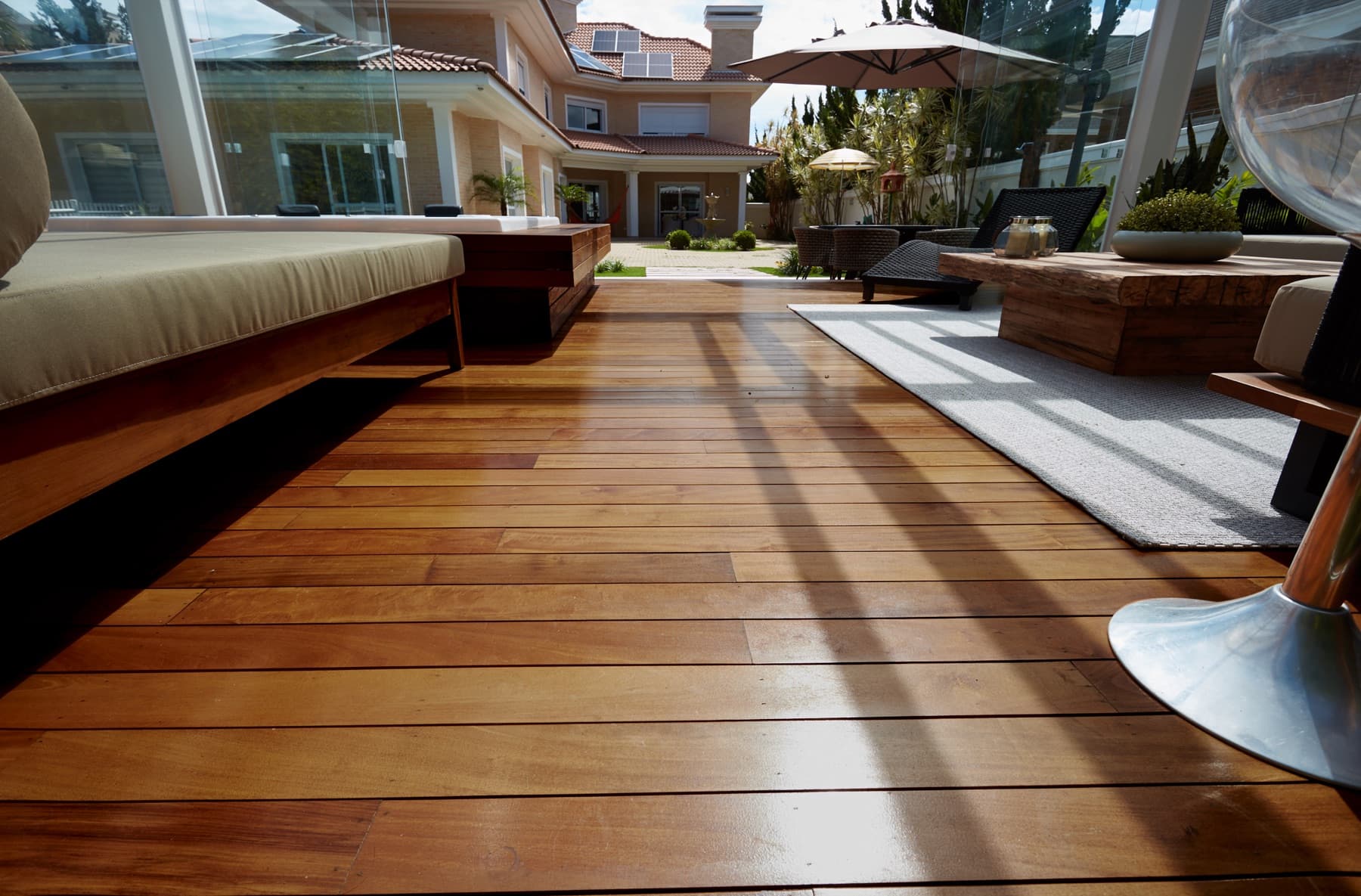
Evaluating Your Existing Deck Frame for Hardwood
Before selecting new decking material, the first critical step in any renovation is to inspect your existing deck frame. Hardwood decking, especially dense species like Ipe and Cumaru, is heavier than many common decking materials. Your existing joists, beams, and ledger board must be in sound condition and adequately sized to support the increased weight.
Look for any signs of rot, insect damage, or structural weakness in the wood components. Check the fastening points where the deck attaches to your home. If any part of the frame shows significant wear, consult with a qualified contractor or structural engineer to determine if repairs or reinforcement are necessary. An appropriate sub-structure is essential for the longevity and safety of your new hardwood deck.
The spacing of your joists is also crucial. Wider spacing might necessitate adding blocking or sistering joists, which adds to the project scope.
Choosing Hardwood Species for Coastal Durability
For coastal environments like Cape May, resistance to salt air, moisture, and fluctuating temperatures is paramount. Some hardwood species are particularly well-suited for these conditions.
Ipe, also known as Brazilian walnut, is a benchmark for outdoor durability. It is exceptionally dense and naturally resistant to rot, insects, and mold. Its natural oils protect it from cracking or warping, making it a robust choice against the elements. Ipe's color ranges from reddish-brown to olive-brown and can be maintained with an annual oil application or allowed to weather to a silvery-gray patina.
Cumaru is another durable tropical hardwood, offering stiffness, strength, and hardness. It is resistant to termites and weather changes, making it a dependable option for demanding builds. Cumaru's natural resistance to insects, rot, and fungi, along with a Class A fire resistance, positions it as a strong contender for coastal deck renovations.
Both Ipe and Cumaru are considered marine-grade standards and are frequently used for docks, boardwalks, and seawall caps, demonstrating their resilience to salt air and spray. This makes them excellent candidates for a deck renovation in Cape May.
Appearance and Weathering: Planning Your Deck's Look
Hardwood decking offers distinct aesthetic choices. Ipe and Cumaru both feature rich, natural colors that can enhance the exterior of your Cape May home. Ipe typically ranges from reddish-brown to olive-brown, while Cumaru presents a slightly lighter, warm brown tone.
A key decision point is whether to maintain the original color or allow the wood to naturally weather. If left untreated, both Ipe and Cumaru will gradually transform into a beautiful silvery-gray patina, often described as a 'driftwood grey.' This natural weathering does not compromise the structural integrity of the wood and can complement the coastal aesthetic.
To preserve the original rich brown tones, an annual application of a UV-blocking sealer or deck oil is recommended. This maintenance task helps protect the wood from UV degradation and keeps its vibrant color. Consider your long-term maintenance commitment when making this aesthetic choice.
Calculating Material Needs for a Renovation
Accurate measurements are vital for a renovation project. Begin by measuring the exact length and width of your existing deck surface to determine the total square footage. Remember to account for any unique shapes, stairs, or cut-outs.
For a straight-lay pattern, common decking board widths are 4 inches or 6 inches. To calculate the number of boards needed, divide your total deck width by the board width, then multiply by the deck length. Always add an extra 10-15% for waste, cuts, and potential future repairs. This waste factor is especially important for renovation projects where existing structures might require more intricate cuts.
Consider board lengths. Hardwood decking is often available in a range of lengths, from 3 to 24 feet. Planning your layout to minimize butt joints and optimize board usage can reduce waste. For example, if your deck is 12 feet deep, using 12-foot or 24-foot boards can be more efficient than using 8-foot boards and creating more seams.
Hypothetical Example: Imagine a deck renovation for a 10-foot by 16-foot rectangular deck. This is 160 square feet. If you plan to use 1x6 inch hardwood boards (which are actually 5.5 inches wide for decking), you would need approximately (160 sq ft * 144 sq in/sq ft) / (5.5 in * 12 in/ft) = 350 linear feet. Adding 15% for waste: 350 * 1.15 = 402.5 linear feet. When purchasing, you would round up to full board lengths. If 16-foot boards are available, you'd need roughly 26 boards (402.5 / 16 = 25.15). Always confirm precise board dimensions and availability before ordering.
Installation Considerations for Hardwood Decking
Installing hardwood decking, particularly dense species like Ipe and Cumaru, requires specific tools and techniques. Due to their hardness, pre-drilling is often necessary for fasteners to prevent splitting. Specialized hidden fastening systems are available for a clean, fastener-free surface appearance, or face-fastening with screws can be used.
Proper ventilation beneath the deck is crucial, especially in a coastal climate where moisture can be prevalent. Ensure adequate airflow to prevent moisture buildup and promote drying, which helps in the long-term stability of the decking. This is particularly important if your renovation involves enclosing the under-deck area or if the deck is close to the ground.
Board spacing is also important. Hardwood can expand and contract slightly with changes in humidity. Following manufacturer guidelines for board spacing ensures proper drainage and accommodates natural movement. While Ipe shows minimal movement post-installation, correct initial spacing is still essential.
Before you order
- Assess the condition of your existing deck frame for structural integrity and joist spacing.
- Determine if any frame repairs or reinforcements are needed to support heavier hardwood.
- Choose a hardwood species suitable for coastal conditions (e.g., Ipe, Cumaru).
- Decide on the desired aesthetic: natural silvery-gray patina or maintained original color.
- Measure your deck dimensions accurately for precise material take-off.
- Calculate linear footage and add 10-15% waste factor for cuts and contingencies.
- Plan board lengths to minimize waste and butt joints.
- Consider professional installation due to the density of hardwood.
- Ensure adequate under-deck ventilation for moisture management.
- Confirm board spacing requirements for your chosen hardwood and fastening system.
Confirm installation details, approved uses and warranty terms in the current instructions for the exact product and profile. Your installer should verify the substrate, structure and applicable project requirements.
This is a planning guide for projects in Cape May, NJ. Ask our team to confirm availability, delivery to your ZIP code and which branch can support your order.
Questions to help you decide
Can I use my existing deck railing with new hardwood decking?
It depends on the condition of your existing railing and its compatibility with your new deck surface. If the railing is structurally sound and aesthetically matches your new hardwood, it may be reusable. However, many renovations opt to replace the railing simultaneously for a cohesive look and to meet current safety standards. Always inspect railings for stability and code compliance.
How does hardwood decking handle salt spray in Cape May?
Hardwood species like Ipe and Cumaru are renowned for their exceptional resistance to harsh marine environments, including salt spray and sea air. Their natural density and oils provide inherent protection against moisture and corrosion, which is why they are frequently chosen for boardwalks and docks. They are well-suited for coastal applications in Cape May.
What is the typical lifespan of hardwood decking in a coastal environment?
With proper installation and minimal care, Ipe decking can last up to 75 years, while Cumaru can last over 25 years, often exceeding 50 years. This longevity significantly surpasses many other decking materials, even in challenging coastal conditions. Occasional cleaning and, if desired, re-oiling can help maximize their lifespan and appearance.
Ready to Renovate Your Cape May Deck with Hardwood?
Contact us with your project dimensions, desired hardwood profile, and ZIP code to request a material quote. Our team can help confirm current availability and service options for your deck renovation.
Request a material quote →