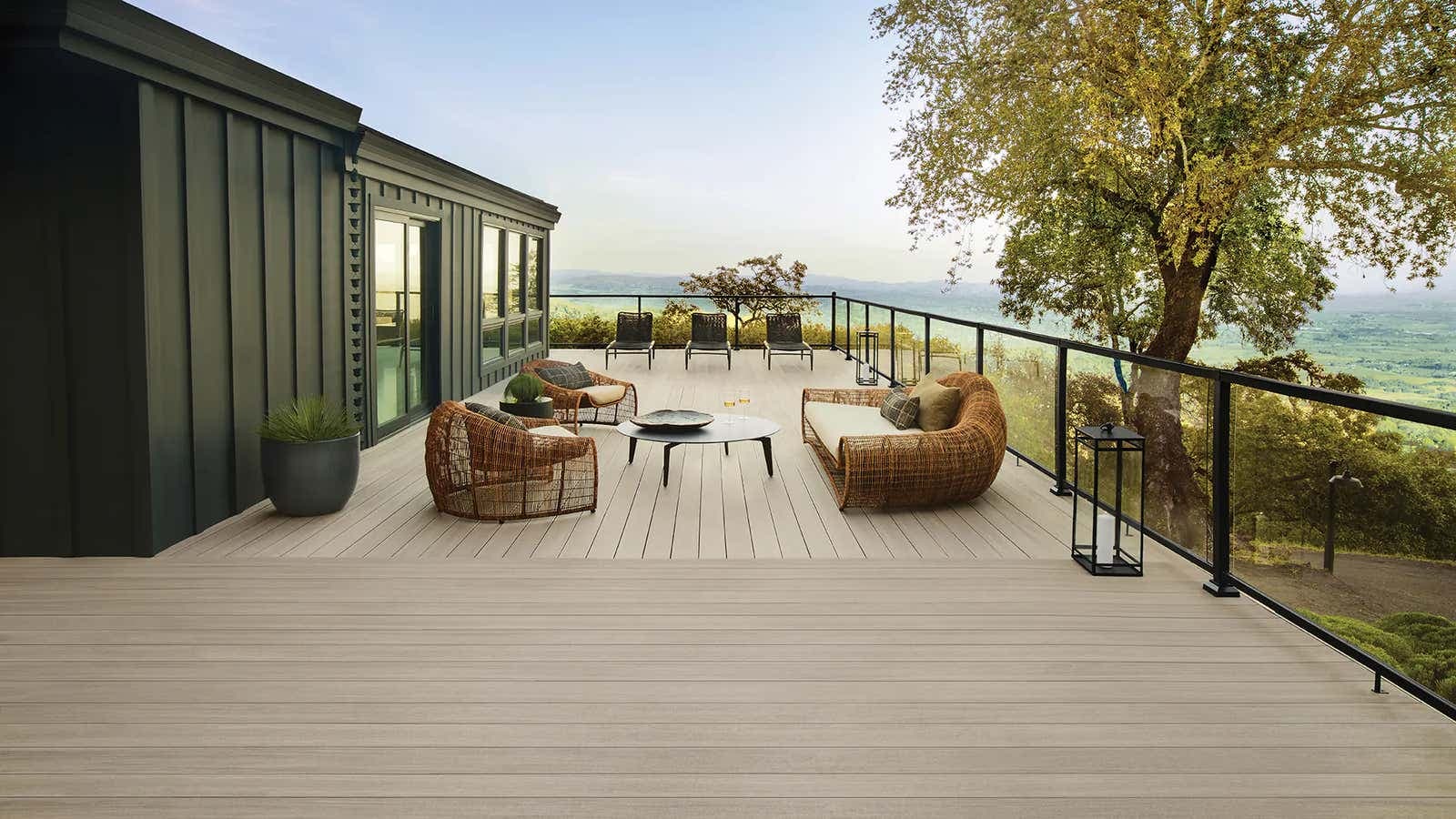
Understanding Composite Decking for Small Spaces
Composite decking is engineered to combine recycled wood fibers and plastic, offering a material that resists rot, splinters, and insect damage. For compact outdoor spaces, its consistent appearance and reduced maintenance requirements can be a significant advantage, allowing more time to enjoy the space rather than maintaining it.
Unlike traditional wood, composite boards maintain their color and grain without the need for regular staining or sealing. This consistency is beneficial in smaller areas where visual uniformity can make the space feel larger and more cohesive. Many composite options also feature cooler-underfoot technology, a consideration for sun-exposed areas often found in compact designs.
Maximizing Usable Space with Decking Profiles
The profile of the composite decking boards you choose can influence the perception and utility of a compact space. Standard boards typically come in common widths, but some collections offer narrower or wider profiles that can subtly alter the visual flow.
Consider a layout that runs parallel to the longest dimension of your space to enhance a sense of depth. For very small or irregularly shaped areas, a diagonal lay can sometimes create an illusion of greater expanse, though this often results in more material waste due to cuts.
Many composite decking lines, such as those from Trex, TimberTech, and Fiberon, offer different board lengths. Planning your layout to minimize seams can contribute to a cleaner, more expansive look, especially in a compact design. Selecting longer boards where possible can reduce visual interruptions.
Support Structures and Decking Assembly
Composite decking requires a robust substructure, typically built from treated lumber, to provide adequate support and ensure proper drainage and ventilation. In compact spaces, the design of this substructure is critical. Ensure that joist spacing adheres strictly to the manufacturer's specifications for the chosen composite board, as improper spacing can lead to sagging or premature wear.
For coastal environments like Cape May, NJ, the substructure materials should be selected for their resistance to salt air and humidity. While composite decking itself is dense and often described as marine-grade standard, the underlying frame needs similar consideration. Always confirm the specific assembly requirements for your chosen composite decking collection.
Ventilation beneath the deck is vital to prevent moisture buildup, which can affect both the decking and the substructure. Even in compact areas, ensure there is sufficient airflow, especially if the deck is close to the ground or enclosed on multiple sides. This helps to maintain the integrity of the decking and can contribute to its longevity.
Project Access and Material Logistics
For compact outdoor spaces, project access can be a significant logistical challenge. Consider how materials will be delivered and stored on-site. Long composite decking boards may be difficult to maneuver through narrow gates, side yards, or interior pathways. Prior planning for material staging is essential to avoid damage and delays.
Work with your supplier to understand delivery options and potential limitations based on your property's access points. Confirming current lines, colors, and delivery timing with a local branch is recommended. Some manufacturers offer a range of board lengths, which can be useful when working with tight access, allowing for shorter, more manageable pieces if necessary.
Similarly, debris removal from cuts and packaging needs to be factored into your project plan. Keeping the work area clear and organized is particularly important in small spaces to maintain safety and efficiency.
Worked Example: A Compact Courtyard Deck
Consider a courtyard in Cape May, NJ, measuring 10 feet by 12 feet, where you want to install a composite deck. This space has a single 3-foot wide gate for access.
To cover the 10-foot by 12-foot area (120 square feet), you will need approximately 20 boards if laid parallel to the 10-foot dimension (10 feet / 0.5 feet per board = 20 boards). If laid parallel to the 12-foot dimension, you would need 24 boards (12 feet / 0.5 feet = 24 boards to cover 12 feet width, and the 10-foot boards would need to be cut). Laying them parallel to the 10-foot dimension minimizes cuts for the main boards and maximizes material efficiency.
You might consider coordinating delivery to a time when a wider pathway or temporary access can be arranged, or explore if shorter board lengths are available to reduce handling challenges, even if it means more seams.
Before you order
- Measure your compact outdoor space accurately, noting all dimensions and existing obstructions.
- Evaluate access points for material delivery and debris removal.
- Choose a composite decking profile and color that visually enhances the space.
- Verify manufacturer's specific substructure requirements, including joist spacing and ventilation.
- Plan your board layout to minimize waste and maximize the visual flow of the space.
- Consider cooler-underfoot options if the space receives significant sun exposure.
- Request a material quote with exact dimensions, desired profile, and your project ZIP code.
Confirm installation details, approved uses and warranty terms in the current instructions for the exact product and profile. Your installer should verify the substrate, structure and applicable project requirements.
This is a planning guide for projects in Cape May, NJ. Ask our team to confirm availability, delivery to your ZIP code and which branch can support your order.
Questions to help you decide
Is composite decking suitable for coastal areas like Cape May, NJ?
Yes, composite decking is generally well-suited for coastal environments. Its engineered composition resists moisture, salt air, and insect damage, which are common concerns in coastal regions. Brands like Trex, TimberTech, and Fiberon offer options that are designed to withstand these conditions and maintain their appearance over time.
How do I choose the right color for a small deck?
For small decks, lighter colors can often make the space feel more open and expansive by reflecting light. However, darker colors can also create a cozy, defined atmosphere. Consider the surrounding architecture and landscaping, as well as the amount of sun exposure your deck receives. Some composite decking lines offer cooler-underfoot options, which might be a factor if your deck is in direct sun.
What maintenance is required for composite decking in a compact space?
One of the key advantages of composite decking is its low maintenance. Typically, it only requires an annual wash with soap and water to remove dirt and debris. Unlike wood, it does not need sanding, staining, or oiling. This minimal upkeep is particularly beneficial for compact spaces where ease of maintenance contributes to overall enjoyment.
Ready to Plan Your Composite Decking Project?
To get started on your compact outdoor space in Cape May, NJ, request a material quote. Provide your project dimensions, the exact composite decking profile you are considering, and your ZIP code. We can also help confirm current availability and service options for your area. Visit our main composite decking page for more information on available products: composite-decking.
Request a material quote →