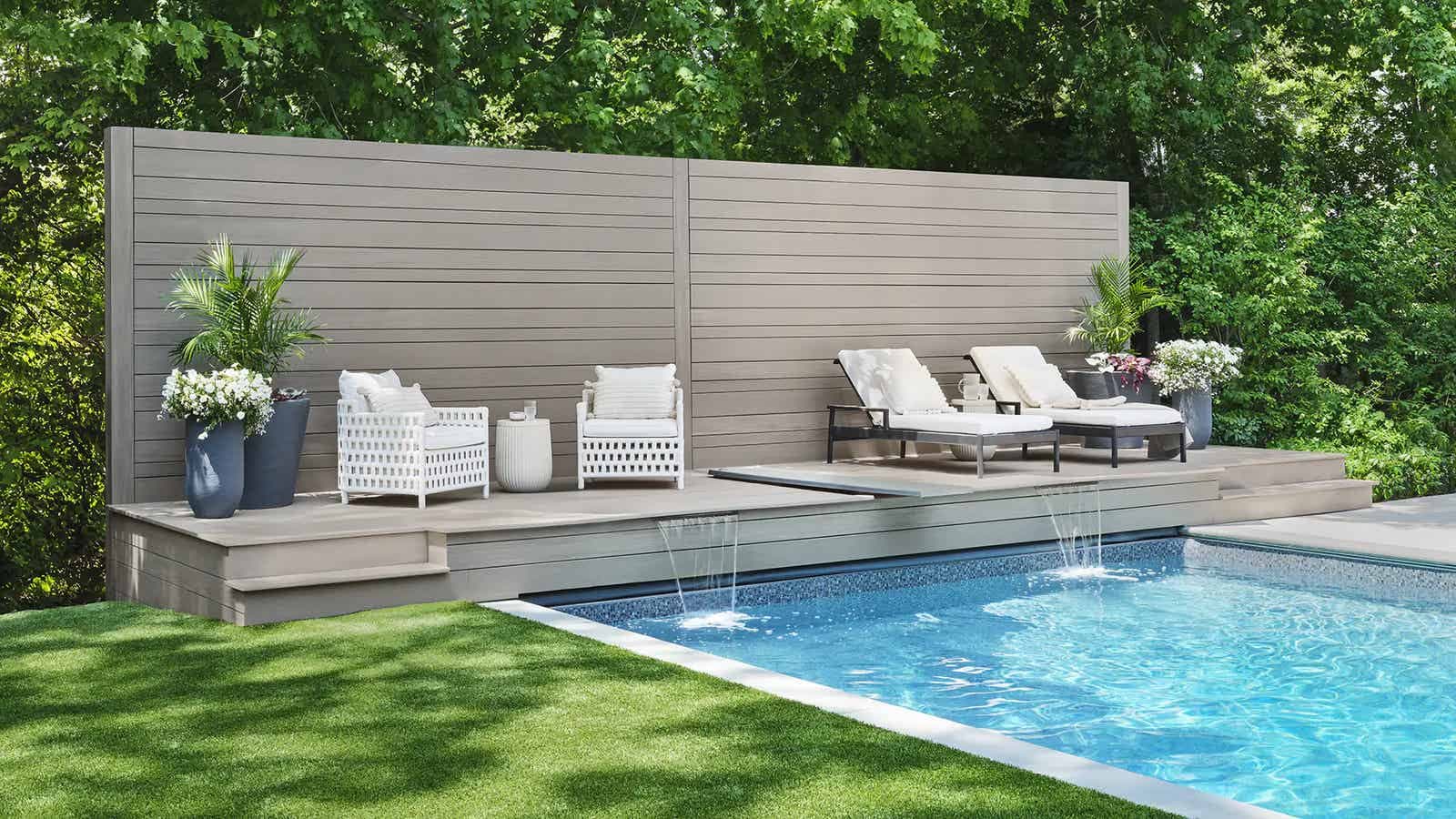
Why PVC Decking for Austin Pool Terraces?
PVC decking is a strong option for pool terraces due to its inherent resistance to moisture. It is 100% synthetic, meaning it contains no wood fibers that can swell, stain, or rot when exposed to standing water, splash zones, or even salt spray, if applicable. This makes it a reliable choice for the constant wetness associated with a pool area.
The material's composition also contributes to its low maintenance profile. Capped polymer surfaces are designed to shed common spills like grease and wine, which can be cleaned with soap and water. This ease of cleaning is a significant advantage for a pool terrace, where spills and dirt are common occurrences.
Additionally, PVC decking can be lighter than some hardwood or composite options, which may facilitate easier handling and installation, particularly for elevated or complex deck designs.
For those considering the environmental impact, PVC decking is made from 100% recyclable material.
Understanding PVC Decking Profiles and Appearance
PVC decking is available in various collections, such as TimberTech Azek's Vintage, Landmark, and Harvest lines. These collections offer different aesthetics, often designed to mimic the look of natural wood with varying grain patterns and color depths. For an Austin pool terrace, you might consider lighter color options, as some PVC decking is available with heat-mitigating color technology, which can help reduce the surface temperature of the boards in direct sunlight.
The boards are full PVC with advanced capping, providing a durable and attractive surface. When planning, consider how the chosen profile and color will complement your home's exterior and the pool area's overall design. Sample boards can help visualize the final appearance and confirm color perception in natural light.
Planning for Water Management and Drainage
While PVC decking is waterproof, proper water management and drainage beneath and around the deck are still crucial. Ensure the underlying structure and surrounding landscape are designed to direct water away from the foundation and prevent pooling. Even though the decking itself won't rot, stagnant water underneath can create other issues, such as promoting algae growth on the deck surface or affecting the sub-structure.
Consider the slope of the sub-structure and the spacing between boards to allow water to drain efficiently. Always refer to the specific manufacturer's installation guidelines for recommended board spacing, as this can vary and is essential for both drainage and proper material performance.
Edge Details and Fascia for Pool Terraces
The edges of your pool terrace require careful planning for both aesthetics and safety. PVC decking systems typically offer matching fascia boards or trim pieces that provide a finished look around the perimeter of the deck and along stairs. These components conceal the deck's substructure and can create a seamless transition from the deck surface to other elements of your pool area.
When selecting edge profiles, consider the visual impact and how they interact with coping around the pool. A clean, consistent edge can enhance the overall appeal of the terrace. Discuss edge finishing options with your installer to ensure a polished and safe result.
Hypothetical Project Example: Austin Pool Terrace
Let's consider a hypothetical pool terrace project in Austin, TX. The homeowner wants to build a rectangular deck measuring 16 feet by 20 feet around a new inground pool. They have chosen a specific PVC decking profile that comes in 16-foot lengths and has a nominal width of 5.5 inches. The goal is a low-maintenance, durable surface that can withstand the Austin sun and frequent pool splashes.
First, calculate the total area: 16 feet x 20 feet = 320 square feet. Since the chosen boards are 16 feet long, this dimension aligns perfectly with one side of the deck, minimizing cuts. For the 20-foot width, the number of boards needed can be estimated. A 5.5-inch wide board means approximately 2.18 boards per linear foot (12 inches / 5.5 inches). For a 20-foot width, this translates to 20 feet * 12 inches/foot / 5.5 inches/board = approximately 43.6 boards. Since you cannot purchase partial boards, 44 boards would be needed for each 16-foot run.
Therefore, the initial estimate for full boards would be 44 boards * 16 feet long. This calculation provides an area-equivalent coverage, but actual purchase quantity should account for waste, minor cuts, and any specific layout patterns like picture framing. For straight runs, purchasing a few extra boards (typically 5-10%) is often recommended to account for cuts and potential future repairs. This example assumes a simple parallel layout; a diagonal layout or complex borders would require a more detailed cut plan and likely more material.
Additionally, the project would require corresponding fascia boards for the perimeter, fasteners (hidden or face-fastened, depending on product specifications), and proper support joists and posts. The homeowner would also need to ensure the existing or new sub-frame is adequate for the decking material, considering local building codes and the expected load, especially around a pool where people gather.
Before you order
- Confirm local building codes and permits required for deck construction in Austin, TX.
- Verify the specific PVC decking product's suitability for wet environments and direct sun exposure.
- Select a PVC decking profile and color that complements your home and offers any desired heat-mitigating properties.
- Plan for adequate drainage and ventilation beneath the deck structure to prevent moisture issues.
- Choose appropriate edge finishing, fascia, and trim pieces for a polished and safe pool terrace.
- Estimate material quantities, including decking boards, fasteners, and support structures, accounting for waste.
- Consider the type of sub-structure required and ensure it is compatible with PVC decking and local regulations.
- Review manufacturer installation guidelines for board spacing, fastening, and maintenance recommendations.
- Request samples of chosen PVC decking to assess color and texture in your specific outdoor lighting conditions.
Confirm installation details, approved uses and warranty terms in the current instructions for the exact product and profile. Your installer should verify the substrate, structure and applicable project requirements.
This is a planning guide for projects in Austin, TX. Ask our team to confirm availability, delivery to your ZIP code and which branch can support your order.
Questions to help you decide
Is PVC decking slippery when wet, especially around a pool?
The degree of slip resistance can vary by manufacturer and specific product line. It's always recommended to exercise caution around wet surfaces, especially pool surrounds. Review product specifications for any available slip-resistance ratings.
How do I clean PVC decking around a pool?
PVC decking is generally easy to clean. For routine maintenance, soap and water are often sufficient to remove dirt, pool chemicals, and general grime. For stubborn stains, consult the manufacturer's cleaning guide for specific recommendations on compatible cleaning products. Avoid using harsh chemicals or abrasive scrubbers that could damage the capped surface.
Can PVC decking get hot in the Austin sun?
Like many outdoor materials, PVC decking can absorb heat from direct sunlight. However, some PVC decking lines offer 'heat-mitigating' color options that are engineered to stay cooler than darker shades. Lighter colors typically reflect more sunlight and can feel cooler to the touch. When selecting your decking, consider the sun exposure of your pool terrace and inquire about these specialized color options.
Ready to Plan Your Austin Pool Terrace?
Request a material quote for PVC decking by providing your project dimensions, desired profile, and ZIP code. Confirm current availability and service options for your Austin, TX project.
Request a material quote →