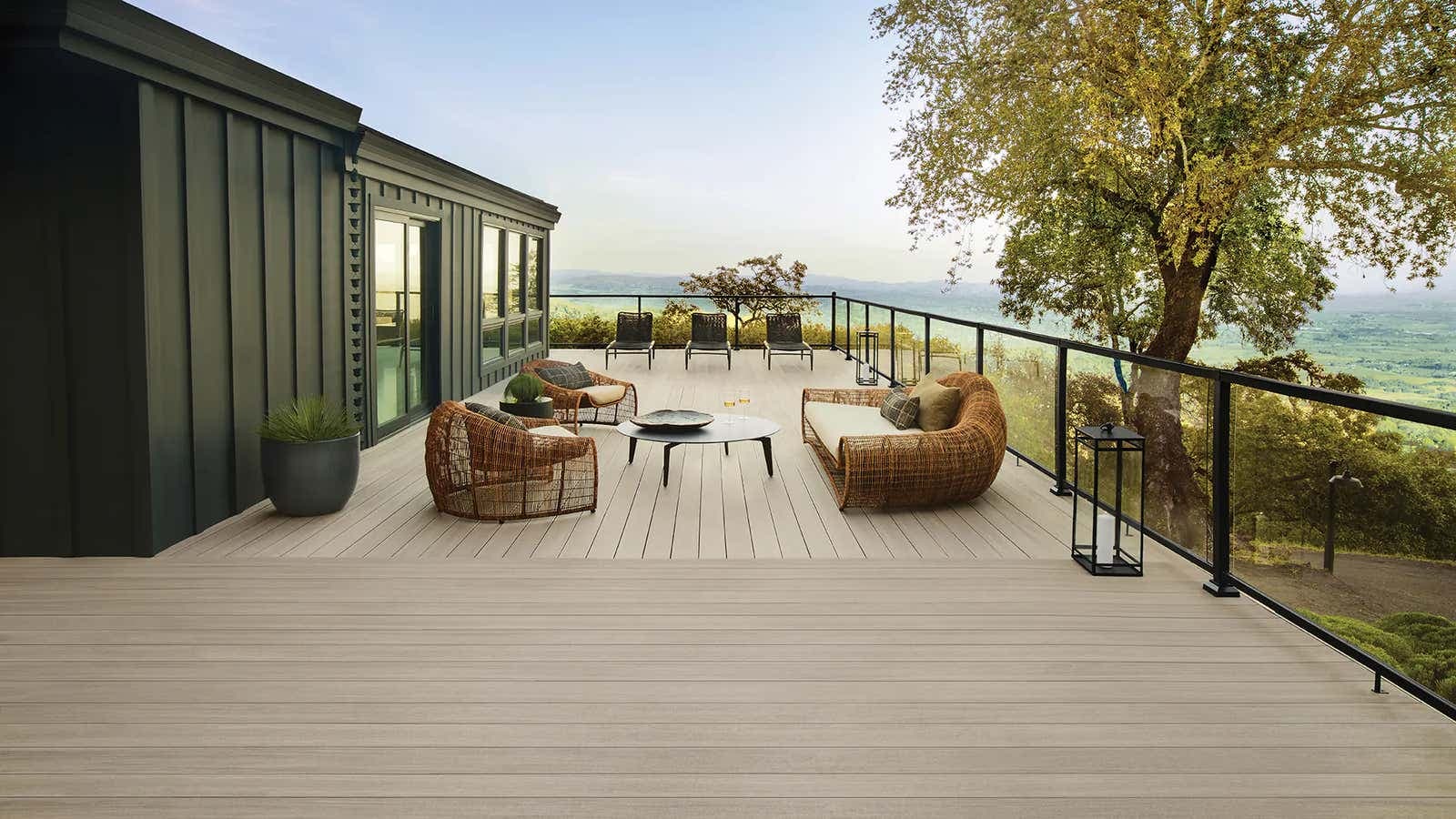
Why Composite Decking for Compact Spaces?
Composite decking is an engineered material typically made from a blend of recycled plastic and wood fibers. This composition results in a durable board designed for low maintenance, which is a significant advantage for any deck, but particularly for compact spaces where access for extensive upkeep might be limited. Unlike traditional wood, composite decking does not require regular staining, sealing, or painting, simplifying long-term care.
For smaller outdoor areas, the consistent appearance of composite boards—uniform in color and grain—can contribute to a cleaner, more organized aesthetic. This consistency can help a compact space feel less cluttered and more intentionally designed. Many composite lines also offer cooler-underfoot options and capped shells that resist humidity, which can be beneficial in Austin's climate.
The material's resistance to rot, splinters, and insect damage also means a longer potential service life with less intervention, allowing you to enjoy your compact deck with minimal fuss.
Maximizing Usable Space with Decking Layouts
In a compact outdoor space, every inch matters. When planning your deck, consider how the layout can enhance the perception of space and improve functionality. For instance, laying boards parallel to the longest dimension of your space can visually extend it. Alternatively, a diagonal layout can add a sense of movement and make a small area feel more dynamic, though it may result in more material waste due to cuts.
Consider incorporating built-in seating or planters directly into your deck design. This can save valuable floor space that freestanding furniture would occupy and create a cohesive look. For example, a low bench along one edge of a balcony deck can provide seating without obstructing views or pathways. When designing built-ins, ensure adequate structural support and proper drainage for planters to protect the decking.
Board width can also influence the feel of a compact space. Wider boards might reduce the number of visible seams, creating a more expansive look, while narrower boards can add intricate detail. Discuss board width options with your supplier to see what is available in the collections you are considering.
Collection-Specific Support and Installation Details
Different composite decking collections, such as those from Trex, TimberTech, and Fiberon, have specific installation guidelines, particularly regarding joist spacing and fastening systems. These details are crucial for the structural integrity and longevity of your deck. For compact spaces, ensure that your chosen product's requirements align with your project's scale and existing sub-structure, if applicable.
Understanding these requirements helps in planning your substructure and ensures proper support for the decking. Always consult the manufacturer's installation guide for the exact product you intend to use.
Fastening methods also vary. Hidden fastening systems, which create a clean, fastener-free surface, are popular for composite decking and can contribute to a streamlined look in a compact area. Face fastening, using color-matched screws, is another option. Confirm the compatibility of fasteners with your chosen decking product. Proper ventilation beneath the deck is also important, even in small spaces, to prevent moisture build-up and ensure the material performs as intended.
Hypothetical Project Example: Austin Balcony Deck
Consider a hypothetical balcony in Austin, TX, measuring 8 feet by 5 feet, which needs a new decking surface. The goal is to create a small, inviting outdoor seating area. For this 40-square-foot space, composite decking is chosen for its low maintenance and consistent appearance.
Assuming a standard composite board length of 12 feet and a width of 5.5 inches (0.458 feet), we can calculate the material needed. To cover the 8-foot length, you would need approximately 8 feet / 0.458 feet/board = 17.47 boards if laid parallel to the 5-foot width. If using 12-foot long boards, you would cut them to 5-foot lengths, yielding two 5-foot pieces and one 2-foot offcut per 12-foot board. For an 8-foot wide area, if laid parallel to the 8-foot dimension, you would need 8 feet / 0.458 feet/board = 17.47 boards. Since boards are typically sold in full lengths, you would need to purchase enough 12-foot boards to cover the 5-foot width with 8-foot lengths. This means 5 feet / (12 feet / (8 feet / 0.458 feet)) is not the calculation. Instead, you need enough 8-foot lengths to cover the 5-foot width. This means 5 feet / 0.458 feet/board = 10.9 boards. Since boards are sold in 12-foot lengths, you'd purchase 11 boards and cut them to 8-foot lengths. Each 12-foot board would yield one 8-foot length and a 4-foot offcut. Therefore, you would need 11 full 12-foot boards.
Given the compact size, a simple picture-frame border using fascia boards could define the edges, adding a finished look without overwhelming the space. The consistent color of composite decking would help the small balcony feel cohesive and modern, providing a perfect spot for morning coffee.
Considering Access and Logistics for Small Projects
For compact outdoor spaces, especially those on upper floors or with limited access, logistics can be a significant factor. Consider how materials will be delivered and moved to the project site. Composite decking boards, while lighter than some dense hardwoods, can still be long and unwieldy, making transport through narrow hallways, elevators, or stairwells challenging.
Verify the length of boards available in your chosen collection and plan your delivery and staging areas carefully. For a small balcony or patio, it might be feasible to have boards cut to shorter lengths if the supplier offers this service, or to plan for on-site cutting. Discuss these logistical details with your supplier when requesting a quote to ensure a smooth process.
Also, consider where waste materials will be stored and disposed of. Even small projects generate offcuts and packaging. Planning for these practicalities beforehand can prevent delays and complications during installation.
Complementary Materials for Compact Decks
To enhance your compact composite deck, consider integrating complementary materials. For instance, a small area rug can define a seating zone and add a touch of color and texture. Planters with drought-tolerant native plants suitable for Austin's climate can bring greenery without requiring excessive maintenance.
Low-profile LED lighting integrated into the deck surface or railings can extend the usability of your compact space into the evening hours without taking up valuable footprint. Consider composite fascia boards for a clean, finished edge, and explore different railing options that fit the scale of your space, such as slender metal balusters or clear glass panels to maintain an open feel.
Explore options for benches or storage solutions that blend seamlessly with the decking. For example, a storage bench made with similar materials can serve a dual purpose, keeping the compact area tidy and functional. You can find related products like hardwood decking for accent pieces, or PVC decking for specific moisture-prone areas.
Before you order
- Measure your compact outdoor space accurately, noting all dimensions and any obstructions.
- Consider the primary function of your compact deck (seating, plants, pathway) and how to maximize usable space.
- Research different composite decking collections (Trex, TimberTech, Fiberon) for available colors, profiles, and textures.
- Review manufacturer installation guides for joist spacing and fastening system requirements for your chosen product.
- Plan for material delivery and site access, especially for upper-level balconies or narrow pathways.
- Evaluate options for integrated features like built-in seating or planters to save space.
- Determine if a picture-frame border or fascia boards are desired for a finished look.
- Consider complementary elements such as lighting, planters, or small outdoor rugs.
- Obtain a material quote with project dimensions, exact profile, and your ZIP code.
Confirm installation details, approved uses and warranty terms in the current instructions for the exact product and profile. Your installer should verify the substrate, structure and applicable project requirements.
This is a planning guide for projects in Austin, TX. Ask our team to confirm availability, delivery to your ZIP code and which branch can support your order.
Questions to help you decide
Can I install composite decking directly over an existing concrete patio in Austin?
Installing composite decking directly over concrete often requires a sleeper system to create proper ventilation and drainage. Without adequate airflow, moisture can get trapped, potentially impacting the decking material over time. Always consult the specific manufacturer's installation guidelines for your chosen composite decking product to ensure compatibility and proper installation methods. Some products may offer low-clearance options, but a sub-frame is generally recommended.
What is the best way to clean composite decking in a compact Austin outdoor space?
Composite decking is designed for low maintenance, typically requiring only an annual wash with soap and water to remove dirt, pollen, and debris. For compact spaces, a soft-bristle brush or a pressure washer set to a low-pressure fan tip can be used. Avoid harsh chemicals or abrasive cleaners, as these can damage the surface. Always check the manufacturer's cleaning recommendations for your specific decking collection to maintain its appearance and warranty.
Are there cooler-underfoot composite decking options suitable for Austin's heat?
Yes, several composite decking manufacturers offer 'cooler-underfoot' or 'cool-to-the-touch' technology in some of their collections. These boards are engineered to absorb and retain less heat than traditional composites, which can make a noticeable difference in direct sunlight, especially in Austin's warm climate. When selecting your composite decking, inquire about these specific features and compare options from different brands like Trex, TimberTech, or Fiberon to find a product that meets your needs for comfort.
Ready to Transform Your Compact Outdoor Space?
Request a material quote today with your project dimensions, exact profile, and ZIP code to confirm current availability and service options for composite decking.
Request a material quote →