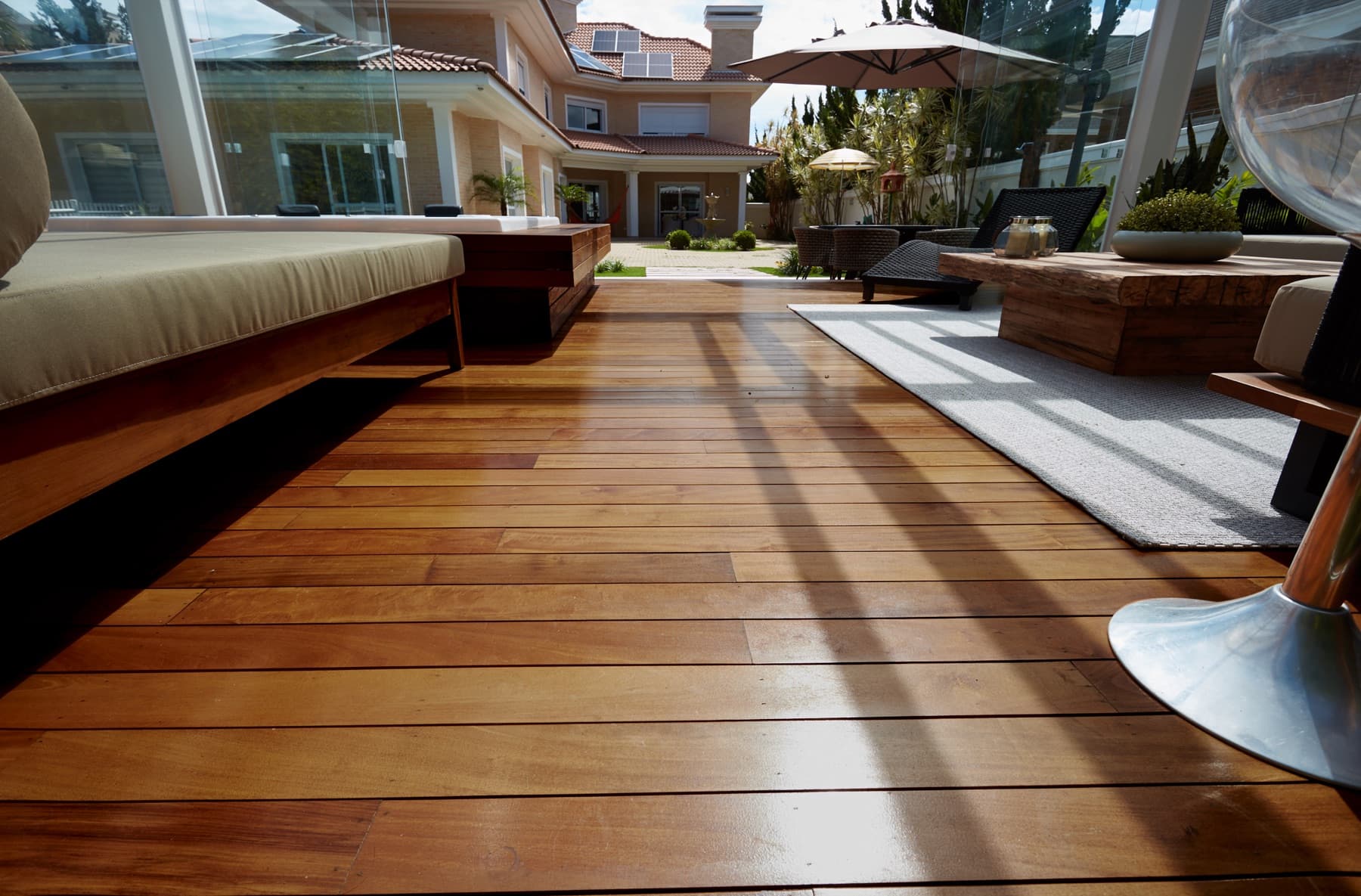
Assessing Your Existing Deck Frame
Before selecting any new decking material, a thorough inspection of your existing deck frame is essential. The structural integrity of the joists, beams, and posts will determine if they can safely support the weight of new hardwood decking. Look for signs of rot, insect damage, or excessive warping. Pay close attention to connections and fasteners, as these can degrade over time.
Hardwood decking, particularly dense species like Ipe and Cumaru, can be heavier than some alternative materials. Ensure your frame is robust enough for the increased load. Consulting with a qualified builder or structural engineer in Austin can provide peace of mind and identify any necessary repairs or reinforcements before you proceed with material selection.
Why Choose Hardwood for Your Renovation?
Hardwood decking, such as Ipe and Cumaru, offers distinct advantages for renovation projects. These species are known for their exceptional density, which contributes to their resistance to rot, insects, and decay. This natural resilience means they often outlast many other decking materials.
Beyond durability, hardwood provides a natural aesthetic that can elevate the appearance of your outdoor space. The rich, varied grain patterns and color tones of species like Ipe, ranging from reddish-brown to olive-brown, or Cumaru, with its warm hues, offer a sophisticated look. While there is an initial investment, the long-term performance and minimal maintenance, beyond annual cleaning and optional oiling to retain color, often make hardwood a cost-effective choice over decades of service.
Ipe, also known as Brazilian walnut, is particularly noted for its strength and resistance to weather changes, mold, and termites. It also carries a Class A fire rating. Cumaru is another very durable tropical hardwood that is resistant to termites and weather changes, offering stiffness, strength, and extreme hardness.
Both Ipe and Cumaru are considered marine-grade standards, making them suitable for coastal environments. Salt air and spray do not typically affect these dense woods, which is a consideration for any outdoor space exposed to varying conditions.
Selecting Your Hardwood Species: Ipe vs. Cumaru
Choosing between hardwood species like Ipe and Cumaru often comes down to specific project needs, aesthetic preferences, and budget. Both are excellent choices for outdoor decking due to their inherent strength and resistance.
Ipe (Handroanthus spp.), often called Brazilian walnut, is considered a benchmark for hardwood decking. Its color ranges from reddish-brown to olive-brown. Ipe's minimal post-installation movement and natural resistance to weather changes, mold, and termites make it a premium option.
Cumaru's color palette often includes warmer, richer tones and it is known for emitting a scent of cinnamon and vanilla when worked. It provides a robust, long-lasting deck surface at a slightly lower price tier than Ipe.
Consider how each species' natural color and grain will complement your Austin home's exterior and landscaping. Both will weather to a silvery-gray patina if left untreated, or their original color can be maintained with a UV-blocking sealer or oil.
Planning Board Dimensions and Layout
The dimensions of your hardwood decking boards will influence both the appearance and the installation process. Hardwood decking is available in various profiles and lengths. For a renovation, consider how new board lengths will align with your existing frame's joist spacing and any planned seam locations.
Common profiles include standard decking boards that can be face-fastened or installed with hidden fasteners. When planning your layout, account for the natural movement of wood and follow manufacturer guidelines for proper board spacing to allow for drainage and ventilation, which is especially important in Austin's climate. A well-planned layout can minimize cuts and waste, optimizing material use.
Thicker boards may allow for wider spacing, but always consult product specifications. If you plan to incorporate a picture-frame border or diagonal patterns, these will require additional calculations for cuts and material quantities.
Estimating Material Needs for a Deck Renovation
Accurately estimating material needs for a hardwood deck renovation involves measuring your existing deck area and accounting for cuts and waste. Here’s a hypothetical example:
Imagine you are renovating a rectangular deck that measures 12 feet by 16 feet, totaling 192 square feet. You plan to use hardwood decking boards that are nominally 6 inches wide (0.5 feet) and available in various lengths, including 12-foot and 16-foot sections.
For a straight layout: To cover the 16-foot length with 6-inch wide boards, you would need 16 feet / 0.5 feet/board = 32 boards across the 12-foot width. If you use 12-foot long boards for the 12-foot dimension, you would need 32 boards. However, to cover the full 16-foot length, you might choose 16-foot boards.
Using 16-foot long boards for the 16-foot dimension: You would need 12 feet (width) / 0.5 feet/board = 24 boards. Each board is 16 feet long. Total lineal feet: 24 boards * 16 feet/board = 384 lineal feet. If ordering in board feet, and assuming a 1x6 (nominal 0.75" x 5.5" actual) profile, this would be roughly 384 lineal feet * (5.5/12) square feet per lineal foot = 176 square feet of actual board surface. You would typically add 10-15% for waste and cuts, especially for end cuts and potential board defects.
If your project involves complex cuts, such as around posts or railings, or if you plan a diagonal layout, increase your waste factor. Always round up to the nearest full board or bundle when ordering to ensure you have enough material, as specific lengths may only be available in certain increments.
Before you order
- Inspect the existing deck frame for structural integrity, rot, and insect damage.
- Determine if the existing frame can support the weight of hardwood decking.
- Decide between Ipe, Cumaru, or other hardwood species based on durability, appearance, and budget.
- Confirm available board profiles and lengths from your supplier.
- Measure your deck area accurately and calculate material needs, including a waste factor.
- Plan your decking layout (straight, diagonal, picture frame) and consider fastener type (hidden vs. face-fastened).
- Account for proper board spacing for ventilation and drainage.
- Consider the long-term maintenance requirements and desired aesthetic (natural silvering vs. maintained color).
- Obtain a material quote with project dimensions, exact profile, and ZIP code.
Confirm installation details, approved uses and warranty terms in the current instructions for the exact product and profile. Your installer should verify the substrate, structure and applicable project requirements.
This is a planning guide for projects in Austin, TX. Ask our team to confirm availability, delivery to your ZIP code and which branch can support your order.
Questions to help you decide
How long does hardwood decking typically last in Austin's climate?
With proper installation and care, high-quality hardwood decking like Ipe can last up to 75 years, and Cumaru over 25 years. Their natural density and resistance to rot and insects help them withstand varying weather conditions, including the heat and humidity common in Austin.
Does hardwood decking require special maintenance?
Hardwood decking is relatively low maintenance. A wash once a year is generally sufficient. If you wish to preserve the original rich brown tones of the wood, an annual application of a UV-blocking sealer or oil is recommended. If left untreated, the wood will naturally weather to a beautiful silvery-gray patina without compromising its structural integrity.
Can I reuse my existing deck fasteners with new hardwood decking?
It is generally not recommended to reuse old fasteners, especially when upgrading to a dense material like hardwood. New, appropriate fasteners (either hidden fastening systems or corrosion-resistant deck screws designed for hardwoods) should be used to ensure secure installation and to prevent staining or damage to the new decking. Always consult the specific product guidelines for fastener recommendations.
Ready to Transform Your Austin Deck?
For your deck renovation project, request a material quote today. Provide your project dimensions, desired hardwood profile, and ZIP code to confirm current availability and service options for Ipe, Cumaru, or other hardwood decking materials.
Request a material quote →