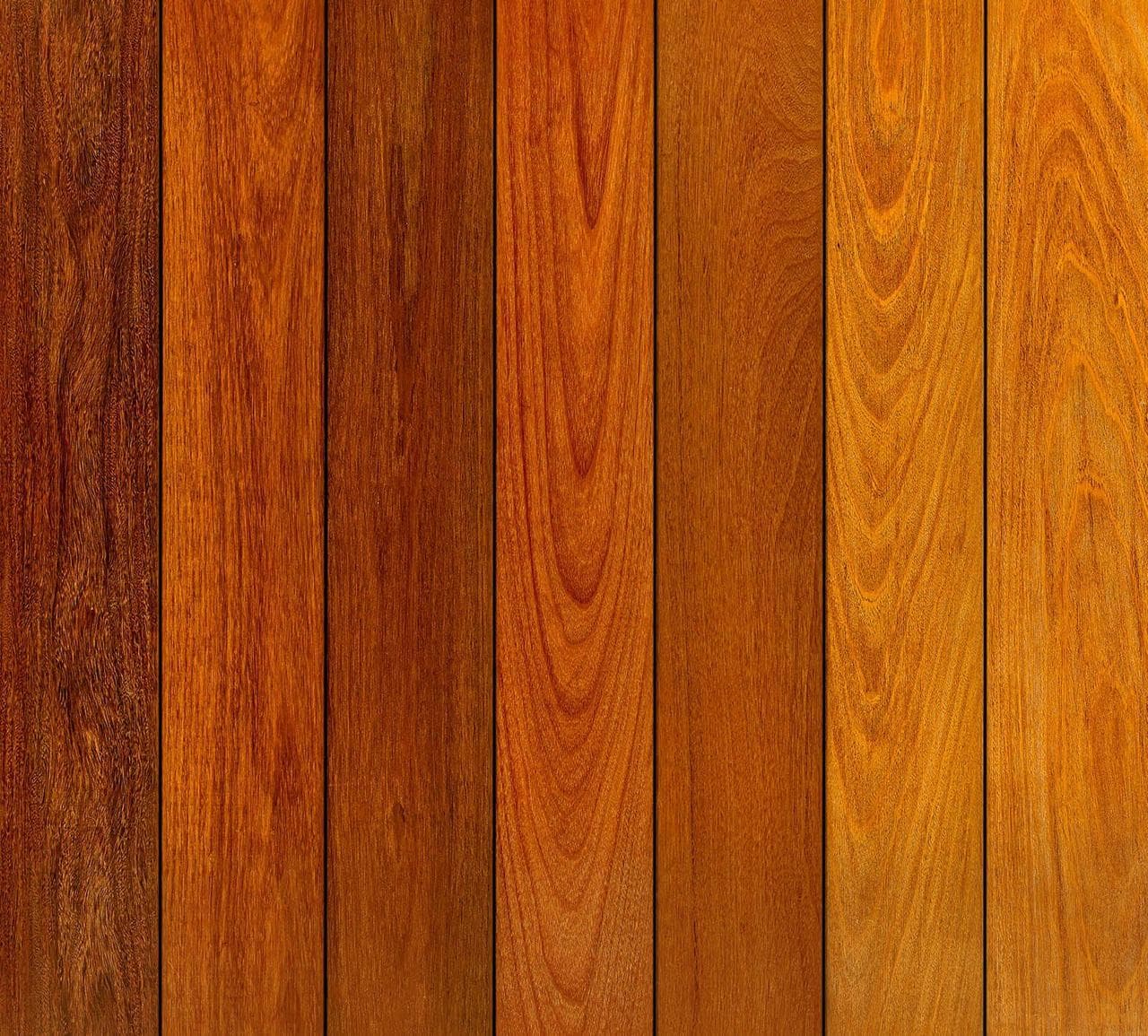
Ipe: The Benchmark for Durability and Density
Ipe, often referred to as Brazilian Walnut, is a dense hardwood native to South America. It is renowned for its exceptional durability and strength, making it a benchmark material for outdoor applications like decking. Its botanical name is Handroanthus spp.
Visually, Ipe lumber typically ranges from a reddish-brown to an olive-brown, presenting a bold grain that can convey a sense of luxury. Beyond its appearance, Ipe offers natural resistance to rot, insects, and mold. It also exhibits minimal movement post-installation, contributing to its long-term stability in various weather conditions. These attributes make Ipe a choice for projects where longevity and robust performance are paramount.
Ipe wood is available in various profiles and sizes, commonly in 1"x2" through 6"x6" dimensions and lengths from 3 to 24 feet. It is supplied as air-dried (AD) or kiln-dried (KD) lumber.
Garapa: A Lighter Tone with Notable Hardness
Garapa, another South American hardwood, provides an alternative with its distinct aesthetic and performance characteristics. While also a dense and durable wood, Garapa typically presents a lighter, golden-yellow to pale brown hue, which can lighten further to a silvery-gray patina if left untreated. This color profile offers a different visual appeal compared to Ipe's deeper tones.
Garapa is recognized for its good hardness and resistance to decay, making it a suitable material for decking and other outdoor structures. It generally offers a smoother grain pattern compared to Ipe, which some prefer for a more uniform appearance. Like Ipe, Garapa is a natural wood product that will require consideration for acclimation and maintenance to retain its desired look and performance.
Visual Appearance and Weathering
The initial color of Ipe is a rich reddish-brown to olive-brown, often darkening slightly over time. If left untreated, Ipe will naturally weather to a soft, silvery-gray patina. This transformation is a common characteristic of many hardwoods exposed to UV light and the elements. Many choose to embrace this weathered look, while others prefer to maintain the original color by applying a UV-blocking sealer or deck oil.
Garapa, by contrast, starts with a golden-yellow to light brown color. Similar to Ipe, Garapa will also weather to a silvery-gray if not regularly treated with a UV-protective finish. The decision between Ipe and Garapa often comes down to the desired initial aesthetic and how you envision your deck aging. If a deeper, more pronounced grain and darker initial tone are preferred, Ipe may be the choice. For a lighter, brighter starting point, Garapa offers a compelling option.
Density and Hardness: What the Janka Scale Reveals
The Janka hardness test measures the resistance of wood to denting and wear, providing a useful metric for comparing the durability of different species. This exceptional hardness contributes to Ipe's resistance to scratches, dents, and heavy foot traffic, making it ideal for high-use areas.
Garapa also possesses notable hardness, though typically lower than Ipe. While specific Janka ratings can vary, Garapa generally falls within a range that still makes it a very durable choice for outdoor decking, especially when compared to softer domestic woods. The difference in hardness means Ipe may offer superior resistance to impact and heavy furniture marks, while Garapa remains a robust option for most residential and light commercial applications.
Maintenance and Longevity Considerations
Both Ipe and Garapa are considered low-maintenance hardwoods, particularly when compared to some other decking materials. If you choose to let either wood naturally weather to a silver-gray, maintenance primarily involves periodic cleaning to remove dirt, debris, and mildew. This typically involves sweeping and occasional washing with a mild cleaner and water.
To preserve the original color of Ipe, regular application of a UV-blocking oil or sealer is recommended. This helps to nourish the wood and protect it from the sun's rays, which cause the graying effect. The frequency of reapplication depends on local climate, sun exposure, and the specific product used, but typically ranges from annually to every few years. Ipe is known for its remarkable longevity, with proper care extending its lifespan significantly. Garapa also benefits from similar maintenance practices to retain its golden hue.
For projects in areas with high sun exposure or significant foot traffic, the choice between Ipe and Garapa may lean towards Ipe due to its slightly higher density and proven track record in demanding conditions. However, for many residential decks, Garapa provides an excellent balance of durability and aesthetic appeal with comparable maintenance requirements if a consistent color is desired.
Project Example: A 200 sq ft Deck
Consider a hypothetical 200 square foot deck project, measuring 10 feet by 20 feet. For both Ipe and Garapa, a common decking board size is 1x6 (actual dimensions approximately 3/4 inch thick by 5.5 inches wide).
To cover a 10-foot width, you would need approximately 22 boards (10 feet * 12 inches/foot / 5.5 inches/board = 21.8 boards). If choosing 20-foot lengths, you'd need 22 boards at 20 feet each. This equates to 440 linear feet of decking (22 boards * 20 feet/board).
For Ipe, given its density, you would need specific carbide-tipped tools for cutting and drilling, and pre-drilling is essential for all fasteners to prevent splitting. Hidden fastening systems are often used for a clean aesthetic. For Garapa, similar installation considerations apply, though it might be slightly easier to work with due to its comparatively lower density. In either case, it's critical to factor in a waste percentage, typically 10-15%, for cuts, defects, and layout adjustments. For this 200 sq ft deck, you'd calculate material for 220-230 sq ft.
Before you order
- What is your desired initial color: deep reddish-brown (Ipe) or golden-yellow (Garapa)?
- Do you prefer a bolder grain pattern (Ipe) or a smoother, more uniform look (Garapa)?
- How important is maximum hardness and dent resistance for your project?
- Are you committed to regular oiling to maintain the original color, or do you prefer the silver-gray weathered look?
- Have you considered the specialized tools and installation techniques required for dense hardwoods?
- What is your project's exposure to sun, foot traffic, and other environmental factors?
- Have you obtained physical samples of both Ipe and Garapa to compare them in person?
Confirm installation details, approved uses and warranty terms in the current instructions for the exact product and profile. Your installer should verify the substrate, structure and applicable project requirements.
Questions to help you decide
Will Ipe and Garapa always turn gray?
Both Ipe and Garapa will naturally weather to a silvery-gray patina if left untreated and exposed to UV light. To maintain their original color, a UV-blocking sealer or deck oil must be applied periodically.
Is one wood easier to install than the other?
Due to its extreme density, Ipe requires specialized carbide-tipped tools for cutting and drilling, and all fastener locations must be pre-drilled. Garapa, while still a dense hardwood, may be slightly less challenging to work with than Ipe, but similar care and appropriate tools are still necessary for proper installation.
Can I use Ipe or Garapa around a pool?
Both Ipe and Garapa are suitable for pool surrounds due to their natural resistance to rot and decay. Their density also makes them resistant to warping from moisture exposure. However, like any decking material, proper drainage and ventilation are crucial for longevity.
Request a Material Quote for Your Decking Project
Ready to move forward with Ipe or Garapa decking? Provide your project dimensions, desired profile, and ZIP code to request a material quote. We can help confirm current availability and service options for your specific needs. Please note that we do not offer phone support for quotes at this time.
Request a material quote →