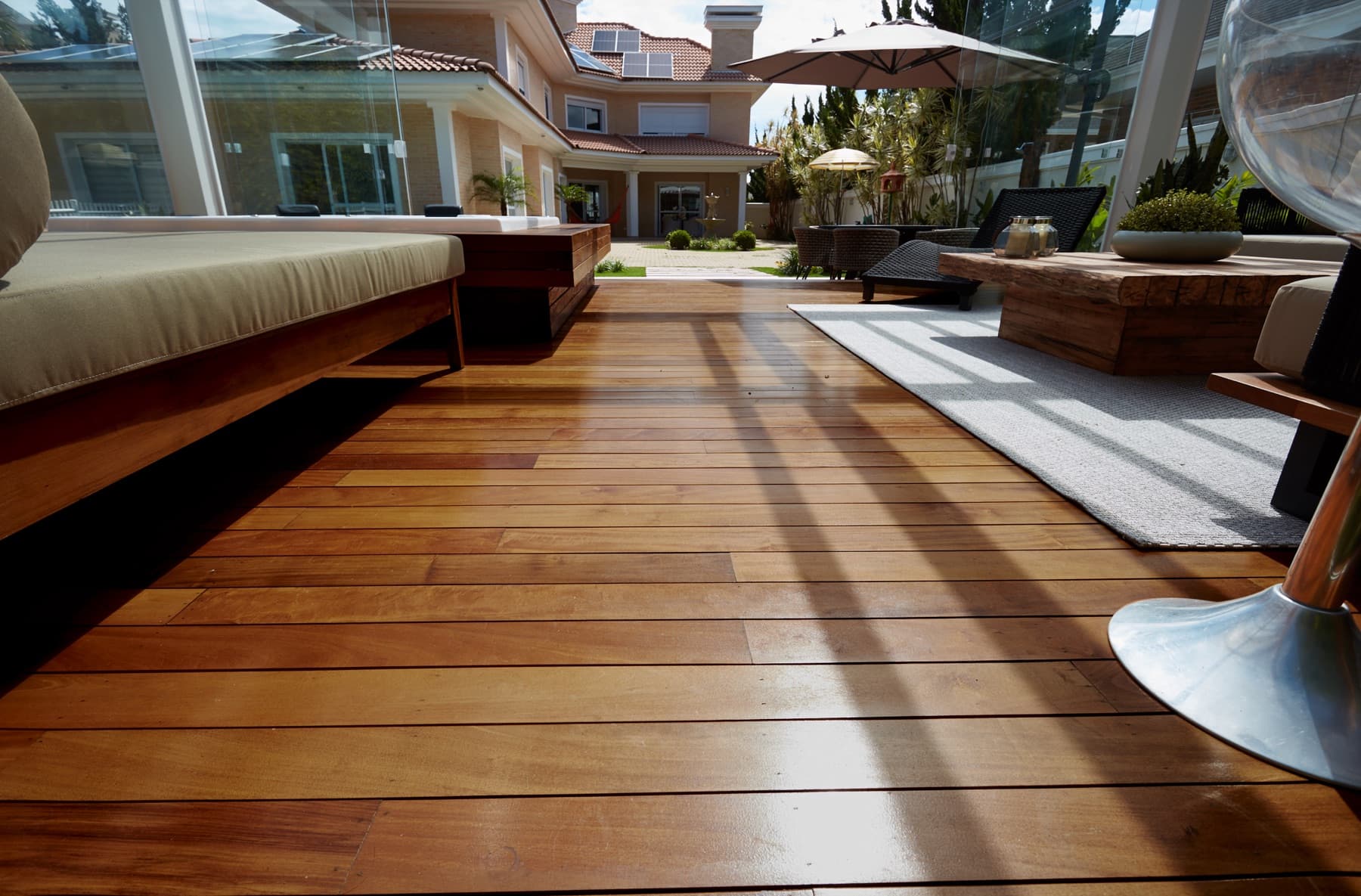
Assessing Your Existing Deck Frame
The first step in any deck renovation is a thorough inspection of your existing frame. The condition of joists, beams, and support posts will dictate the scope of your project. Look for signs of rot, insect damage, or structural weakness. Even if the current decking material is failing, the underlying structure might still be sound enough to support new hardwood. However, hardwood species like Ipe and Cumaru are denser and heavier than many common decking materials, which means your frame must be robust enough to handle the increased load.
It is recommended to consult with a qualified builder or engineer to assess the structural integrity of your existing frame. They can confirm if your current joist spacing and support system are adequate for the chosen hardwood species. Proper ventilation beneath the deck is also crucial, especially in humid climates, to prevent moisture accumulation that can compromise both the new decking and the existing frame.
Why Choose Hardwood for Your Renovation?
Hardwood decking, particularly species like Ipe and Cumaru, offers distinct advantages for renovation projects where durability and a lasting appearance are priorities. These tropical hardwoods are naturally dense, which contributes to their resistance to rot, insects, and challenging weather conditions. This inherent resilience means they often require less chemical treatment compared to some other wood species.
For homeowners in Virginia Beach, exposed to coastal conditions, the natural resistance of hardwoods to salt air and spray can be a significant benefit. While the initial investment in hardwood can be higher, its long lifespan and low maintenance requirements, such as an annual wash and optional oiling to retain color, contribute to its long-term value. Hardwood also provides a unique aesthetic, with each board displaying natural variations in grain and color.
Ipe: The Benchmark for Durability
Ipe, also known as Brazilian walnut, is a highly dense and durable hardwood. It is recognized for its reddish-brown to olive-brown tones and its capacity to withstand demanding outdoor conditions. Its density contributes to its natural resistance to rot, insects, and mold, making it a suitable choice for a long-lasting deck. Ipe's minimal movement post-installation further contributes to its stability.
When considering Ipe for a renovation, remember its density requires specialized tools and techniques for installation. While it can be left untreated to weather to a silvery-gray patina, applying a UV-blocking sealer can help preserve its original color. Ipe is available in various profiles and lengths, typically ranging from 1"x2" to 6"x6" dimensions and 3–24 ft lengths.
Cumaru: A Durable Alternative
Cumaru is another tropical hardwood known for its durability and resistance to termites and weather changes. It shares many characteristics with Ipe, offering stiffness, strength, and hardness, making it a robust option for decking. Cumaru typically exhibits reddish-brown hues and, when worked, can release a subtle scent of cinnamon and vanilla.
Like Ipe, Cumaru is naturally resistant to insects, rot, and fungi, which can reduce the need for chemical treatments. It can also be left untreated to develop a silvery-gray patina or maintained with an oil finish to retain its initial color. Cumaru is a strong contender for those seeking high performance and durability in their deck renovation.
Planning Your Hardwood Decking Renovation: A Worked Example
Consider a hypothetical deck renovation project in Virginia Beach for a 12-foot by 16-foot existing deck. The homeowner desires to replace the old decking with 5/4x6 Ipe boards (actual dimensions approximately 1 inch thick by 5.5 inches wide).
First, calculate the total deck area: 12 feet * 16 feet = 192 square feet. Next, account for board length and waste. If using 12-foot Ipe boards, each board covers 5.5 inches / 12 inches/foot * 12 feet = 5.5 square feet. The number of boards needed for area coverage is 192 sq ft / 5.5 sq ft/board = 34.9 boards. Always round up to ensure full coverage and account for cuts and potential waste, especially with dense hardwoods where offcuts might not always be reusable for other sections. Therefore, you would need to purchase approximately 36-38 boards, depending on the complexity of the deck shape and edge detailing. This calculation is for area coverage only; consult with your installer for a precise material take-off that considers specific layout, fastening methods, and trim pieces. Remember to also consider fascia boards and any stair treads if applicable, calculating these separately based on linear footage.
The project also requires compatible fasteners. For Ipe, hidden fasteners are often preferred for a clean look, but face-fastening with appropriate stainless steel screws is also an option. Ensure any chosen fasteners are suitable for dense hardwoods and the local climate. Finally, plan for ventilation by ensuring adequate spacing between boards, as recommended by the manufacturer, to allow for air circulation and drainage.
Before you order
- Inspect existing deck frame for rot, insect damage, and structural integrity.
- Consult a qualified builder or engineer to assess frame suitability for heavier hardwood decking.
- Confirm existing joist spacing aligns with hardwood decking requirements.
- Choose hardwood species (e.g., Ipe, Cumaru) based on desired appearance, durability, and maintenance.
- Calculate total deck area and estimate board quantity, including waste factor.
- Select appropriate fastening system (hidden or face-fastened) compatible with chosen hardwood.
- Plan for adequate ventilation beneath the deck.
- Consider fascia boards, stair treads, and other trim pieces in material take-off.
- Verify current profiles and lengths available for your chosen hardwood species.
- Request a material quote with project dimensions, exact profile, and ZIP code.
Confirm installation details, approved uses and warranty terms in the current instructions for the exact product and profile. Your installer should verify the substrate, structure and applicable project requirements.
This is a planning guide for projects in Virginia Beach, VA. Ask our team to confirm availability, delivery to your ZIP code and which branch can support your order.
Questions to help you decide
How do I know if my existing deck frame can support hardwood decking?
Hardwood decking, especially species like Ipe and Cumaru, is denser and heavier than many common decking materials. It is crucial to have a qualified builder or structural engineer inspect your existing frame to ensure it can safely support the increased load. They can assess the condition of joists, beams, and posts, and verify if your current joist spacing is appropriate for the chosen hardwood.
What maintenance does hardwood decking require in Virginia Beach?
Hardwood decking is generally low maintenance. An annual wash with soap and water is typically sufficient. If you prefer to maintain the wood's original rich brown color, you can apply a UV-blocking oil finish annually or as needed. If left untreated, hardwoods like Ipe and Cumaru will naturally weather to a silvery-gray patina, which does not affect their structural integrity.
Are Ipe and Cumaru suitable for coastal environments like Virginia Beach?
Yes, Ipe and Cumaru are well-suited for coastal environments. Their natural density and oil content provide excellent resistance to moisture, rot, insects, and salt air. These species are frequently specified for marine applications, boardwalks, and structures exposed to harsh coastal conditions due to their inherent durability and stability.
Ready to Transform Your Virginia Beach Deck?
Request a material quote for your hardwood decking project today. Provide your project dimensions, desired hardwood profile, and ZIP code to confirm current availability and service options.
Request a material quote →