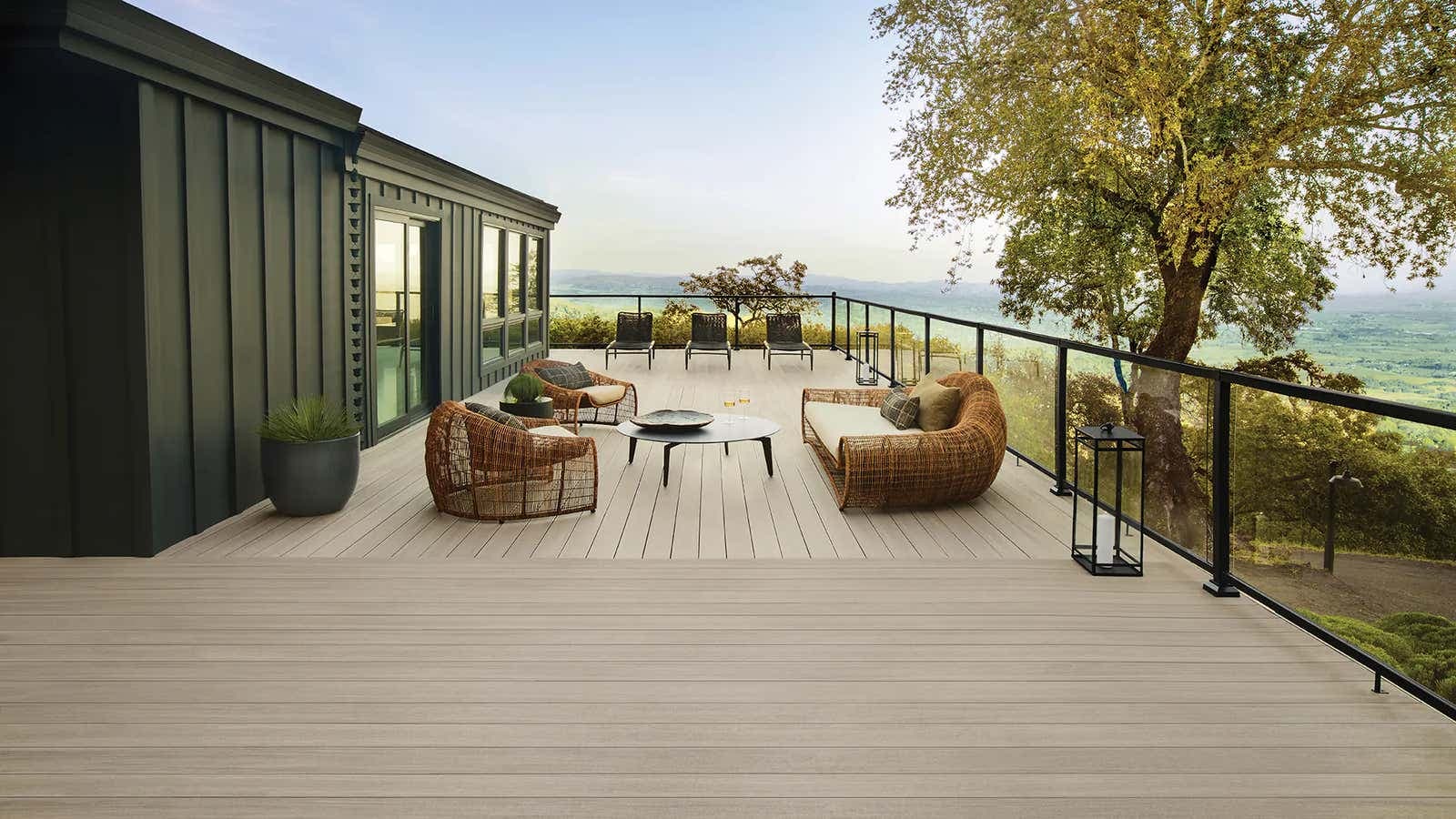
Understanding the Constraints of Compact Outdoor Spaces
A compact outdoor space in Virginia Beach, whether a small patio, balcony, or courtyard, presents unique design challenges. You'll likely encounter limited access for material delivery, restricted areas for construction, and a need to optimize every dimension. The goal is to create a functional and appealing extension of your living area, not just a surface.
Consider how the space will be used: for morning coffee, a small dining area, or a quiet reading nook. This informs material choices, furniture placement, and even the direction of your decking boards. Vertical space might also be a factor, with railings or overhead structures influencing light and air circulation.
Why Composite Decking Suits Smaller Projects
Composite decking is a suitable choice for compact outdoor spaces due to its consistent appearance and reduced maintenance requirements. Manufacturers like Trex, TimberTech, and Fiberon offer a range of colors and profiles that maintain their look over time, which can be particularly advantageous in areas where constant upkeep might be difficult or disruptive.
The resistance of composite materials to fading and staining means less time spent on cleaning and more time enjoying your space. This consistency in appearance also helps to create a visually cohesive area, which is beneficial in smaller designs where visual clutter can easily overwhelm the space. Cooler-underfoot options are also available, which can be a comfort during Virginia Beach's warmer months. Some composite decking options also incorporate a high percentage of recycled content, offering an environmentally conscious choice. (S1)
Selecting Board Profiles and Colors for Visual Impact
For compact spaces, the choice of board profile and color can significantly influence the perception of size. Lighter colors can make a space feel more open and expansive by reflecting light, while darker colors can create a sense of intimacy and sophistication. Consider how the decking color will interact with surrounding walls, planters, and natural light.
Narrower boards can sometimes make a small area feel larger by creating more lines of perspective, drawing the eye along the length of the space. Conversely, wider boards might be chosen to minimize seams and create a more uniform, less busy appearance. Always verify the exact dimensions and profiles available from manufacturers like Trex, TimberTech, and Fiberon, as these can vary by collection. (S1)
Planning for Support and Substructure in Limited Access Areas
The substructure for your composite deck is critical, especially in compact spaces where access for construction may be challenging. Ensure that the chosen composite decking system is compatible with the intended support structure, whether it's a traditional wood frame or an alternative system. Manufacturer specifications for joist spacing and ledger board attachment are essential to follow.
For balconies or elevated decks, the existing structure's capacity to support the additional weight of the decking and any planned furnishings must be verified. Local building codes in Virginia Beach will also dictate specific requirements for structural integrity, drainage, and ventilation beneath the deck surface. Adequate ventilation is particularly important for composite decking to prevent moisture buildup and ensure material longevity.
Worked Example: A 6-Foot by 10-Foot Balcony Deck
Let's consider a hypothetical Virginia Beach balcony measuring 6 feet wide by 10 feet long. The goal is to install composite decking that visually expands the space and minimizes maintenance. We'll assume the balcony has an existing concrete slab, suitable for a low-profile substructure.
For this project, we might choose a light-colored composite board, perhaps in a gray or light tan, to reflect sunlight and make the space feel brighter. If the available board length is typically 12 feet, we would need 10-foot long boards for the 10-foot dimension. To cover the 6-foot width, assuming boards are 5.5 inches wide (a common dimension), we would need 13 boards (72 inches / 5.5 inches per board = 13.09 boards). Therefore, 14 boards would be purchased to allow for any necessary cuts or tolerances. If the boards are oriented parallel to the 10-foot length, this creates an illusion of depth. If oriented parallel to the 6-foot width, it can make the space feel wider. The choice depends on the desired visual effect.
For the substructure, a low-profile sleeper system or adjustable pedestals might be considered to minimize height while allowing for drainage. This example assumes a simple rectangular layout; more complex designs would require additional planning for cuts and waste. Always confirm board lengths and widths with your chosen product collection, such as those from Trex, TimberTech, or Fiberon. (S1)
Before you order
- Confirm local Virginia Beach building codes and HOA regulations for decking projects.
- Measure your compact space accurately, noting any irregularities or obstructions.
- Determine the primary use of the space (e.g., dining, lounging, gardening).
- Research composite decking collections for available colors, board widths, and profiles.
- Consider the visual impact of board orientation (lengthwise vs. widthwise) on your space.
- Plan for adequate substructure and ventilation, especially for low-clearance installations.
- Account for material access and staging during the installation phase.
- Obtain samples of preferred composite decking colors to view in your specific lighting conditions.
- Calculate material quantities carefully, including a margin for cuts and waste.
Confirm installation details, approved uses and warranty terms in the current instructions for the exact product and profile. Your installer should verify the substrate, structure and applicable project requirements.
This is a planning guide for projects in Virginia Beach, VA. Ask our team to confirm availability, delivery to your ZIP code and which branch can support your order.
Questions to help you decide
Can composite decking be installed directly over an existing concrete patio in Virginia Beach?
Installing composite decking directly over concrete often requires a low-profile substructure, such as sleepers or adjustable pedestals, to ensure proper drainage and ventilation. This prevents moisture from being trapped, which is crucial for the longevity of the deck and to meet building codes. Consult the specific manufacturer's installation guidelines for the composite decking you choose and local Virginia Beach building officials for requirements.
What are the best composite decking colors for a small, sun-exposed balcony in Virginia Beach?
For a sun-exposed balcony, lighter composite decking colors tend to absorb less heat, potentially making the surface cooler underfoot. Light grays, tans, or off-white shades can also help a small space feel more open and brighter by reflecting sunlight. Many manufacturers offer 'cooler-underfoot' options designed to mitigate heat absorption. (S1)
How do I ensure proper drainage for a composite deck on a small Virginia Beach balcony?
Proper drainage is essential for any deck, especially in compact spaces or on balconies where water runoff needs careful management. Ensure your substructure creates a slight slope away from any building walls and allows water to flow freely. Using a permeable base or a system that elevates the decking boards can facilitate drainage. Always follow manufacturer guidelines for spacing between boards to allow water to pass through, and check local Virginia Beach regulations for balcony drainage.
Start Planning Your Compact Deck Project
Ready to transform your Virginia Beach outdoor space with composite decking? Request a material quote today. Provide your project dimensions, desired composite profile, and ZIP code to confirm current availability and service options. Explore our full range of composite decking options at /decking/composite, or consider other materials like hardwood (/decking/hardwood) or PVC (/decking/pvc).
Request a material quote →