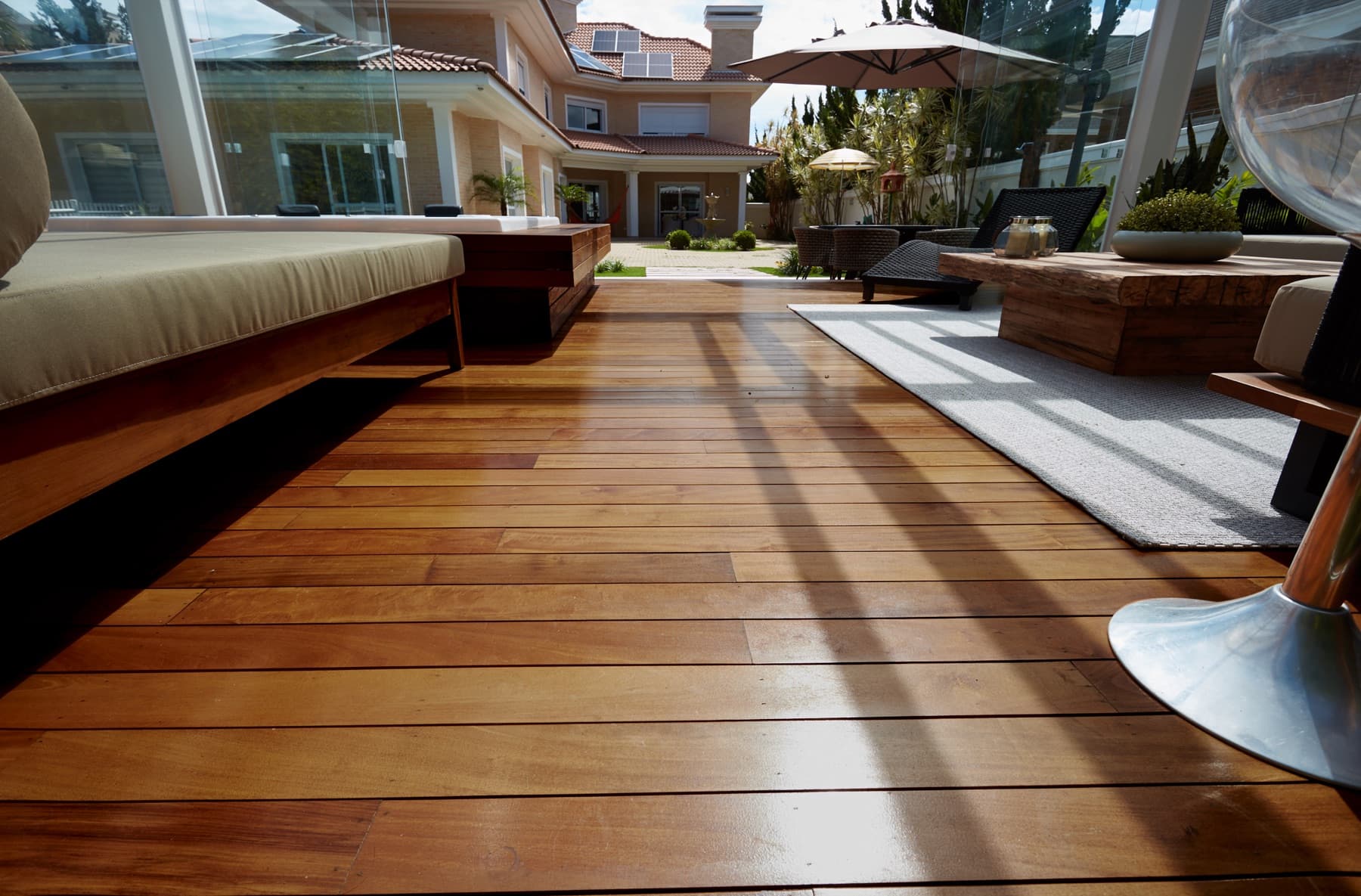
Assessing Your Existing Deck Frame for Hardwood
Before selecting any new decking material, a thorough inspection of your existing deck frame is essential. Hardwood decking, especially dense species like Ipe, is heavier than many common decking materials. Your current framing must be robust enough to support the increased weight.
Check for any signs of rot, insect damage, or structural instability in joists, beams, and support posts. Pay close attention to connections and ledger boards. If significant issues are found, these must be addressed and repaired or replaced before new decking is installed. Consulting with a qualified builder or inspector can help determine if your existing frame is suitable or if upgrades are necessary to meet current building standards and support the new hardwood.
Understanding Hardwood Decking Options: Ipe vs. Cumaru
Lumber Plus offers a range of hardwood decking options, with Ipe and Cumaru being popular choices for their durability and appearance.
Ipe (Handroanthus spp.), also known as Brazilian Walnut, is a dense, durable hardwood. It features a reddish-brown to olive-brown color and is noted for its minimal movement post-installation and natural resistance to weather changes, mold, and termites. Ipe is considered a benchmark hardwood for its longevity. Its density provides natural defense against rot and insects, making it suitable for demanding outdoor applications. If left untreated, Ipe weathers to a silvery-gray patina; applying a UV-blocking sealer can help maintain its original color.
Cumaru (Dipteryx odorata) is another very durable tropical hardwood. It is resistant to termites and weather changes, offering stiffness, strength, and extreme hardness. Cumaru also has natural resistance to insects, rot, and fungi. When worked, Cumaru can emit a scent of cinnamon and vanilla. Like Ipe, Cumaru can be left untreated to achieve a silvery-gray appearance or maintained with an oil to preserve its warmer tones.
Both Ipe and Cumaru are suitable for areas with significant weather exposure, including coastal environments, due to their natural resistance to salt air and moisture. They require minimal chemical treatments for protection.
Planning for Rochester's Climate: Winter and Coastal Considerations
Rochester experiences distinct seasons, including cold winters with snow and ice, and humid summers. Choosing hardwood decking means selecting a material that can withstand these fluctuations.
Hardwood species like Ipe and Cumaru are naturally resistant to warping after moisture exposure and their natural oils help protect against cracking. This resilience is important for managing the freeze-thaw cycles common in Rochester. While these hardwoods perform well in varied climates, ensuring proper ventilation beneath the deck is crucial for moisture management, regardless of the season. Good ventilation helps prevent moisture buildup that could affect both the decking and the sub-structure.
For homes in areas that experience conditions similar to coastal exposure, such as high humidity or frequent precipitation, Ipe and Cumaru are also well-suited. Their inherent resistance to moisture and decay makes them a reliable choice where other materials might struggle.
Determining Board Dimensions and Layout
Hardwood decking is available in various profiles and lengths. Common dimensions for Ipe, for example, can range from 1"x2" up to 6"x6" in lengths from 3 to 24 feet. Careful planning of your deck layout will help minimize waste and achieve your desired aesthetic.
Consider the width of the boards and how they will align with your deck's dimensions. For renovation projects, matching the new board width to existing patterns can create a seamless look, or you might choose a different width for a refreshed design. Plan for board seams to fall over joists for proper support. While specific stock varies, understanding the available range helps in designing an efficient layout.
For a deck measuring 10 feet by 12 feet (120 square feet), using 1x6 (nominal) Ipe boards, which are typically 5.5 inches wide, would require approximately 262 linear feet of decking. If boards are available in 12-foot lengths, you would need 22 boards (120 inches / 5.5 inches = 21.8, rounded up to 22 boards for width coverage; 10 feet length needs 10 boards, so 22 boards * 12 feet = 264 linear feet). Always add a percentage for cuts and waste, typically 5-10%, depending on the complexity of your deck shape and cuts needed around obstacles.
Maintenance and Long-Term Care for Hardwood Decks
Hardwood decking, particularly Ipe and Cumaru, is considered low-maintenance compared to many other decking materials. A simple wash once a year is generally sufficient to remove dirt and debris. This helps maintain its appearance and prevents buildup that could lead to staining.
To preserve the original rich color of Ipe or Cumaru, an annual application of a UV-blocking oil or sealer is recommended. If you prefer a natural, weathered look, you can skip the annual oiling, and the wood will gradually silver to a driftwood gray patina over time. Structurally, the wood remains sound whether oiled or allowed to weather naturally. Regular inspection for any loose fasteners or minor damage can also contribute to the deck's longevity.
Before you order
- Inspect existing deck frame for integrity, rot, and insect damage.
- Determine if the existing frame can support the weight of hardwood decking.
- Choose between Ipe (reddish-brown to olive-brown) or Cumaru (similar tones, cinnamon/vanilla scent when worked).
- Decide on desired finished appearance: natural silvering or maintained color with UV-blocking oil.
- Measure deck dimensions accurately for material takeoff, accounting for waste.
- Confirm available board profiles and lengths for chosen hardwood species.
- Plan for proper under-deck ventilation to manage moisture.
- Consider fastener type (hidden vs. face-fastened) and installer experience with hardwoods.
- Budget for professional installation due to hardwood density and specialized tools.
Confirm installation details, approved uses and warranty terms in the current instructions for the exact product and profile. Your installer should verify the substrate, structure and applicable project requirements.
This is a planning guide for projects in Rochester, NY. Ask our team to confirm availability, delivery to your ZIP code and which branch can support your order.
Questions to help you decide
How long can hardwood decking last in Rochester's climate?
With proper installation and care, Ipe decking can last up to 75 years, and Cumaru can last over 25 years. Their natural resistance to rot, insects, and weather changes makes them well-suited for Rochester's varied seasons, including winter exposure.
Does hardwood decking require special maintenance in winter?
Hardwood decking like Ipe and Cumaru is naturally resilient to extreme weather. While no special winter-specific maintenance is typically required beyond regular cleaning, ensuring good drainage and ventilation beneath the deck is important year-round to prevent moisture buildup from snow and ice.
Can I install hardwood decking myself for a renovation?
While it's possible for experienced DIYers, installing dense hardwoods like Ipe and Cumaru often requires specialized tools and techniques. Professional installation is generally recommended to ensure proper fastening, spacing, and a durable, aesthetically pleasing result.
Ready to Transform Your Rochester Deck?
Request a material quote for your hardwood decking project. Provide your project dimensions, desired profile, and ZIP code to confirm current availability and service options for Ipe, Cumaru, or other hardwood species.
Request a material quote →