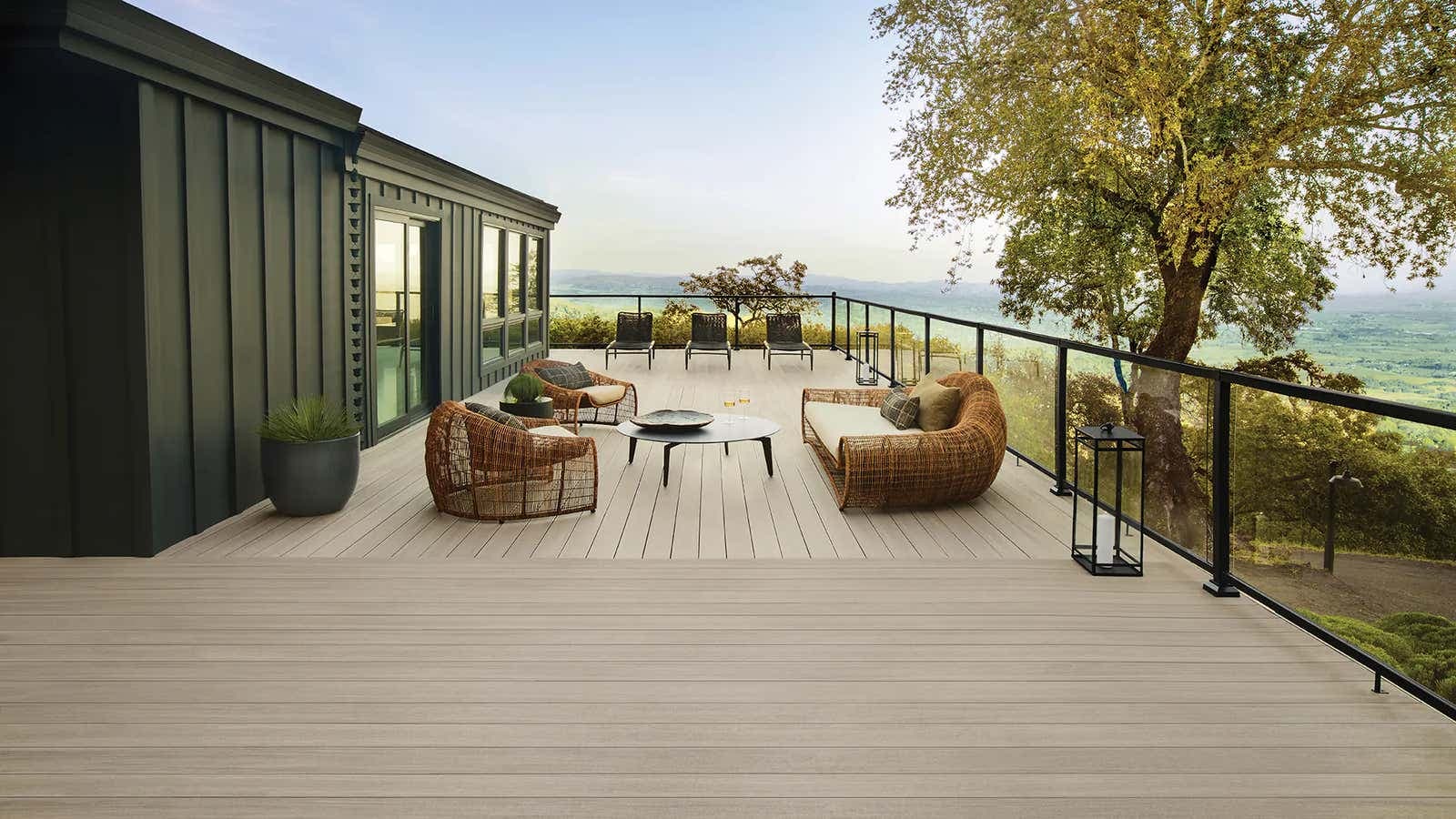
Understanding Compact Space Constraints
A compact outdoor space might be a small urban backyard, a narrow side yard, or a balcony. These areas often present unique challenges: limited access for material delivery, restricted sunlight, and the need to integrate with existing structures or landscaping. The design must be efficient, making the most of every square foot.
Consider how the deck will flow from an adjacent doorway or pathway. Will it serve as a dining area, a quiet reading nook, or a transition zone? The primary function will influence the deck's dimensions and the type of furniture or features it needs to accommodate. For example, a deck meant for a bistro table and two chairs will have different size requirements than one intended for a small lounge area.
Maximizing Usable Space with Layout Choices
For compact decks, the direction of your composite decking boards can significantly impact the perception of space. Running boards parallel to the longest dimension of the space can make it appear longer, while a diagonal layout might create a sense of openness and visual interest, albeit with potentially more material waste from cuts.
Picture-frame borders are an effective design element in smaller spaces. They define the deck's edges, creating a finished look and visually separating the deck from surrounding elements. This can be particularly useful in a compact area where the deck itself is a focal point. Using a contrasting color for the border can further enhance this effect.
Choosing the Right Composite Decking Profile
Composite decking is available in various profiles, including solid and scalloped boards. For compact spaces, the choice of profile primarily affects the deck's appearance and how it integrates with the overall design. Brands like Trex, TimberTech, and Fiberon offer a range of profiles and colors.
Consider the visual weight of the boards. Wider boards can make a small space feel more expansive and modern, while narrower boards might offer a more traditional or intricate look. The consistent color and grain of composite decking, board after board, ensure a uniform appearance without surprises, which is often desirable in a carefully planned compact area. Some options also feature cooler-underfoot technology, which can be a benefit in areas that receive direct sunlight.
Explore the available collections at Lumber Plus, such as those from Trex, TimberTech, and Fiberon, to compare their specific profiles and color palettes. Each manufacturer offers distinct characteristics in their products, including variations in recycled content, with some Trex lines containing up to 95% recycled material.
Worked Example: A 10-foot by 8-foot Balcony Deck
Let's consider a hypothetical balcony measuring 10 feet long by 8 feet wide. The goal is to create a comfortable seating area. We will use standard composite decking boards, assumed to be 12 feet long and 5.5 inches wide for this example.
For a clean, efficient layout, we decide to run the boards parallel to the 10-foot length. Each board is 5.5 inches wide (0.458 feet). To cover the 8-foot width, we need 8 feet / 0.458 feet per board = 17.47 boards. We'll round up to 18 boards to ensure full coverage. Since the balcony is 10 feet long, and our boards are 12 feet, each board can be cut to fit, leaving a 2-foot offcut. This offcut is not typically reusable for the main deck area if it's too short, but could be used for smaller trim pieces if needed.
Therefore, for the main decking area, we would need 18 boards, each 12 feet long. If we wanted a picture-frame border, we'd add additional boards. For a single border board around the perimeter, we'd need two 10-foot lengths and two 8-foot lengths. This would require two additional 12-foot boards (cut to 10 feet) and two 8-foot boards (which would require two 12-foot boards cut to 8 feet, leaving 4-foot offcuts). This highlights the importance of a detailed cut plan to minimize waste and ensure you purchase the correct quantity.
Installation and Maintenance Considerations
For compact spaces, ease of installation can be a factor, especially if access is limited. Composite decking typically uses hidden fastening systems, which result in a clean, fastener-free surface. This is aesthetically pleasing and practical for smaller areas where every detail is visible.
One of the advantages of composite decking is its low maintenance. A simple soap-and-water wash is usually sufficient for cleaning. This is particularly beneficial for small decks where extensive cleaning or sealing might be cumbersome. Unlike wood, composite decking does not require oiling, sanding, or staining.
Ensure proper ventilation beneath the deck, even in compact spaces. This helps to prevent moisture buildup and maintain the integrity of the deck structure. Always refer to the manufacturer's specific installation guidelines for board spacing and substructure requirements.
Before you order
- Measure your compact space precisely, noting all dimensions and any obstructions.
- Determine the primary function of your deck (e.g., dining, lounging, pathway).
- Consider board direction (parallel, perpendicular, diagonal) to optimize visual space.
- Decide if a picture-frame border will enhance the design and define the area.
- Select a composite decking profile and color that complements your home and desired aesthetic.
- Account for material access and delivery to your specific compact outdoor space.
- Plan for proper ventilation and drainage beneath the deck structure.
- Confirm local building codes or homeowner association rules for deck construction in compact areas.
- Request a material quote with exact dimensions, preferred profile, and your project ZIP code.
Confirm installation details, approved uses and warranty terms in the current instructions for the exact product and profile. Your installer should verify the substrate, structure and applicable project requirements.
This is a planning guide for projects in Rochester, NY. Ask our team to confirm availability, delivery to your ZIP code and which branch can support your order.
Questions to help you decide
Can composite decking be installed directly over an existing patio?
Composite decking generally requires a structural substructure (joists and beams) for proper support and ventilation. While some systems might allow for low-profile installations, it's crucial to consult the manufacturer's guidelines and possibly a local contractor to ensure adequate drainage, ventilation, and structural integrity. Direct installation over a solid surface without a proper substructure is typically not recommended.
How do I choose a composite decking color for a small space?
Lighter colors can make a small space feel larger and more open, reflecting more light. Darker colors can create a cozy, intimate atmosphere. Consider the existing colors of your home's exterior, trim, and any surrounding landscaping. Samples are recommended to see how colors appear in your specific lighting conditions. Many composite decking lines offer consistent color and grain, ensuring the final look matches your expectation.
What are the maintenance requirements for composite decking in a compact area?
Composite decking is designed for low maintenance. Typically, an annual wash with soap and water is sufficient to keep it clean. Unlike wood, it does not require sanding, staining, or sealing. Regularly clear away leaves and debris to prevent staining and ensure proper drainage, especially in compact spaces where airflow might be more restricted. Always follow the specific cleaning recommendations from the decking manufacturer.
Ready to Transform Your Compact Outdoor Space?
Request a material quote today. Provide your project dimensions, desired composite decking profile, and project ZIP code to confirm current availability and service options. Explore our full range of composite decking at our main decking page: /decking/composite. For complementary materials, consider our wider selection of decking options: /decking, hardwood decking: /decking/hardwood, Ipe hardwood: /decking/hardwood/ipe, and PVC decking: /decking/pvc.
Request a material quote →