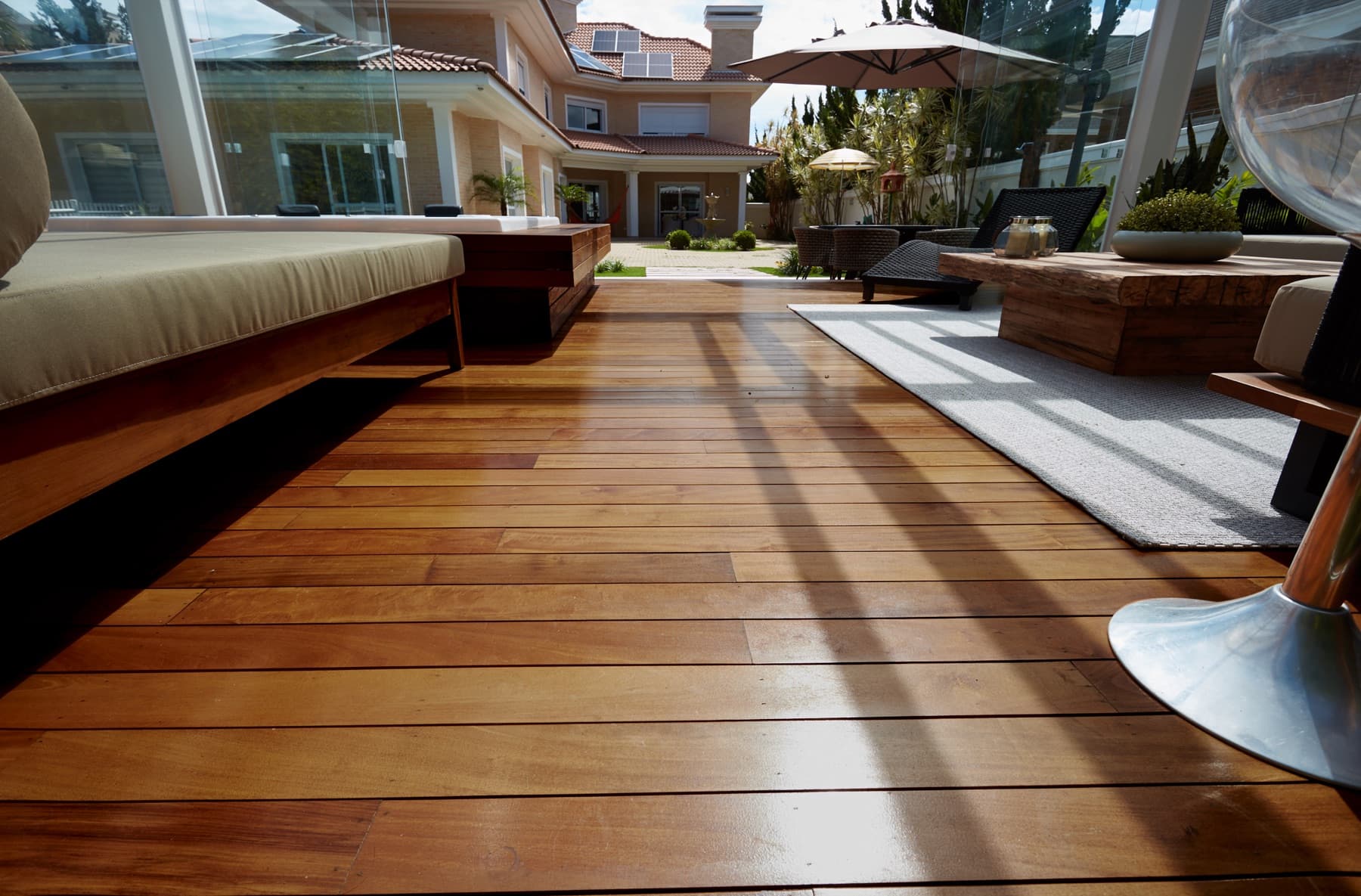
Evaluating Your Existing Deck Frame for Hardwood
The first and most crucial step in any deck renovation involving a surface material change is a thorough assessment of your existing deck frame. Hardwood decking, particularly dense species like Ipe and Cumaru, carries a different weight profile than many common decking materials. Your frame must be robust enough to support this additional load and any new live loads, such as furniture or snow accumulation.
Inspect all structural components: ledger board, joists, beams, and posts. Look for signs of rot, insect damage, or significant warping. Pay close attention to connections and fasteners. If any structural element shows compromise, it must be repaired or replaced before new decking is installed. Consult with a qualified builder or structural engineer if you have any doubts about your frame's integrity or load-bearing capacity.
Ensure your joist spacing is appropriate for the hardwood decking you select. Standard hardwood decking boards often require closer joist spacing than some composite or treated lumber options to prevent flexing and ensure proper support. Verify the manufacturer's recommendations for your chosen species and profile.
Choosing Your Hardwood Species: Ipe vs. Cumaru
Lumber Plus offers a range of Brazilian hardwood decking species, each with distinct characteristics. For renovation projects, Ipe and Cumaru are frequently chosen due to their durability and appearance.
Ipe, also known as Brazilian Walnut, is often considered the benchmark for hardwood decking. Ipe is naturally resistant to rot, insects, and mold, and exhibits minimal movement post-installation. Its color ranges from reddish-brown to olive-brown and can be maintained with a UV-blocking sealer or allowed to weather to a silvery-gray patina. Ipe's lifespan, with proper care, can extend for decades. It is available in various dimensions.
It is also resistant to termites and weather changes. Cumaru shares many of Ipe's advantages in terms of longevity and resistance to environmental factors. It often presents a slightly lighter, warm reddish-brown tone. Cumaru is a strong choice for those seeking a durable hardwood with a similar performance profile to Ipe, often at a different price point. It also has a distinct cinnamon and vanilla scent when being worked.
Both species are dense, contributing to their natural resistance without chemical treatments. They are suitable for exterior applications and are known for their ability to withstand harsh weather conditions, which is a key consideration for outdoor projects in Lincoln, NE.
Consider the desired aesthetic and long-term maintenance plan when choosing between these species. Both can be oiled to retain their original color or left to weather naturally.
Understanding Board Profiles and Lengths
Hardwood decking is available in various profiles and lengths. Common profiles include standard rectangular boards, often with eased edges. The specific dimensions you choose can impact the visual flow of your deck and the efficiency of installation.
Lengths can vary significantly, from 3 to 24 feet for species like Ipe. Longer boards can reduce the number of end joints, creating a more continuous look. However, longer boards may also be more challenging to transport and maneuver during installation. Shorter lengths can be more economical and easier to handle for smaller or more intricate deck designs. Always confirm current availability of profiles and lengths before planning your purchase.
When planning your layout, consider how board lengths will align with your existing joist structure. Minimizing cuts and optimizing board usage can help reduce waste and project costs.
Installation Considerations for Hardwood Decking
Due to its density, hardwood decking requires specific installation techniques and tools. Professional installation is often recommended to ensure proper handling and fastening.
Hidden fastening systems are popular for hardwood decks as they create a clean, fastener-free surface. These systems typically involve clips that attach to the side of the board and secure it to the joist. Alternatively, face-fastening with specialized screws can be used, requiring pre-drilling to prevent splitting. Always follow the manufacturer's specific instructions for fasteners and installation gaps, as these can vary by species and profile.
Proper ventilation beneath your deck is critical, especially when renovating an existing structure. Adequate airflow helps prevent moisture buildup, which can lead to issues with both the decking and the underlying frame. Ensure there's sufficient clearance and open areas for air circulation.
Worked Example: Renovating a 10x12 Foot Deck in Lincoln
Let's consider a hypothetical deck renovation project for a 10-foot by 12-foot elevated deck in Lincoln, NE. The homeowner wants to replace the old decking with Ipe.
First, the existing frame is inspected and found to be in excellent condition. No rot or structural issues are present.
For the 10-foot width of the deck, we will need approximately 22 boards (10 feet / 0.458 feet per board (5.5 inches) = 21.8 boards, rounded up). For the 12-foot length, we will use 12-foot boards to minimize end joints. Therefore, we would need 22 boards, each 12 feet long. This totals 264 linear feet of decking.
To calculate the board feet (BF) for ordering, assuming a nominal 1x6 (actual 0.75" x 5.5") profile, which is common for Ipe: (Width in inches x Thickness in inches x Length in feet) / 12 = Board Feet. For a 12-foot board: (5.5 x 0.75 x 12) / 12 = 4.125 BF per board. So, 22 boards x 4.125 BF/board = 90.75 BF. It's always advisable to add a waste factor, typically 5-10%, for cuts and potential imperfections. For this project, a 10% waste factor would mean ordering approximately 100 BF of Ipe.
This example assumes straight, full-length board installation. Any picture-framing, diagonal layouts, or stairs would require additional calculations and potentially different board lengths or profiles. Always create a detailed cutting plan to optimize material use.
Before you order
- Have I thoroughly inspected my existing deck frame for structural integrity, rot, and insect damage?
- Is my joist spacing compatible with the hardwood decking product I intend to use?
- Have I researched the specific characteristics (color, density, maintenance) of Ipe, Cumaru, or other hardwood species?
- Do I prefer the original color maintained with oil, or a natural silvery-gray patina?
- Have I confirmed the available profiles and lengths for my chosen hardwood species?
- Have I accounted for proper ventilation beneath the deck?
- Have I planned for appropriate fastening methods (hidden or face-fastened) and necessary tools?
- Have I calculated the linear footage and board feet needed, including a waste factor for cuts?
- Will I require professional installation, or do I have the necessary skills and tools for DIY?
- Have I considered the long-term maintenance requirements for my chosen hardwood decking?
Confirm installation details, approved uses and warranty terms in the current instructions for the exact product and profile. Your installer should verify the substrate, structure and applicable project requirements.
This is a planning guide for projects in Lincoln, NE. Ask our team to confirm availability, delivery to your ZIP code and which branch can support your order.
Questions to help you decide
How does hardwood decking perform in Lincoln, NE's climate?
Hardwood decking species like Ipe and Cumaru are known for their natural resistance to weather changes and can perform well in Lincoln's climate, which experiences hot summers and cold winters. Their density helps them resist warping and cracking. However, proper installation, including adequate ventilation, is crucial for long-term performance.
Can I install hardwood decking over my existing deck frame?
You can, provided your existing frame is structurally sound and meets the load-bearing requirements for hardwood. A professional inspection is recommended to ensure the frame is free of rot or damage and that joist spacing is appropriate for the hardwood species you choose. Any compromised elements must be repaired or replaced.
What maintenance does hardwood decking require?
Hardwood decking is relatively low maintenance. A wash once a year is generally sufficient. If you wish to preserve the original rich color, an annual application of a UV-blocking oil is recommended. If left untreated, the wood will naturally weather to a beautiful silvery-gray patina without affecting its structural integrity.
Ready to Upgrade Your Deck with Hardwood?
For your Lincoln, NE deck renovation project, request a material quote with your project dimensions, exact profile preferences, and ZIP code. We can confirm current availability and service options for Ipe, Cumaru, and other hardwood decking materials.
Request a material quote →