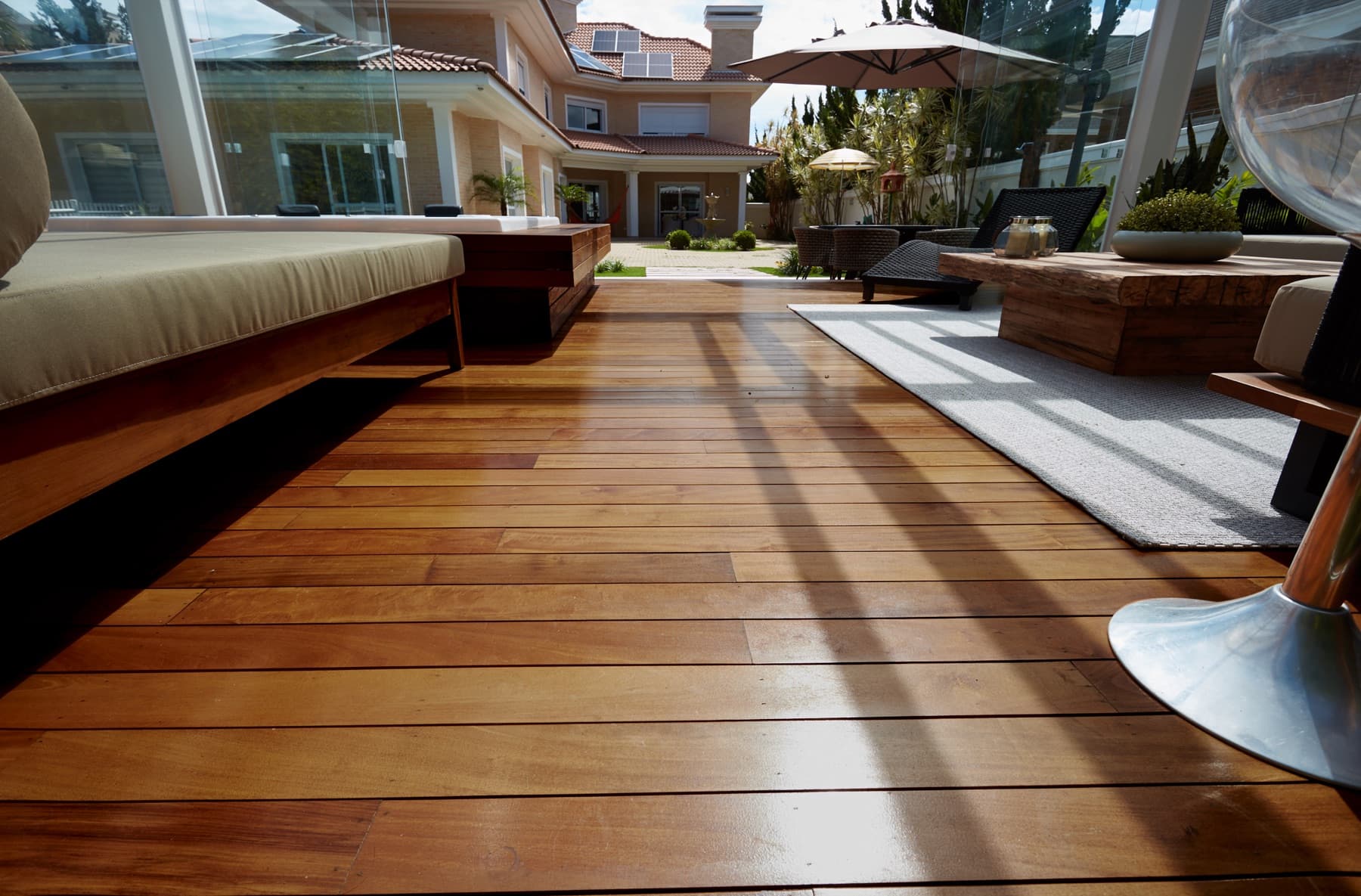
Evaluating Your Existing Deck Frame for Hardwood
Before selecting new decking material, the first step in any renovation is to inspect the existing deck frame. Hardwood decking species like Ipe and Cumaru are significantly denser and heavier than many common decking materials, including treated lumber or composites. This density translates to a higher load on your deck's substructure.
Check for any signs of rot, insect damage, or structural weakness in joists, beams, and support posts. Ensure all fasteners are secure and free from corrosion. Consult the manufacturer's installation guidelines for specific joist spacing requirements for your chosen hardwood species and board dimensions. Any compromised elements of the frame should be repaired or replaced before new decking is installed.
If your existing frame is structurally sound and meets the load and spacing requirements for hardwood, you may be able to reuse it, which can simplify the renovation process. However, if the frame requires extensive repairs or upgrades, it might be more cost-effective in the long run to replace it entirely to ensure it can adequately support the new, heavier decking and provide decades of service.
Understanding Hardwood Decking Species: Ipe and Cumaru
Lumber Plus offers a range of hardwood decking species, with Ipe and Cumaru being prominent choices for their durability and aesthetic qualities.
Ipe, also known as Brazilian walnut, is a dense and durable hardwood native to South America. It is known for its reddish-brown to olive-brown color range and its minimal movement after installation. Ipe is naturally resistant to weather changes, mold, and termites. With proper care, Ipe decking can last for many decades, making it a long-term investment for a deck renovation. It carries a high Janka hardness rating, indicating its resistance to indentation and wear. Ipe is often considered a benchmark for outdoor hardwoods. Its natural oils contribute to its resistance to cracking or warping after moisture exposure. Many suppliers, including Lumber Plus suppliers, adhere to sustainable forestry standards for Ipe.
Cumaru is another very durable tropical hardwood, also from Brazil. It is resistant to termites and weather changes, offering stiffness, strength, and extreme hardness. Cumaru presents a range of reddish-brown to golden-brown tones. It also features natural resistance to insects, rot, and fungi. Like Ipe, Cumaru is a dependable choice for demanding outdoor builds, suitable for a variety of applications.
Both Ipe and Cumaru can be left untreated to weather to a silvery-gray patina, or they can be maintained with a UV-blocking sealer to preserve their original color. The choice depends on your preferred aesthetic and maintenance commitment.
Consider the appearance of each species. Ipe's bold grain and deep colors can create a luxurious feel, while Cumaru's warm tones offer a distinct character. Viewing physical samples can help you visualize how each species will complement your home's exterior in Albany.
Planning for Albany's Climate: Winter and Coastal Considerations
Albany's climate includes cold winters with snow and ice, as well as warm, humid summers. When selecting hardwood decking, it's important to choose a material that can withstand these seasonal shifts.
Both Ipe and Cumaru are known for their resilience in varying weather conditions. Their natural density and oils contribute to their resistance to warping, cracking, and insect damage, which is crucial for a material exposed to freezing temperatures and thaw cycles. While these hardwoods are often specified for coastal applications due to their resistance to salt air and spray, their inherent durability also makes them suitable for inland climates like Albany, where freeze-thaw cycles can challenge less robust materials.
Proper installation, including adequate ventilation beneath the deck and appropriate board spacing, is key to maximizing the performance of hardwood decking in any climate. This helps prevent moisture accumulation and allows for natural expansion and contraction of the wood.
Material Takeoff and Ordering for Renovation
Accurate measurements are critical for a successful renovation. Start by measuring the exact dimensions of your deck area, accounting for any irregularities or features like stairs, railings, or built-in benches. Hardwood decking is typically sold in linear feet or by the board foot, with various lengths and profiles available.
When calculating the quantity needed, consider waste factor for cuts and any unusable portions. A common approach is to add 10-15% to your total square footage to account for these factors. For example, if your deck measures 10 feet by 12 feet, it's 120 square feet. With a 10% waste factor, you'd plan for 132 square feet of material. However, the purchase quantity will depend on the actual board dimensions and your cutting plan. For instance, if using 1x6 (nominal) boards, which are typically 5.5 inches wide, you would need approximately 2.18 linear feet per square foot (12 inches / 5.5 inches). So, 120 square feet would require about 262 linear feet of decking, plus waste.
It's important to confirm current profiles and lengths available for your chosen species. Hardwood decking often comes in standard profiles like 1x4 and 1x6 (nominal dimensions), and lengths can vary. Planning your layout to minimize cuts and maximize the use of full-length boards can help reduce waste and cost. Discuss your project dimensions and preferred profile with a Lumber Plus representative to ensure you order the correct quantities and to confirm current availability.
Remember to account for any fascia boards, stair treads, or other trim pieces that will also need to be replaced with hardwood to maintain a consistent aesthetic.
Worked Example: Renovating a 10x12 Foot Deck in Albany
Let's consider a hypothetical deck renovation project in Albany for a rectangular deck measuring 10 feet by 12 feet. The homeowner wants to replace existing treated lumber decking with Ipe hardwood.
2. **Deck Area Calculation:** The deck area is 10 ft * 12 ft = 120 square feet.
3. **Decking Board Dimensions:** The homeowner chooses Ipe 1x6 (nominal, actual ~5.5 inches wide) decking. Each linear foot of a 5.5-inch wide board covers approximately 0.458 square feet (5.5/12). Conversely, one square foot requires about 2.18 linear feet (12/5.5).
4. **Linear Footage Needed (Initial):** 120 sq ft * 2.18 linear ft/sq ft = 261.6 linear feet.
5. **Waste Factor:** Adding a 10% waste factor: 261.6 linear feet * 1.10 = 287.76 linear feet.
6. **Board Lengths:** Assuming Ipe boards are available in 10-foot and 12-foot lengths to match the deck dimensions, this minimizes end cuts. For a 10x12 deck, using 12-foot boards running parallel to the 10-foot dimension would require 10 ft / (5.5 inches / 12 inches/ft) = 21.8 boards. Rounding up to 22 boards, each 12 feet long, gives 22 * 12 = 264 linear feet. This is close to our calculated 287.76 linear feet with waste, allowing for some trimming and potential offcuts.
7. **Fascia and Stairs:** The deck also has a 12-foot fascia board and 3 stair treads, each 4 feet wide. This adds 12 + (3 * 4) = 24 linear feet of material, which should also be Ipe. Adding a 10% waste factor for these elements: 24 linear feet * 1.10 = 26.4 linear feet.
8. **Total Order:** The homeowner would request approximately 264 linear feet of 1x6 Ipe decking for the main surface, and 27 linear feet for fascia and stairs. It's always advisable to round up to the nearest full board length available.
This example illustrates the importance of detailed measurements and considering board dimensions to optimize your order and minimize waste for your Albany deck renovation.
Before you order
- Assess existing deck frame for structural integrity (rot, damage, secure fasteners).
- Determine if the existing frame can support the higher density/weight of hardwood.
- Choose hardwood species (e.g., Ipe, Cumaru) based on desired appearance, durability, and maintenance preference.
- Consider the local Albany climate: ensure chosen hardwood is suitable for freeze-thaw cycles and humidity.
- Measure deck dimensions accurately, including main surface, stairs, and fascia.
- Calculate linear footage needed, accounting for board width and a waste factor (10-15%).
- Plan board layout to optimize use of available lengths and minimize cuts.
- Confirm current profiles and lengths available from Lumber Plus.
- Plan for proper ventilation under the deck during installation.
Confirm installation details, approved uses and warranty terms in the current instructions for the exact product and profile. Your installer should verify the substrate, structure and applicable project requirements.
This is a planning guide for projects in Albany, NY. Ask our team to confirm availability, delivery to your ZIP code and which branch can support your order.
Questions to help you decide
Can I use my existing deck frame for hardwood decking?
It depends on the condition and construction of your existing frame. Hardwood decking is denser and heavier than many other materials, so the frame must be structurally sound and adequately spaced to support the increased load. If the frame is compromised or doesn't meet requirements, it should be repaired or replaced.
What is the difference between Ipe and Cumaru hardwood decking?
Both Ipe and Cumaru are durable tropical hardwoods suitable for decking. Ipe (Brazilian walnut) is typically a reddish-brown to olive-brown with a bold grain, known for its exceptional hardness and longevity, often considered a benchmark. Cumaru offers similar durability and resistance to weather and insects, with colors ranging from reddish-brown to golden-brown. Both can be left to weather gray or maintained with a UV-blocking sealer to retain their original color.
How do I calculate the amount of hardwood decking I need for my renovation?
First, measure the total square footage of your deck. Then, consider the width of the decking boards you plan to use (e.g., 1x6 nominal boards are typically 5.5 inches wide). Divide the deck's width in inches by the board's actual width to find how many boards wide your deck is. Multiply this by the deck's length to get the total linear footage. Add a waste factor of 10-15% for cuts and potential imperfections. Always confirm available board lengths and choose lengths that best fit your deck dimensions to minimize waste.
Ready to Renovate Your Albany Deck with Hardwood?
Request a material quote with your project dimensions, exact profile, and ZIP code. We can help you confirm current availability and service options for your hardwood decking project.
Request a material quote →