Understanding Garapa Deck Tiles and Their Installation
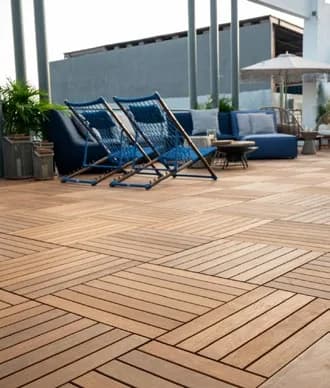
Garapa deck tiles offer a warm, golden-toned surface for terraces, balconies, and outdoor rooms. They are available in two primary dimensions: 12 x 12 inches (1 square foot per tile) and 24 x 24 inches (4 square feet per tile). These modular units are typically installed on a flat, stable substrate, often using a connecting system or placed on pedestals to create a raised, level surface.
The primary goal of any deck tile installation is to achieve a uniform, safe, and aesthetically pleasing finish. This means the individual tiles should sit flush with each other, without rocking, gaps, or significant variations in height. The substrate's condition directly impacts the final result, making careful assessment essential.
Garapa, as a tropical hardwood, is known for its appearance. While the tiles themselves are robust, their performance as a walking surface depends on a properly prepared base. Improper installation over an uneven surface can lead to tripping hazards, premature wear, and difficulty maintaining the tiles.
Defining 'Uneven': Minor Imperfections vs. Structural Issues
Not all unevenness is created equal. A minor, gradual slope designed for drainage on a concrete slab is different from significant dips, cracks, or heaving sections. It's important to distinguish between:
Minor Imperfections: These might include slight variations in a concrete slab, small undulations, or a gentle, consistent slope (e.g., 1/8 inch per foot) for water runoff. These often fall within the tolerance for certain installation methods, particularly with adjustable pedestal systems.
Significant Unevenness or Structural Problems: This category includes large depressions, pronounced humps, crumbling concrete, wide cracks, or areas where the substrate is actively settling or shifting. These issues indicate a fundamental problem with the existing surface that deck tiles cannot, and should not, fix. Attempting to install over such conditions can compromise the integrity of the deck tile assembly and potentially exacerbate the underlying problem.
Installation Methods and Their Tolerance for Unevenness
The method you choose for installing your Garapa deck tiles will dictate how much unevenness can be accommodated:
Direct Lay (on a prepared subfloor): If you plan to lay the tiles directly onto a surface like an existing concrete patio, the surface must be relatively flat and stable. Even minor variations can cause tiles to rock or create uneven seams. For this method, the substrate typically needs to be repaired or leveled to ensure a consistent base.
Pedestal Systems: Adjustable pedestal systems are often the preferred solution for creating a level deck tile surface over existing uneven substrates, especially on rooftops or patios with drainage slopes. These pedestals come in various heights and often have adjustable heads, allowing you to fine-tune the height of each tile to compensate for substrate irregularities and achieve a perfectly level finished surface. They also create a gap beneath the tiles for air circulation and water drainage. However, even with pedestals, extreme unevenness (e.g., deep depressions or sharp elevation changes) may still require some pre-leveling of the substrate for the pedestals to function effectively and maintain stability.
It is important to confirm the specific requirements and tolerances of the chosen pedestal system, as they are not all designed for the same degree of substrate variation.
When to Repair the Substrate Before Installation
If your existing surface exhibits significant unevenness or structural problems, repair should be your first step. Ignoring these issues can lead to wasted effort and materials. Consider repairing the substrate if you observe:
Large cracks or crumbling areas: These indicate structural weakness. Repair with appropriate patching compounds or consult a professional.
Significant dips or humps: Areas with more than a 1/4 inch variation over a few feet often require leveling compounds or grinding to create a more uniform plane.
Active settling or shifting: If the substrate is moving, deck tiles will not remain stable. Address the root cause of the movement before proceeding.
Poor drainage: Standing water on the substrate can lead to moisture issues and affect the longevity of the deck tiles. Ensure proper drainage is established.
Investing in substrate preparation ensures that your Garapa deck tiles have a solid, stable foundation, maximizing their lifespan and your enjoyment of the outdoor space.
Worked Example: Leveling a Sloped Patio with Garapa Deck Tiles
Let's consider a hypothetical concrete patio, 10 feet by 15 feet, with a consistent slope of 1/4 inch per linear foot towards a drain at one end. This means one end of the patio is 2.5 inches lower than the other (10 feet * 1/4 inch/foot = 2.5 inches).
If you were to lay 24 x 24 inch Garapa deck tiles directly on this surface, they would follow the slope, resulting in an unlevel walking surface. This is where an adjustable pedestal system becomes valuable.
To achieve a level surface, you would start by placing the lowest pedestals at the highest point of the patio (where the slope begins). As you move towards the drain, you would gradually increase the height of the pedestals. The individual pedestals under each corner of the tile would be adjusted to compensate for this rise, ensuring the tile itself remains level.
This method allows the underlying slope to function for drainage while presenting a perfectly level finished surface with the Garapa deck tiles. For a 10x15 foot area using 24x24 inch tiles, you would need approximately 40 tiles (5 rows of 2 tiles by 5 rows of 3 tiles, or 5x3=15 tiles for 10x6 ft, and 5x7.5ft, so 5x8=40 tiles if cut to fit).
This example highlights how pedestals can manage a consistent slope, but they are less effective for abrupt, localized dips or humps, which would still require substrate repair.
Before you order
- Assess the type and degree of unevenness: Is it a minor slope for drainage or significant structural damage?
- Measure the variations: Use a long straightedge and level to quantify dips and humps.
- Consider the installation method: Will you lay directly or use a pedestal system?
- Determine if repair is necessary: Can the unevenness be accommodated, or does the substrate need fixing?
- Factor in drainage: Ensure water can still flow away from the structure, even with deck tiles installed.
- Review manufacturer guidelines: Check specific recommendations for Garapa deck tile installation and compatible pedestal systems.
- Request a material quote: Provide dimensions and details of your substrate for accurate recommendations.
Confirm installation details, approved uses and warranty terms in the current instructions for the exact product and profile. Your installer should verify the substrate, structure and applicable project requirements.
Questions to help you decide
Can I put Garapa deck tiles directly on a cracked concrete slab?
No, it is generally not recommended to install Garapa deck tiles directly over a cracked concrete slab. Cracks indicate structural issues or movement in the slab. The tiles might follow the unevenness, leading to an unstable surface, or the cracks could worsen and affect the tile assembly. It's best to repair significant cracks and ensure the slab is stable and relatively level before installing any deck tiles.
How much slope can a pedestal system accommodate for Garapa deck tiles?
The amount of slope a pedestal system can accommodate varies by product and manufacturer. Generally, adjustable pedestals are designed to handle consistent slopes of up to several inches over a given distance, allowing you to create a perfectly level finished surface. However, for very steep slopes or abrupt changes in elevation, you might still need to perform some initial leveling of the substrate to ensure the pedestals remain stable and within their operational range. Always consult the specific pedestal system's specifications.
What are the benefits of using Garapa deck tiles with a pedestal system on an uneven surface?
Using Garapa deck tiles with a pedestal system on an uneven surface offers several benefits. It allows you to create a perfectly level finished walking surface, even if the underlying substrate has a slope for drainage. The pedestals create a void beneath the tiles, promoting air circulation and allowing water to drain freely, which can help with moisture management. This method also often allows for easier access to the underlying membrane or utilities if maintenance is required.
Ready to Plan Your Garapa Deck Tile Project?
Request a material quote today. Provide your project dimensions, desired Garapa deck tile profile (12x12 or 24x24), and ZIP code. Our team can help confirm current availability and service options for your project.
Request a material quote →