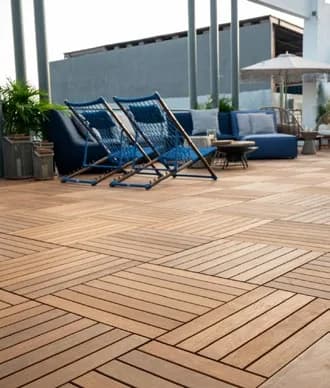
Understanding Garapa Deck Tile Dimensions
Garapa deck tiles come in specific square formats, which simplifies area calculations but requires careful planning for non-square or non-rectangular spaces. The two common sizes are:
12" x 12" (one foot by one foot): Each tile covers 1 square foot. This size is often chosen for smaller areas, intricate layouts, or spaces with many edges and transitions.
24" x 24" (two feet by two feet): Each tile covers 4 square feet. This larger format is typically preferred for more expansive terraces and open surfaces where fewer tile seams are desired.
Knowing the exact dimensions and the area each tile covers is the starting point for any quantity takeoff.
Measuring Your Project Area Accurately
Before ordering, accurately measure the length and width of the area where the Garapa deck tiles will be installed. Use a reliable tape measure and record dimensions in feet and inches. For irregular shapes, break the area down into smaller, manageable rectangles or squares, measure each section, and then sum the areas. Always measure at multiple points along each edge to account for any slight variations in the existing structure.
Consider any fixed obstructions such as columns, planters, or drains. While you don't subtract these areas directly from your initial measurement (as you'll still need tiles to cut around them), noting their locations and dimensions is vital for planning cuts.
Calculating the Base Quantity of Tiles
Once you have the total square footage of your project area, divide this by the area covered by a single Garapa deck tile. For example, if you choose 12" x 12" tiles, each covers 1 square foot. If you choose 24" x 24" tiles, each covers 4 square feet. This gives you the theoretical minimum number of tiles needed.
It is important to remember that this initial calculation does not account for cuts or waste. It merely provides the area-equivalent coverage. Your actual purchase quantity will almost always be higher.
Accounting for Cuts and Waste
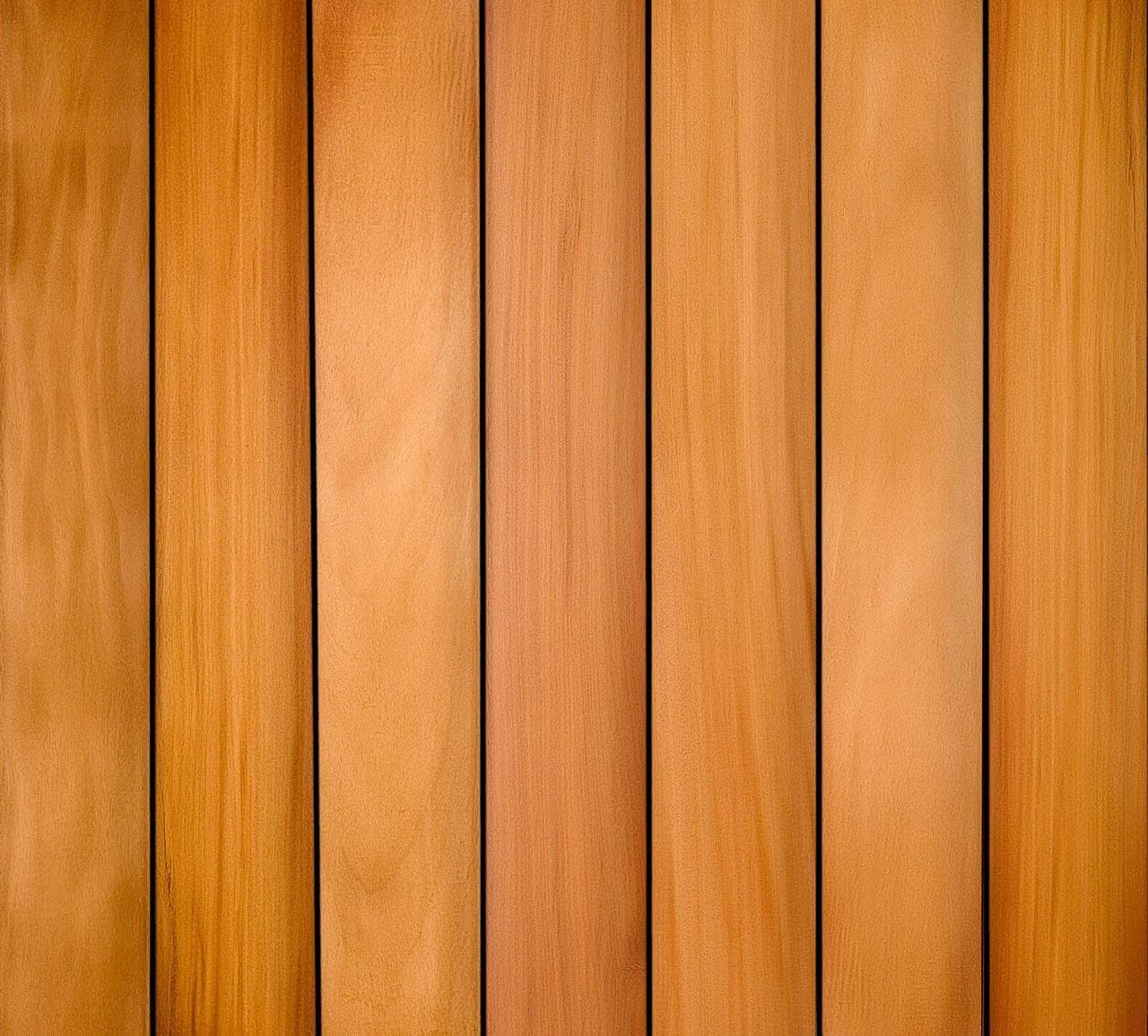
Few projects are perfect multiples of tile dimensions, meaning most installations will require cutting tiles to fit edges, corners, and around obstructions. These cuts generate waste. A standard waste factor for deck tile projects is typically between 5% and 10%, depending on the complexity of the layout and the installer's experience.
For projects with many irregular shapes, angles, or obstructions, a higher waste factor (e.g., 10-15%) might be more appropriate. For simple, rectangular areas, a lower factor (e.g., 5%) may suffice. It is always better to slightly over-order than to face delays due to insufficient material.
When planning cuts, consider if offcuts from one tile can be used elsewhere. For instance, if you cut a 24" x 24" tile into a 24" x 10" piece, the remaining 24" x 14" piece might be usable for another edge, reducing overall waste. However, assume some pieces will be too small or irregularly shaped to be reused.
Worked Example: A Hypothetical Terrace Project
Let's consider a hypothetical rectangular terrace measuring 11 feet 6 inches by 14 feet 3 inches. We will use 24" x 24" Garapa deck tiles.
Step 1: Convert dimensions to feet for easier calculation.
Length: 11 feet 6 inches = 11.5 feet
Width: 14 feet 3 inches = 14.25 feet
Step 2: Calculate the total area.
Area = Length x Width = 11.5 feet x 14.25 feet = 163.875 square feet.
Step 3: Determine the area per tile.
A 24" x 24" tile covers 2 feet x 2 feet = 4 square feet.
Step 4: Calculate the base number of tiles.
Base Tiles = Total Area / Area per Tile = 163.875 sq ft / 4 sq ft/tile = 40.96875 tiles.
Step 5: Round up to the nearest whole tile for the base quantity.
This means a minimum of 41 tiles are needed to cover the area without any cuts.
Step 6: Account for layout and cuts. Since the dimensions are not exact multiples of 2 feet (24 inches), cuts will be needed along both the 11.5-foot and 14.25-foot edges. For the 11.5-foot side, you'll need 6 full tiles (12 feet) and will cut 6 inches off the last row. For the 14.25-foot side, you'll need 8 full tiles (16 feet) and will cut 1 foot 9 inches off the last column. This implies a layout of 6 tiles by 8 tiles, totaling 48 tiles.
Step 7: Apply a waste factor. Given the need for cuts along two edges, a 10% waste factor is reasonable for this project.
Waste Tiles = 48 tiles * 0.10 = 4.8 tiles.
Step 8: Add waste to the layout quantity and round up.
Total Tiles = 48 tiles + 4.8 tiles = 52.8 tiles. Round up to 53 tiles.
In this example, ordering 53 Garapa deck tiles (24" x 24") would provide sufficient material, accounting for the layout and a reasonable waste factor. The actual number of full tiles purchased is driven by the grid, not just the area.
Final Review and Ordering
Before finalizing your order, double-check all measurements and calculations. Consider drawing a simple diagram of your project area, marking where full tiles will lay and where cuts will be necessary. This visual aid can help identify potential problem areas or opportunities to optimize cuts.
Remember that Garapa deck tiles, like other natural wood products, can have slight variations in color and grain. Ordering all your material at once helps ensure consistency across your project. If you anticipate needing additional tiles later, be aware that future batches might have subtle differences.
For complex projects, or if you are unsure about your calculations, it can be beneficial to consult with a contractor or project planner. They can offer insights into efficient layouts and waste reduction strategies.
Before you order
- Have I measured the length and width of my project area accurately?
- Have I broken down irregular shapes into measurable rectangles?
- Have I chosen the appropriate Garapa deck tile size (12"x12" or 24"x24")?
- Have I calculated the total square footage of the project area?
- Have I determined the area covered by a single tile?
- Have I calculated the base quantity of tiles needed for area coverage?
- Have I considered the actual grid layout and how many full tiles are needed along each dimension?
- Have I applied a reasonable waste factor (e.g., 5-10%) based on project complexity?
- Have I rounded up to the nearest whole tile for the final quantity?
- Have I accounted for fixed obstructions and potential intricate cuts around them?
- Have I planned for any extra tiles for future repairs or replacements?
Confirm installation details, approved uses and warranty terms in the current instructions for the exact product and profile. Your installer should verify the substrate, structure and applicable project requirements.
Questions to help you decide
What if my project area is not a perfect rectangle or square?
For irregular shapes, divide the area into smaller, simpler geometric forms (rectangles, squares, triangles) that you can measure individually. Calculate the area for each section and sum them to get the total square footage. Remember that more complex shapes will likely require a higher waste factor due to increased cutting.
Can I mix 12" x 12" and 24" x 24" Garapa deck tiles in one project?
While technically possible to mix sizes, it requires careful planning to ensure a cohesive look and proper installation. The difference in module size means that joints will not align uniformly. If you plan to mix, create a detailed layout drawing beforehand to visualize the pattern and accurately calculate quantities for each size. It is generally simpler to stick to one size for a uniform appearance.
How do I account for a balcony with a curved edge?
For a curved edge, you'll need to approximate the area by extending your rectangular measurements to cover the curve, knowing that the tiles along the curve will require significant cutting. You can also measure the area as if it were a full rectangle and then estimate the tiles that will be cut away and discarded from the curved section.
Ready to Plan Your Garapa Deck Tile Project?
Request a material quote with your project dimensions, desired Garapa deck tile profile (12"x12" or 24"x24"), and ZIP code to confirm current availability and service options.
Request a material quote →