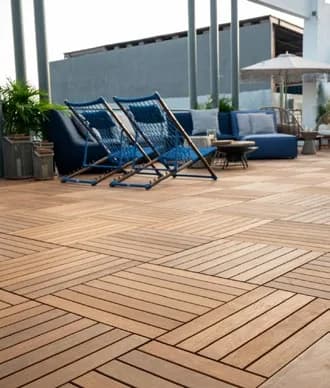
Understanding Garapa Deck Tiles for Large Terraces
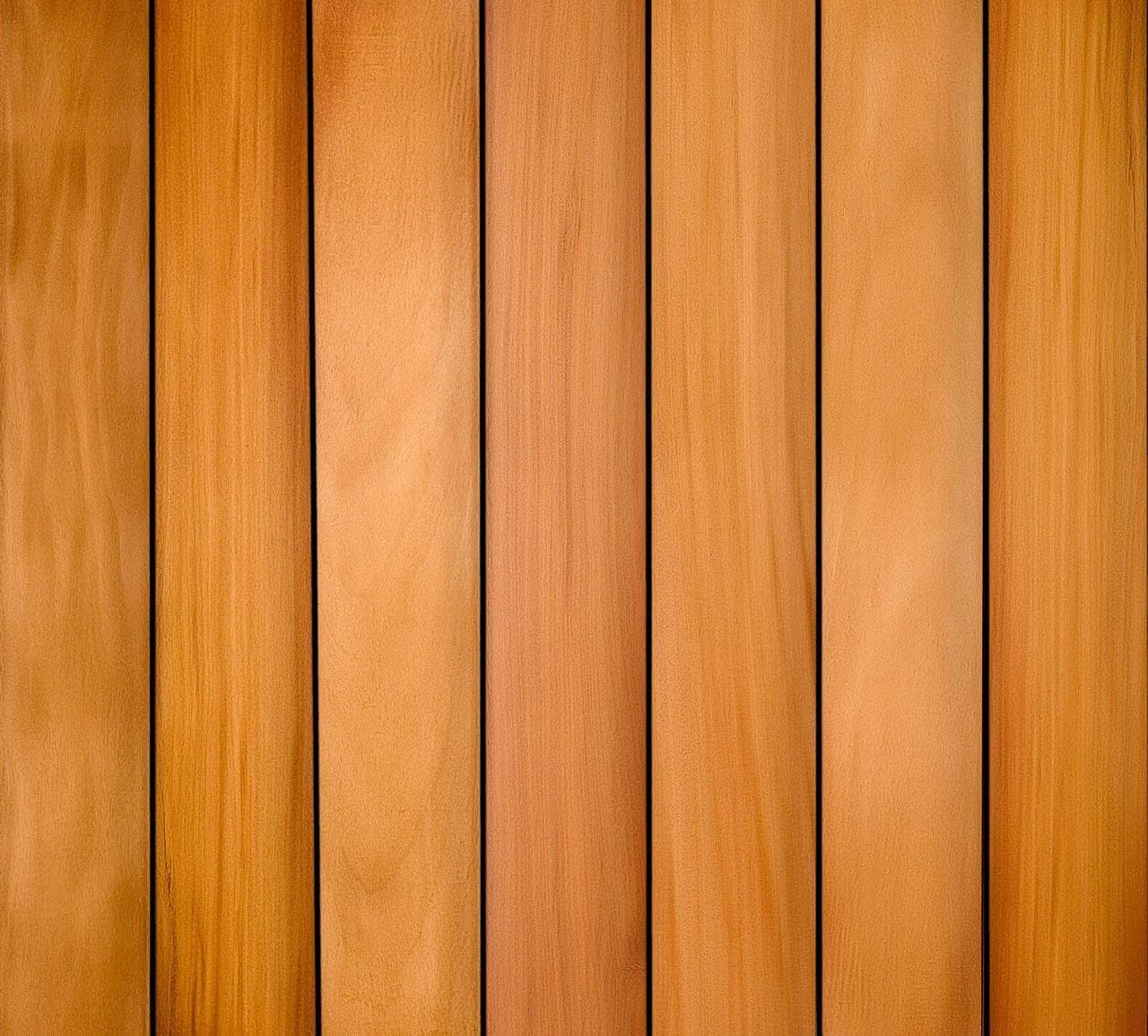
Garapa deck tiles offer a practical solution for large outdoor areas due to their modular nature and the wood's inherent characteristics. Garapa is known for its warm golden tones, which can brighten an expansive terrace, and its durability as a tropical hardwood. These tiles typically come in two standard square sizes: 12" x 12" (1 square foot per tile) and 24" x 24" (4 square feet per tile). The choice between these sizes, or combining them, significantly influences the visual scale and the perceived intricacy of your terrace layout.
For a large terrace, the larger 24" x 24" tiles can often be more efficient, reducing the number of seams and creating a more expansive, less 'busy' look. However, 12" x 12" tiles can be useful for intricate patterns, borders, or to navigate around numerous obstacles. Understanding these options is the first step in planning your large terrace.
Defining Functional Zones on Your Terrace
A large terrace naturally lends itself to multiple functions. Before selecting tile sizes or patterns, consider how you intend to use different areas. Will there be a dining zone, a seating area, a space for planters, or a walkway? Clearly defining these zones on a preliminary sketch will guide your tile layout decisions.
For example, you might designate a central area for dining using a straight lay pattern of 24" x 24" tiles, while a perimeter lounge area could use 12" x 12" tiles in an alternating pattern to create visual interest and a sense of enclosure. The tile layout can subtly delineate these zones without the need for physical barriers, maintaining an open feel.
Coordinating Module Repetition and Visual Flow
One of the key considerations for a large terrace is how the repeated modules of the deck tiles will appear across the entire surface. A consistent layout can create a sense of order and expansiveness, while varied patterns can introduce visual breaks and define areas.
When using a single tile size, a straight lay (all tiles aligned in the same direction) is a common choice for large areas, offering a clean, contemporary look. An alternating or checkerboard pattern can add dynamism but may require more careful planning, especially if the terrace is not perfectly square or rectangular. Consider how the module lines will lead the eye through the space and connect different zones.
Planning for Service Access and Obstacles
Large terraces often incorporate elements like drains, access panels for utilities, or support columns. Your Garapa deck tile layout must account for these. For areas requiring regular access, consider how tiles can be easily removed and replaced without disrupting the entire installation.
For example, around a roof drain, you might plan a small grid of 12" x 12" tiles that can be lifted individually, even if the surrounding area uses larger 24" x 24" tiles. For fixed obstacles like columns, precise measurements and careful cutting will be necessary to ensure a neat fit. Always plan cuts to minimize waste and ensure stability.
Worked Example: A Multi-Zone Terrace Layout
Let's consider a hypothetical large terrace measuring 20 feet by 30 feet, which needs to accommodate a dining area, a lounge, and a walkway. We will use Garapa deck tiles in both 12" x 12" and 24" x 24" sizes.
1. **Dining Zone (10 ft x 12 ft):** For this primary area, we'll use 24" x 24" Garapa deck tiles. A 10 ft (120") by 12 ft (144") area. Along the 10 ft side, 120" / 24" = 5 tiles. Along the 12 ft side, 144" / 24" = 6 tiles. This zone requires 5 x 6 = 30 tiles.
2. **Lounge Zone (10 ft x 15 ft):** Adjacent to the dining area, we'll create a lounge. To introduce a subtle visual difference, we'll use 24" x 24" tiles laid diagonally if the base allows, or in a straight pattern, but perhaps with a contrasting border. For a straight pattern, 10 ft (120") by 15 ft (180"). 120" / 24" = 5 tiles. 180" / 24" = 7.5 tiles. This means 8 tiles along the 15 ft side, with half a tile cut. This zone requires 5 x 8 = 40 tiles (assuming cuts are made from full tiles).
3. **Walkway and Border (Remaining Area):** The remaining perimeter and a connecting walkway will use 12" x 12" Garapa deck tiles. This helps define the edges and navigate any irregular shapes. For instance, a 2 ft (24") wide walkway connecting the two zones would require 24" / 12" = 2 tiles wide. The total perimeter length and walkway length would be calculated and then divided by the 12" module.
Total tile count: For the dining zone, 30 tiles (24"x24"). For the lounge zone, 40 tiles (24"x24"). The remaining area for walkways and borders would require a separate calculation based on its specific dimensions, using 12"x12" tiles. This example illustrates how different zones can be defined and how tile quantities are calculated based on specific dimensions and chosen module sizes. Always add a percentage for cuts and waste.
Before you order
- Sketch your large terrace and mark out primary functional zones (dining, lounge, pathways).
- Determine the primary Garapa deck tile size (12"x12" or 24"x24") for each zone, considering visual scale and maintenance.
- Choose a layout pattern (straight, alternating, diagonal) for each zone and ensure visual harmony between zones.
- Identify all fixed obstacles (columns, drains, utility access points) and plan for tile cuts or removable sections.
- Measure all dimensions precisely, calculate the number of tiles needed for each zone, and add a waste factor.
- Consider edge finishing options to create a polished look for the entire terrace.
- Review local building requirements for outdoor surfaces, especially regarding drainage and structural loads.
Confirm installation details, approved uses and warranty terms in the current instructions for the exact product and profile. Your installer should verify the substrate, structure and applicable project requirements.
Questions to help you decide
Can I combine different sizes of Garapa deck tiles on a large terrace?
Yes, combining 12" x 12" and 24" x 24" Garapa deck tiles can be an effective design strategy for a large terrace. It allows for the creation of distinct visual zones, adds texture, and can be useful for navigating intricate areas or borders. Ensure that the heights of the different tile sizes are compatible if they are from the same product line, or plan for any necessary adjustments to the underlying support system to maintain a level surface.
How do I ensure proper drainage on a large Garapa deck tile terrace?
Proper drainage is critical for any large outdoor terrace. Garapa deck tiles are typically installed on a level, solid sub-surface that is sloped away from any structures, or on a pedestal system that allows water to flow freely underneath. The gaps between the individual deck tiles also allow water to pass through to the underlying surface. Ensure that the sub-surface has adequate drainage points and that they remain clear of debris. Consult with a professional to confirm the existing slope and drainage infrastructure of your terrace before installation.
What maintenance is required for Garapa deck tiles on a large terrace?
Garapa deck tiles, like other tropical hardwoods, are durable but benefit from periodic maintenance. To maintain their golden color, you can apply a UV-inhibiting oil finish annually. If left unfinished, Garapa will naturally weather to a silver-gray patina. Regular cleaning with a broom or leaf blower to remove debris, and occasional washing with mild soap and water, will help prevent dirt buildup. For a large terrace, consider the practicality of maintaining the chosen finish across the entire area.
Ready to Plan Your Large Garapa Terrace Project?
Request a material quote today. Provide your project dimensions, desired Garapa deck tile profiles, and your ZIP code to confirm current availability and service options. Our team can help you estimate quantities and plan your layout.
Request a material quote →