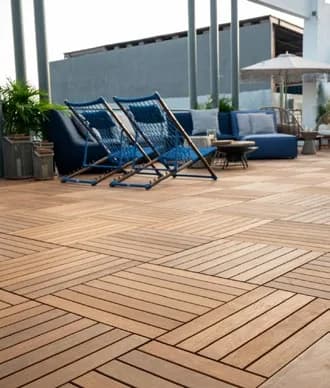
Understanding Garapa Deck Tile Packaging and Weight
Garapa deck tiles are typically packaged to protect them during transit. While specific packaging can vary, they are often bundled or crated to facilitate handling. Individual 12 x 12 inch tiles cover 1 square foot, and 24 x 24 inch tiles cover 4 square feet. It's important to consider the weight of these bundles. Garapa is a dense hardwood, and even a small stack can be heavy. Knowing the approximate weight per bundle helps in planning for unloading and transport within the jobsite.
Before your delivery, inquire about the packaging specifics and estimated weight per unit or pallet. This information is vital for assessing whether manual handling is feasible or if mechanical assistance, like a forklift or pallet jack, will be necessary at the delivery point and for moving materials to the staging area.
Planning for Delivery: Site Access and Unloading
The first step in material logistics is ensuring your site can accommodate the delivery vehicle. Consider the size of the truck that will transport your Garapa deck tiles. Will it be able to navigate your street, driveway, or access point? Are there overhead obstructions like low branches or power lines? For larger projects, a tractor-trailer might be used, requiring ample turning radius and clear access.
Once the vehicle arrives, where will the materials be unloaded? Designate a safe, level area that is clear of debris and provides sufficient space for the delivery personnel to work. If a forklift is required, ensure the unloading zone is suitable for its operation. For urban deliveries, especially to upper-floor balconies or rooftops, additional planning for hoists, elevators, or manual carrying routes is essential. Communicate any access limitations to your supplier in advance.
Temporary Storage and Staging on Site
After unloading, Garapa deck tiles need a secure, temporary storage location. This staging area should be as close to the installation site as practical to minimize handling. The key considerations for a storage area are protection from the elements, security, and stability.
Protect the tiles from direct sunlight, rain, and excessive humidity fluctuations. Ideally, store them under a tarp or in a covered area, elevated off the ground to prevent moisture absorption from below. This helps maintain the material's stability before installation. Ensure the storage area is level and supports the weight of the stacked tiles. For long-term storage, proper ventilation around the stacks is crucial to prevent mold or warping. If the project spans multiple days, consider security measures to protect your materials overnight.

Navigating Materials to the Installation Area: A Hypothetical Example
Consider a hypothetical rooftop terrace project in a multi-story building. You've ordered 200 Garapa deck tiles, each measuring 24 x 24 inches, to cover a 800 square foot area. The delivery truck can only access the ground floor loading dock. Each 24 x 24 inch tile covers 4 square feet.
From the loading dock, the tiles must be transported to the rooftop. This might involve using a freight elevator, which has weight and dimension limits, or even a construction hoist. If using an elevator, you would need to calculate how many tiles can be moved per trip to avoid exceeding its capacity. For example, if each tile weighs approximately 15 pounds (hypothetical weight for calculation) and the elevator capacity is 1,000 pounds, you could move about 66 tiles per trip. This means at least 4 trips would be needed for 200 tiles, not accounting for personnel or other tools.
Once on the rooftop level, the tiles need to be moved from the elevator exit to the specific terrace area. This often involves using dollies or carts, especially for larger tiles. Plan the pathway, ensuring it's clear of obstructions and safe for workers to transport materials. Breaking down the total quantity into manageable loads and planning the sequence of movement can significantly improve efficiency and safety.
Key Considerations for Coastal or Winter Projects
In coastal environments, elevated humidity and potential for salt spray necessitate extra care during storage. Ensure tiles are thoroughly covered to prevent direct exposure to salt-laden air, which can accelerate weathering. For winter projects, protecting Garapa deck tiles from snow, ice, and extreme temperature fluctuations is vital. While the material is durable, minimizing exposure to harsh conditions before installation helps maintain its appearance and stability.
Always store materials on a dry, stable surface, elevated from direct ground contact. This is particularly important in winter to prevent tiles from freezing to the ground or absorbing moisture from melting snow. Allow materials to acclimate to the ambient temperature of the jobsite for a period before installation, if possible, to reduce the risk of movement after fitting.
Complementary Products for a Complete Deck Tile System
Beyond the Garapa deck tiles themselves (available at /deck-tiles/garapa), consider other products that facilitate a complete and efficient installation. For projects requiring an elevated surface or improved drainage, a pedestal system can be an excellent choice. These adjustable supports lift the tiles off the substrate, allowing for level surfaces over uneven ground and providing space for utilities. (Explore options at /deck-tiles).
For alternative aesthetic choices or different performance characteristics, Ipe deck tiles offer deep chocolate tones (/deck-tiles/ipe), while Cumaru deck tiles provide rich reddish-brown hues (/deck-tiles/cumaru). Planning for these complementary materials in your delivery and staging process is just as important as the tiles themselves.
Before you order
- Verify delivery vehicle access (street, driveway, overhead clearance).
- Designate a clear, safe unloading zone.
- Assess need for mechanical unloading equipment (forklift, hoist, pallet jack).
- Identify a secure, covered, and elevated temporary storage area.
- Plan material movement from storage to installation site (e.g., elevator capacity, dolly routes).
- Account for environmental factors (humidity, rain, snow) in storage planning.
- Confirm packaging details and estimated weight per bundle with your supplier.
- Consider security for materials stored overnight.
Confirm installation details, approved uses and warranty terms in the current instructions for the exact product and profile. Your installer should verify the substrate, structure and applicable project requirements.
Questions to help you decide
How should I store Garapa deck tiles if my project is delayed?
If your project is delayed, store Garapa deck tiles in a dry, covered area, preferably indoors or under a robust shelter. Elevate them off the ground to prevent moisture absorption. Ensure good air circulation around the stacks to avoid mold or mildew. Cover them with a tarp, but allow for some ventilation to prevent condensation buildup. Protect them from direct sunlight and extreme temperature fluctuations.
What should I do if the delivery truck cannot access my specific jobsite location?
If the delivery truck cannot reach your exact jobsite, you will need to arrange for an alternative staging area as close as possible that the truck can access. From there, you'll need to coordinate a secondary transport method, such as moving materials in smaller loads with a flatbed truck, van, or even manually with dollies, to the final installation area. Communicate any access issues with your supplier beforehand to explore options.
Do I need to acclimate Garapa deck tiles before installation?
While Garapa deck tiles are engineered for stability, allowing them to acclimate to the ambient conditions of your jobsite for a few days before installation can be beneficial. This allows the wood to adjust to the local temperature and humidity, potentially reducing movement after installation. Keep them covered and elevated during this period.
Request a Material Quote for Your Garapa Deck Tile Project
Ready to plan your outdoor space? Request a material quote for Garapa deck tiles by providing your project dimensions, desired tile profile (12 x 12 or 24 x 24 inches), and ZIP code. This will help us confirm current availability and service options for your location.
Request a material quote →