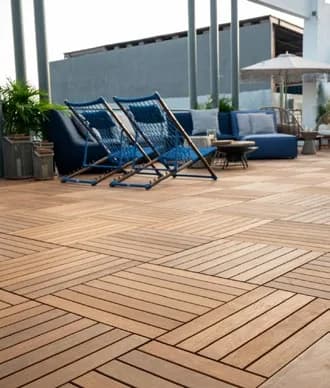
Understanding Garapa Deck Tiles for Courtyard Use
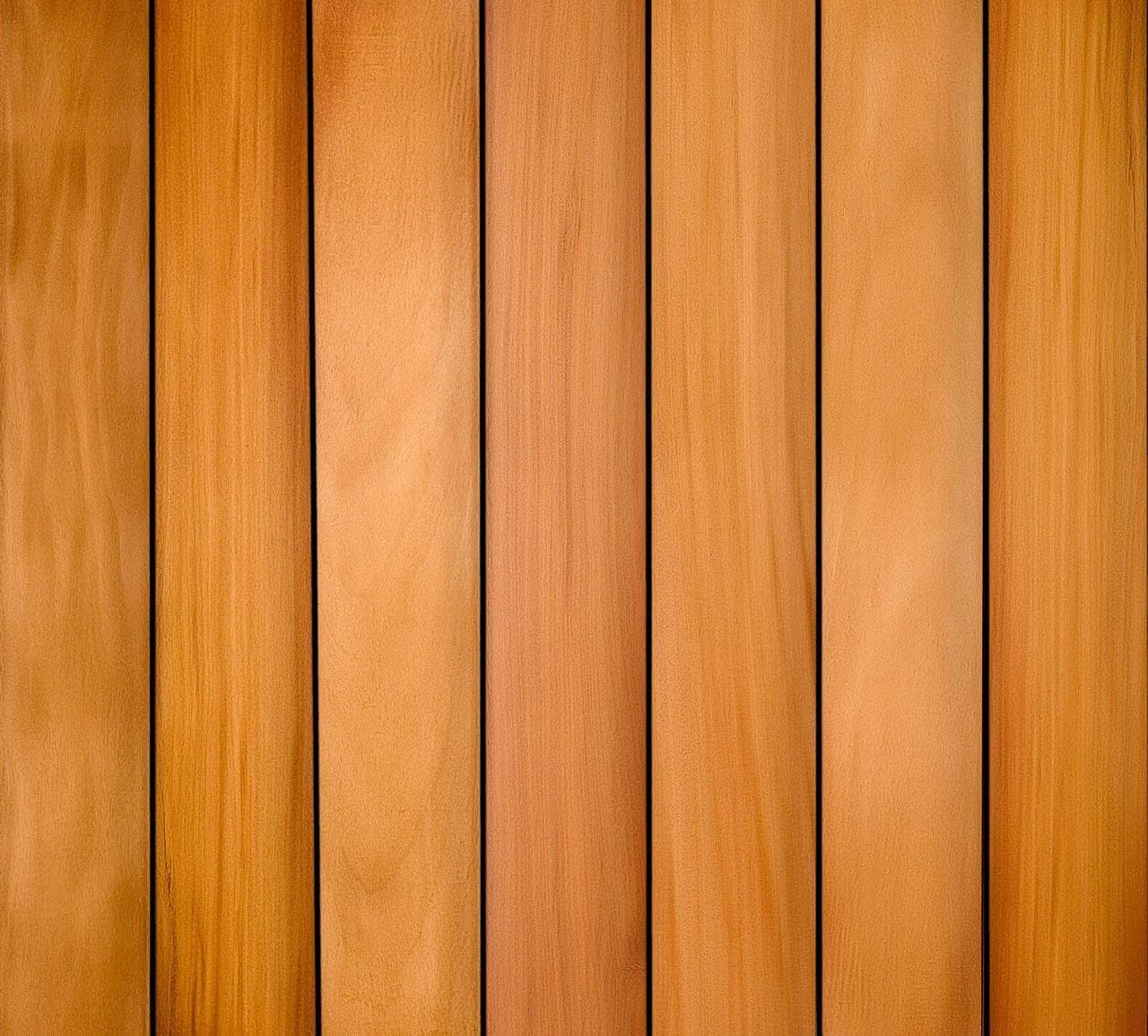
Garapa deck tiles are crafted from Garapa hardwood, known for its warm, golden-brown hues that can brighten an outdoor space. This wood species provides a natural aesthetic that complements various design styles, from modern minimalist to more traditional settings. The tiles typically feature a slatted surface mounted on a grid, allowing for quick installation and promoting drainage.
When considering Garapa for a courtyard, it's important to recognize its characteristics. Garapa is a dense hardwood, offering a degree of natural resistance to the elements. Its golden tones can deepen over time if left untreated, developing a silver-gray patina. Regular cleaning and optional oiling can help maintain its original color. Garapa deck tiles are available in standard sizes, such as 12 x 12 inches and 24 x 24 inches, providing flexibility for different courtyard dimensions and layout preferences. The choice between sizes can influence the visual scale and the number of seams in the finished surface.
Choosing deck tiles for a courtyard can simplify the installation process compared to traditional deck board construction. The modular nature of tiles means they can often be laid directly over an existing stable, level surface, provided proper preparation is done. This can be particularly advantageous in courtyards where structural modifications are not feasible or desired.
Designing Your Courtyard Layout with Zones
A successful courtyard gathering area often incorporates distinct zones for different activities. Instead of a single, undifferentiated space, consider how you want to use the area. Common zones include a dining area, a lounge or seating area, and possibly a small accent zone for planters or a water feature. Garapa deck tiles can help define these zones through strategic placement and even by varying tile patterns or sizes if desired.
Begin by sketching your courtyard and identifying the primary functions. For example, a dining zone might require a larger, contiguous area, while a lounge zone could be more segmented with individual chairs and side tables. Consider the flow of traffic between these zones and how people will move through the space. The modularity of Garapa deck tiles allows for a degree of design flexibility, enabling you to create pathways or delineate areas with relative ease.
For a clear example: imagine a courtyard measuring 10 feet by 15 feet. You might designate a 6-foot by 8-foot area for dining, a 6-foot by 6-foot area for lounging, and a 2-foot wide perimeter for planters. This approach helps in calculating material needs and visualizing the functional flow of your new gathering space.
Surface Preparation and Substrate Considerations
Before installing Garapa deck tiles, proper surface preparation of your existing courtyard is critical for a stable and long-lasting installation. The underlying surface, or substrate, must be stable, clean, and level. Any significant cracks, unevenness, or loose debris should be addressed first. Sweeping and power washing the existing pavement can remove dirt and grime.
If your courtyard has minor depressions or slopes, you may need to apply a self-leveling compound or use shims under the tiles to achieve a consistent plane. Ensure that the substrate allows for adequate drainage away from any structures. Standing water beneath the deck tiles can lead to issues over time, so verify that your courtyard's existing drainage system is functional and unobstructed. Deck tiles are typically designed to allow water to pass through and drain away on the surface beneath them, not to retain water.
For installations directly on concrete or other hard surfaces, ensure that the surface is completely dry before laying the tiles. While Garapa is naturally resilient, consistent moisture underneath can be detrimental to any wood product.
Worked Example: Calculating Garapa Deck Tile Needs for a Courtyard
Let's consider a hypothetical courtyard with specific dimensions to illustrate the material calculation process. Suppose you have an L-shaped courtyard. The main section is 12 feet wide by 10 feet deep, and a smaller, adjacent section is 6 feet wide by 8 feet deep.
First, calculate the total area: (12 ft * 10 ft) + (6 ft * 8 ft) = 120 sq ft + 48 sq ft = 168 square feet. You decide to use 24 x 24-inch Garapa deck tiles, which each cover 4 square feet (2 ft x 2 ft).
To find the approximate number of tiles needed based on area: 168 sq ft / 4 sq ft per tile = 42 tiles.
However, this is an area-equivalent calculation. For a precise order, a layout plan is essential to account for cuts and waste. For the 12 ft x 10 ft section:
Along the 12-foot dimension: 12 ft / 2 ft per tile = 6 tiles. Along the 10-foot dimension: 10 ft / 2 ft per tile = 5 tiles. Tiles for main section: 6 tiles * 5 tiles = 30 tiles.
For the 6 ft x 8 ft section:
Along the 6-foot dimension: 6 ft / 2 ft per tile = 3 tiles. Along the 8-foot dimension: 8 ft / 2 ft per tile = 4 tiles. Tiles for smaller section: 3 tiles * 4 tiles = 12 tiles.
Total full tiles needed without accounting for cuts or waste: 30 + 12 = 42 tiles. This matches the area-based estimate in this simple example. However, if your dimensions were, for example, 13 feet, you would need 7 tiles (13/2 = 6.5, rounded up to 7) for that row, resulting in cuts and potential waste. Always add an additional 5-10% for cuts, waste, and future repairs. For this project, ordering 45-47 tiles would provide a reasonable buffer.
If your courtyard has irregular shapes or many obstructions, a detailed tile-by-tile layout diagram will provide the most accurate quantity. Consider how any edge cuts can be reused. For example, a tile cut in half for one edge might provide a piece for another edge if dimensions align.
Finishing Touches: Edges, Planters, and Furniture
Once your Garapa deck tiles are installed, the finishing touches complete the transformation of your courtyard. Consider how you will finish the edges of the tiled area. Some deck tile systems offer specific edge pieces or trim to create a clean, finished look, while others may allow for a simple, exposed edge depending on the aesthetic.
Integrate planters to add greenery and softness to the space. Large planters can also serve as natural dividers between different zones. When placing heavy planters, ensure the weight is distributed evenly and does not create localized stress on the tiles or the substrate below. Consider using planters with risers to promote air circulation and drainage underneath, preventing moisture buildup directly on the tiles.
Finally, select outdoor furniture that complements the warm tones of the Garapa. Metal, wicker, or other wood furniture can create a cohesive and inviting atmosphere. Arrange furniture within your designated zones to enhance functionality and comfort. Remember to use furniture glides or pads to protect the deck tile surface from scratches or indentations.
Maintenance for Long-Lasting Beauty
Garapa deck tiles, like all natural wood products, benefit from regular maintenance to preserve their appearance and prolong their lifespan. Basic maintenance includes sweeping away leaves and debris regularly to prevent moisture and mildew accumulation. Periodically cleaning the tiles with a mild detergent and water can help remove dirt and grime.
Garapa will naturally weather to a silver-gray patina if left untreated. If you prefer to maintain the original golden color, you may choose to apply a UV-inhibiting oil finish designed for hardwoods. This typically needs to be reapplied periodically, depending on exposure to sun and rain. Always follow the specific instructions of the finish product you select.
In areas that experience winter conditions, ensure that snow and ice are removed carefully, avoiding metal shovels that could scratch the surface. Proper drainage continues to be important year-round to prevent water from pooling on or under the tiles.
Before you order
- Assess existing courtyard surface: Is it stable, level, and does it drain well?
- Define functional zones: Dining, lounge, circulation paths.
- Measure courtyard dimensions accurately for each zone.
- Choose Garapa deck tile size: 12x12 or 24x24 inches, considering scale and seams.
- Create a detailed layout plan to estimate tile quantities, accounting for cuts and waste.
- Plan for edge finishes and transitions.
- Consider placement of planters and furniture, ensuring proper support and drainage.
- Research appropriate cleaning and maintenance for Garapa hardwood.
- Determine if a UV-inhibiting oil finish is desired to maintain original color.
Confirm installation details, approved uses and warranty terms in the current instructions for the exact product and profile. Your installer should verify the substrate, structure and applicable project requirements.
Questions to help you decide
Can Garapa deck tiles be installed directly on an uneven concrete courtyard?
Garapa deck tiles require a stable and reasonably level surface for proper installation and long-term performance. Minor unevenness might be corrected with shims, but significant slopes or depressions in the concrete should be addressed and leveled before installation. Deck tiles are not designed to bridge large gaps or correct major surface imperfections on their own. Consult with a professional if your courtyard has substantial leveling issues.
How do I calculate the number of Garapa deck tiles I need for an L-shaped courtyard?
For an L-shaped courtyard, break the area down into simpler rectangles. Measure the length and width of each rectangular section. Calculate the square footage of each section, then add them together for the total area. Divide the total area by the square footage of a single deck tile (e.g., 1 sq ft for 12x12, 4 sq ft for 24x24) to get an initial estimate. For accuracy, sketch a layout grid on paper, mapping out each tile. This helps account for cuts and minimize waste. Always add 5-10% extra for cuts, waste, and future replacements.
What kind of maintenance does Garapa require to keep its golden color?
Garapa hardwood will naturally weather to a silver-gray patina over time if left untreated. To help preserve its golden color, regular cleaning and the application of a UV-inhibiting oil finish designed for hardwoods are recommended. The frequency of reapplication depends on your climate and the amount of sun exposure the tiles receive. Always follow the manufacturer's instructions for the specific oil product you choose. Regular sweeping and occasional washing with a mild detergent will also help maintain its appearance.
Ready to Transform Your Courtyard?
Request a material quote for Garapa deck tiles today. Provide your project dimensions, desired tile profile (12x12 or 24x24), and ZIP code, and we'll help confirm current availability and service options for your courtyard project.
Request a material quote →