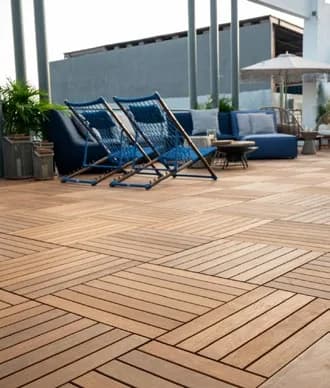
Understanding Garapa Deck Tiles
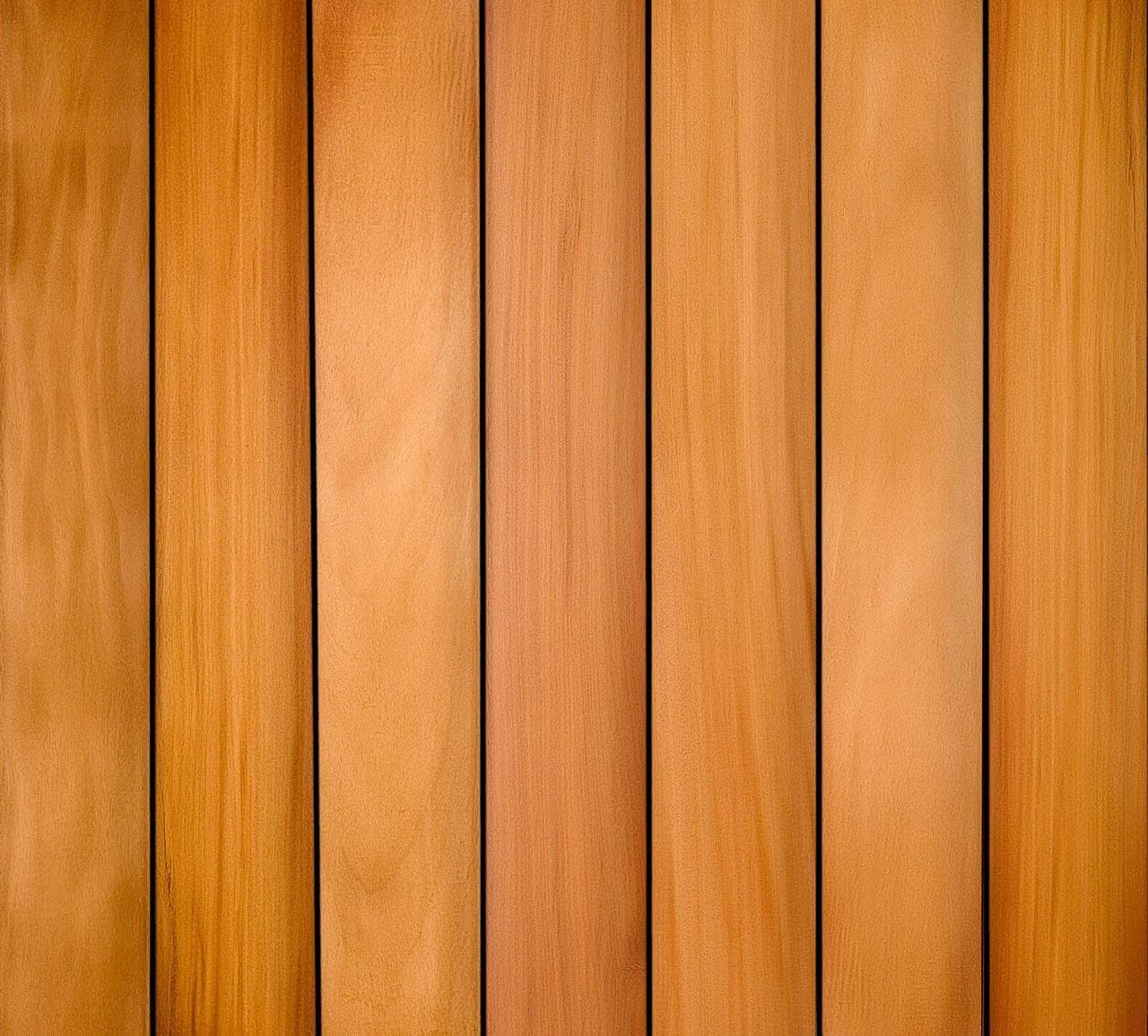
Garapa deck tiles are crafted from Garapa, a tropical hardwood known for its warm, golden tones. This material can bring a bright, inviting aesthetic to outdoor areas such as terraces, balconies, and other outdoor rooms. It offers a distinct appearance compared to darker hardwoods like Ipe or Cumaru.
Lumber Plus offers Garapa deck tiles in two standard square formats: 12 x 12 inches and 24 x 24 inches. The 12 x 12 inch tile provides 1 square foot of coverage per tile, suitable for smaller areas or layouts with more intricate edges and transitions. The larger 24 x 24 inch tile covers 4 square feet per tile, often preferred for more expansive terraces and open surfaces where fewer tile seams are desired.
Understanding these foundational characteristics helps in making informed decisions about the overall design and material requirements for your project.
Confirming Project Dimensions and Layout
Before placing any order, precise measurements of your project area are fundamental. Your contractor will likely verify these, but having your initial calculations ready can expedite the process. Accurately mapping the area where the Garapa deck tiles will be installed is crucial, including any irregular shapes, obstructions, or areas requiring cuts.
Consider the chosen tile size (12x12 or 24x24) and how it will lay out across your space. A detailed layout plan, even a simple sketch, can help visualize cuts needed and minimize waste. For example, if you have a rectangular area, consider how the tiles will align to edges and whether full tiles or partial tiles will be visible at the perimeter.
Selecting the Right Tile Profile and Quantity
Beyond dimensions, the specific profile of the Garapa deck tile is important. While both 12x12 and 24x24 tiles are available, the choice impacts the overall visual scale and installation efficiency. Larger tiles can cover ground more quickly but may be less adaptable to very complex or highly irregular shapes. Smaller tiles offer more flexibility for detailed work but result in more seams across the surface.
Calculating the quantity requires dividing the total project area by the area covered per tile. However, this is only an area-equivalent. You must account for cuts and potential waste. For instance, if you have an 8-foot by 5-foot rectangular area (40 square feet) and are using 24x24 inch tiles (4 square feet each), you might initially calculate 10 tiles. However, if the 5-foot dimension requires cuts that don't yield reusable offcuts for another section, you may need to purchase additional tiles. Always factor in an allowance for cuts and potential future replacements, typically 5-10% extra, depending on the complexity of the layout.
Your contractor can assist in refining these calculations based on their experience with similar installations and the specific tile dimensions. Provide them with your chosen tile size and your measured project area.
Considering the Substructure and Installation Method
Garapa deck tiles are typically installed over a stable, level substructure. This could be an existing concrete patio, a rooftop membrane, or a raised pedestal system. The chosen installation method directly influences the type of support materials needed and how the tiles will be secured.
If using a pedestal system, ensure compatibility with the deck tiles. Pedestals often require specific spacing and can influence the overall finished height of your deck. For direct installation on a flat surface, confirm that the surface is adequately prepared for drainage and stability. Discuss these structural considerations with your contractor, as they are crucial for the long-term performance and safety of your deck tile installation.
Planning for Edges, Transitions, and Obstacles
Outdoor spaces often feature various elements that require careful planning around deck tiles. These include door thresholds, roof drains, columns, and built-in planters. How the deck tiles terminate at edges or transition to other surfaces needs to be addressed during planning.
For edges, consider whether you will use trim pieces, a border of full tiles, or simply a cleanly cut edge. Around roof drains, ensure that access for maintenance is preserved and that water flow is not impeded. Columns and other fixed obstacles will require precise cuts. Providing your contractor with a detailed drawing of these features will help them accurately estimate material needs and labor for the installation.
Worked Example: A 10x12 Foot Balcony
Let's consider a hypothetical 10-foot by 12-foot rectangular balcony. The total area is 120 square feet. You decide to use the 24 x 24 inch Garapa deck tiles, which cover 4 square feet per tile.
For the 10-foot (120-inch) dimension, you would need 5 tiles (120 inches / 24 inches per tile = 5 tiles). For the 12-foot (144-inch) dimension, you would need 6 tiles (144 inches / 24 inches per tile = 6 tiles). This means you would need a base of 5 x 6 = 30 tiles for full coverage without considering waste or cuts. Your area-equivalent coverage is 30 tiles * 4 sq ft/tile = 120 sq ft.
However, if there's an irregular edge or a small planter box that requires custom cuts, you'd add a waste factor. For a simple rectangular balcony, a 5% waste factor might be sufficient: 30 tiles * 1.05 = 31.5 tiles. You would purchase 32 tiles. For more complex layouts, a 10% waste factor (33 tiles) would be prudent. This example assumes minimal complex cuts and a straightforward installation.
Before you order
- Confirm final project dimensions and square footage.
- Specify Garapa as the wood species.
- Select preferred tile size: 12x12 inch or 24x24 inch.
- Review and approve the contractor's material quantity calculation, including waste factor.
- Discuss the proposed installation method (e.g., direct lay, pedestal system).
- Identify all obstacles (columns, drains, planters) and how tiles will be cut/finished around them.
- Confirm desired edge treatment and transitions to other surfaces.
- Agree on a material delivery schedule and job site storage plan.
- Review the quote for Garapa deck tiles, ensuring all specifications match.
Confirm installation details, approved uses and warranty terms in the current instructions for the exact product and profile. Your installer should verify the substrate, structure and applicable project requirements.
Questions to help you decide
What is the difference between 12x12 and 24x24 Garapa deck tiles?
The primary difference is the size and the area they cover. 12x12 inch tiles cover 1 square foot each and are often used for smaller areas or designs requiring more cuts and transitions. 24x24 inch tiles cover 4 square feet each, making them suitable for larger, more open spaces where fewer seams are desired. The choice impacts the visual scale and the number of tiles needed for a given area.
Do I need to order extra Garapa deck tiles for waste?
Yes, it is generally recommended to order an additional 5-10% of tiles beyond your calculated area coverage. This accounts for cuts needed around edges, obstacles, or for future replacements due to unforeseen damage. The exact percentage depends on the complexity of your project's layout.
Can Garapa deck tiles be installed directly on soil or grass?
Garapa deck tiles should not be installed directly on soil or grass. They require a stable, level, and well-drained substructure, such as a concrete slab, a rooftop membrane, or a properly designed deck frame with a pedestal system. Direct contact with soil can lead to moisture retention and compromise the material's integrity.
Request a Material Quote for Garapa Deck Tiles
Ready to move forward with your Garapa deck tile project? Provide us with your project dimensions, desired tile profile (12x12 or 24x24), and your ZIP code. We can then prepare a detailed material quote and confirm current availability and service options. Visit our contact page to submit your request.
Request a material quote →