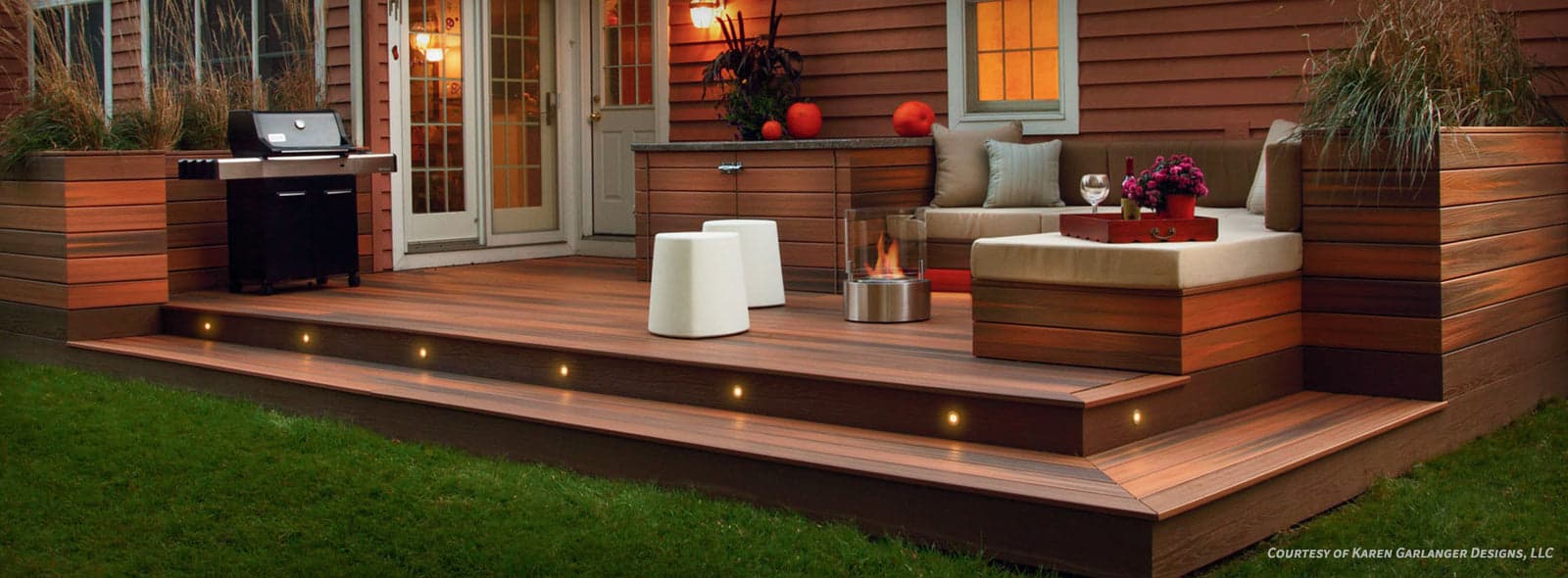
Understanding Fiberon's Composition for Winter Durability
Fiberon decking is made from a capped wood-plastic composite, a blend of recycled wood fibers and plastics. This construction aims to combine the aesthetic qualities of wood with enhanced durability. The key feature for winter performance is the protective cap layer.
The cap surrounds the composite core on three or four sides, depending on the Fiberon line, creating a barrier against moisture intrusion. This is particularly important in winter, as repeated freeze-thaw cycles can cause expansion and contraction in materials that absorb water, potentially leading to damage over time. The cap helps to minimize this absorption, contributing to the material's stability in fluctuating temperatures. Fiberon decking is made in the USA and contains 94% recycled content by weight.
Fiberon offers three main lines: Concordia (four-sided capped), Sanctuary (three-sided capped), and Good Life (entry-level with a scalloped profile). Each line features a written stain and fade warranty, indicating the manufacturer's confidence in the cap's performance.
Managing Snow and Ice Accumulation
Effective snow and ice management are crucial for maintaining the safety and condition of any deck in winter. For Fiberon decking, routine snow removal helps prevent prolonged ice buildup and keeps the surface accessible.
When clearing snow, use a plastic shovel. Metal shovels or sharp tools can scratch the deck surface, potentially compromising the protective cap. For compacted snow or ice, avoid chipping or prying, which can also damage the boards. Instead, consider using approved de-icing agents.
Ensure proper drainage around and under the deck structure. Water pooling on or beneath the deck can exacerbate freeze-thaw issues. Adequate ventilation beneath the deck is also important to prevent moisture buildup and ice formation on the underside of the boards.
Selecting Approved De-Icing Products
Not all de-icing products are suitable for composite decking. Some can cause discoloration, staining, or damage to the cap. Always refer to the manufacturer's guidelines for compatible de-icers.
Generally, calcium chloride-based de-icers are often recommended as a safer option for composite decking compared to rock salt (sodium chloride). However, even with approved products, it's best practice to apply them sparingly and rinse the deck thoroughly once the ice has melted and temperatures permit. Avoid leaving de-icing residues on the deck surface for extended periods.
For stubborn ice, consider using warm water or a mixture of warm water and a mild, pH-neutral soap. Always test any cleaning or de-icing solution on an inconspicuous area first to confirm compatibility and prevent unintended marks.
Winter Maintenance and Cleaning
Even in winter, periodic cleaning can help maintain your Fiberon deck's appearance. While heavy cleaning might be impractical in freezing temperatures, addressing spills or debris promptly can prevent issues.
For general cleaning, Fiberon recommends a simple soap-and-water wash. This can be performed during milder winter days or as soon as weather conditions allow in early spring. Remove any accumulated leaves, dirt, or organic matter that might trap moisture or promote mold growth. A soft-bristle brush can be used for gentle scrubbing.
Avoid using power washers at high pressures, as this can damage the deck surface. If using a pressure washer, keep the nozzle at least 12 inches from the deck and use a fan-tip attachment set to a low-pressure setting. Always rinse the deck thoroughly to remove all cleaning solution residues.
Hypothetical Project Example: A Deck in a Snowy Climate
Consider a homeowner in a region experiencing significant snowfall and freezing temperatures. They are planning a 12-foot by 20-foot rectangular deck using Fiberon Sanctuary decking in Chestnut. The deck will be elevated 24 inches off the ground.
For this project, the builder would specify Fiberon Sanctuary grooved-edge boards for hidden fasteners and square-edge boards for a picture-frame border and fascia. The builder would also incorporate a slight slope (e.g., 1/8 inch per foot) away from the house to encourage water runoff.
During winter, the homeowner would use a plastic snow shovel to clear snow. For icy patches, they would apply a calcium chloride-based de-icer sparingly, following manufacturer guidelines, and rinse the deck with water once the ice melts and temperatures are above freezing. They would also ensure that downspouts or roof runoff do not directly discharge onto the deck surface, preventing excessive ice buildup.
The overall approach emphasizes proactive snow removal, careful selection of de-icing agents, and ensuring proper drainage and ventilation to mitigate winter-related challenges.
Before you order
- Verify Fiberon product line (Concordia, Sanctuary, Good Life) and its specific capping (3-sided or 4-sided).
- Plan for adequate ventilation underneath the deck to prevent moisture buildup and ice.
- Ensure proper drainage on the deck surface and around the structure to avoid water pooling.
- Acquire a plastic snow shovel for clearing snow to avoid scratching the deck.
- Identify and purchase manufacturer-approved de-icing products (e.g., calcium chloride-based).
- Establish a routine for snow removal and post-de-icer rinsing.
- Review Fiberon's specific cleaning and maintenance instructions for winter conditions.
- Consider the impact of roof runoff and plan diversions if necessary.
Confirm installation details, approved uses and warranty terms in the current instructions for the exact product and profile. Your installer should verify the substrate, structure and applicable project requirements.
Questions to help you decide
Can I use rock salt (sodium chloride) on my Fiberon deck?
It is generally not recommended to use rock salt (sodium chloride) on Fiberon composite decking. Rock salt can potentially stain or damage the deck surface. Always opt for manufacturer-approved de-icing products, such as those that are calcium chloride-based, and follow their specific application instructions. Rinse the deck thoroughly after use when temperatures permit.
Will Fiberon decking become slippery when wet or icy?
Like most outdoor surfaces, Fiberon decking can become slippery when wet, icy, or covered with snow. While the material itself is designed for outdoor conditions, it is crucial to exercise caution in such weather. Prompt snow and ice removal, along with the use of approved de-icers, can help improve traction. Regular cleaning also prevents the buildup of algae or mildew, which can contribute to slipperiness.
How do I clean my Fiberon deck after a harsh winter?
After winter, once temperatures are consistently above freezing, you can clean your Fiberon deck with a solution of warm water and a mild, pH-neutral soap. Use a soft-bristle brush to gently scrub away any accumulated dirt, salt residue, or organic matter. Rinse the deck thoroughly with water to remove all cleaning solution. Avoid high-pressure washing or harsh chemicals, which could damage the surface.
Ready to Plan Your Fiberon Deck Project?
Contact us with your project dimensions, desired Fiberon profile, and ZIP code to request a material quote. Our team can help confirm current availability and service options for your decking needs.
Request a material quote →