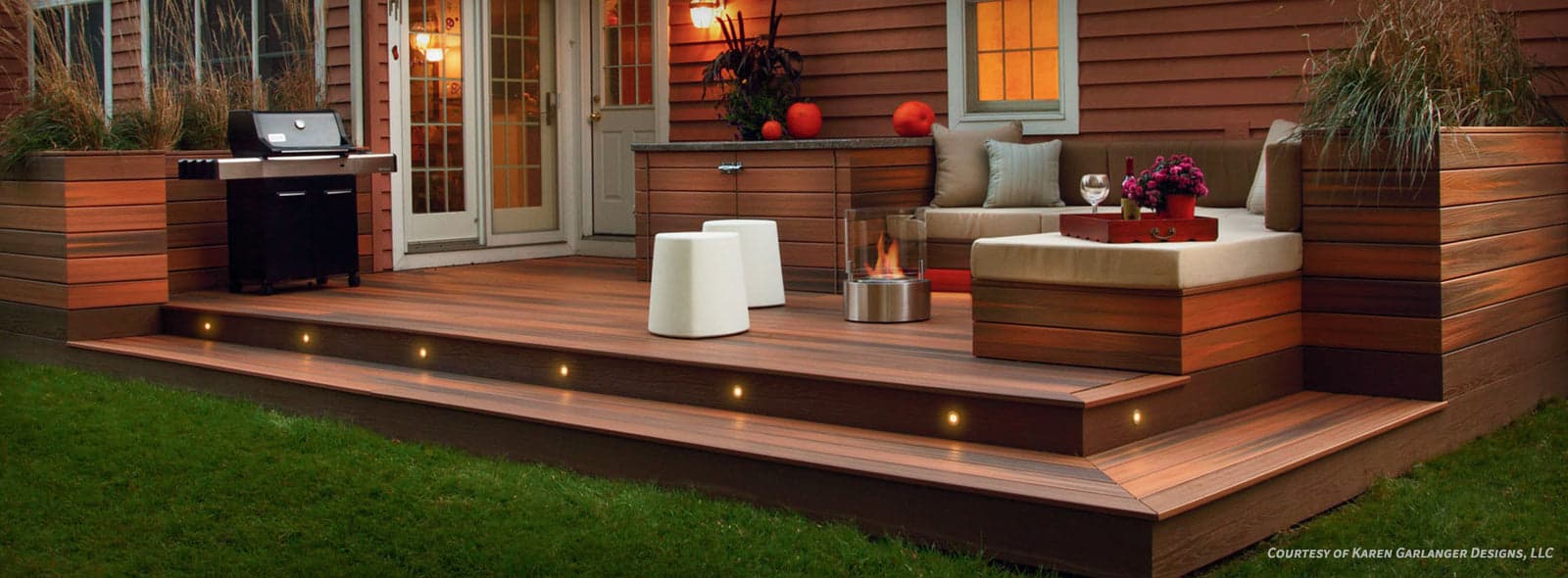
Understanding Fiberon Decking Lines and Their Finishes
Fiberon offers three primary lines: Concordia, Sanctuary, and Good Life, each with distinct characteristics in color depth, capping, and grain patterns. Understanding these differences is key to making a selection that matches your project's aesthetic and performance needs.
Fiberon Concordia is the flagship line, featuring four-sided capped boards with deep, multi-tonal color blends. These boards are designed to offer a premium appearance with rich, varied hues. The capping on all four sides provides enhanced durability and a consistent finish. Examples include Ipe, Bordeaux, and Graphite, offering a range from tropical browns to modern grays.
Fiberon Sanctuary is a mid-range option with three-sided capped composite boards. This line typically features cathedral grain patterns and warm, believable wood tones. It's a popular choice for decks that aim for a custom look without the premium price point. Chestnut, Moringa, and Espresso are examples of colors within this line, providing earthy and natural shades.
Fiberon Good Life is the entry-level line, characterized by a scalloped profile and honest, straightforward colors. While offering a more economical solution, it maintains the core benefits of composite decking, including no staining or sealing. Cabin and Beach House are typical colors, offering classic, comfortable tones. Each line carries a written stain and fade warranty, offering peace of mind regardless of the chosen tier.
The Impact of Natural Light on Color Perception
The way natural light hits your deck throughout the day profoundly affects how its color is perceived. A color that appears subtle in shade might look vibrant in direct sunlight, or a deep tone might seem lighter under bright conditions. This is why viewing physical samples outdoors at different times of day is crucial.
For decks that receive full sun exposure, lighter colors may appear brighter, while darker colors can absorb more light. Conversely, for shaded decks or those under a covered porch, lighter colors can help brighten the space, whereas darker tones might appear richer and more subdued. Consider the primary direction your deck faces (e.g., north, south, east, west) and how sunlight will interact with the chosen board color at different hours and seasons.
Coordinating with Your Home's Exterior and Landscape
Your Fiberon decking color should complement your home's existing exterior elements, including siding, trim, roofing, and landscaping. A well-chosen deck color creates a cohesive outdoor living space that enhances your property's overall appeal.
For homes with warm exterior tones, such as brick or earth-colored siding, decking colors like Fiberon Concordia's Ipe or Sanctuary's Chestnut can create a harmonious blend. If your home features cooler tones, like gray siding or white trim, options such as Concordia's Graphite or Good Life's Beach House might be more suitable. Also, consider the colors of any permanent landscaping features, such as stone walls, pavers, or mature trees, to ensure the deck integrates seamlessly into its surroundings.
Considering the Visual Effect of Grain and Texture
Fiberon decking boards are designed with various grain patterns and textures to mimic the appearance of natural wood. These details contribute to the overall finish and can influence how light interacts with the surface.
The deeper, multi-tonal blends in the Concordia line, for example, often feature intricate grain patterns that add visual depth and dimension. The Sanctuary line's cathedral grain provides a classic wood aesthetic. Even the Good Life line, while simpler, offers an honest texture. When evaluating samples, run your hand over the surface to feel the texture and observe how the grain pattern contributes to the board's character. This tactile and visual assessment is an important part of understanding the finished look.
Worked Example: Selecting Fiberon for a South-Facing Deck
Consider a hypothetical 12-foot by 16-foot south-facing deck, attached to a home with light gray siding and white trim. The homeowner desires a contemporary look that feels inviting. A nearby pergola will offer partial shade for a portion of the deck in the afternoon.
Initial thought might lean towards a dark gray for a modern feel. However, for a south-facing deck, a dark color like Fiberon Concordia Graphite could absorb significant sunlight, potentially making the surface feel warmer underfoot. While this is not a universal rule and depends on many factors, it's a consideration for comfort. A lighter gray, such as Fiberon Good Life Beach House, could be an alternative, but the homeowner wants more depth.
After reviewing physical samples outdoors at different times, the homeowner observes that Fiberon Concordia Bordeaux, a rich brown with subtle gray undertones, appears elegant and less prone to showing dust than a very light color. In direct morning sun, its multi-tonal blend is pronounced, while in the afternoon shade from the pergola, it retains its richness without appearing too dark or flat. The Bordeaux color also provides a pleasing contrast with the light gray siding and white trim, anchoring the outdoor space without overwhelming it. This choice leverages the multi-tonal quality of Concordia to manage the varying light exposure and achieve the desired aesthetic.
Complementary Products and Accessories
Fiberon offers a full system of matching fascia and riser boards for a cohesive finish. These are available in coordinating colors to ensure a seamless transition between the deck surface and its edges. Using matching trim elements creates a polished and professional appearance.
For fastening, Fiberon supports both hidden clips and face screws. Hidden fasteners provide a clean, unblemished deck surface, while face screws offer a visible, traditional attachment method. Your choice of fastening system can also subtly influence the overall aesthetic, particularly for the deck's edges and stairs. Consider how these elements will integrate with your chosen decking color and finish.
Explore related decking materials such as hardwood options like Ipe for comparison, or other composite brands like Trex and TimberTech to understand the full range of possibilities for your project. Each offers unique color palettes and textures.
Before you order
- Obtain physical Fiberon decking samples for your chosen lines and colors.
- View samples outdoors at different times of day (morning, noon, afternoon) to assess color perception under varying light conditions.
- Place samples near your home's siding, trim, and existing landscaping to check for color coordination.
- Consider the primary direction your deck will face (e.g., south-facing for maximum sun, north-facing for more shade).
- Evaluate the grain pattern and texture of the samples to ensure it aligns with your desired aesthetic.
- Review available matching fascia and riser boards in your chosen color to ensure a unified look.
- Discuss fastening options (hidden clips vs. face screws) with your installer and how they might affect the visual outcome.
Confirm installation details, approved uses and warranty terms in the current instructions for the exact product and profile. Your installer should verify the substrate, structure and applicable project requirements.
Questions to help you decide
Why is it important to see physical samples of Fiberon decking?
Digital images can misrepresent true colors due to screen variations and lighting conditions during photography. Physical samples allow you to see the exact color, grain, and texture of the boards under the actual lighting conditions of your project site, which is crucial for making an accurate selection.
Do darker Fiberon deck colors get hotter than lighter ones?
While darker colors generally absorb more heat, the surface temperature of any decking material, including Fiberon, can be influenced by many factors such as direct sun exposure, ambient air temperature, and ventilation. There is no universal claim about temperature differences based on color alone. Always consider the specific conditions of your project and test samples if this is a concern.
Can I mix and match colors from different Fiberon lines?
While technically possible, mixing colors from different Fiberon lines (Concordia, Sanctuary, Good Life) is generally not recommended for the main deck surface. Each line has distinct capping, grain patterns, and board profiles, which could lead to an inconsistent appearance. For accents like picture frames or borders, it's best to consult with a design professional to ensure compatibility and a cohesive look.
Ready to Select Your Fiberon Decking?
Request a material quote with your project dimensions, desired Fiberon profile, and ZIP code. We can help confirm current availability and service options for your project.
Request a material quote →