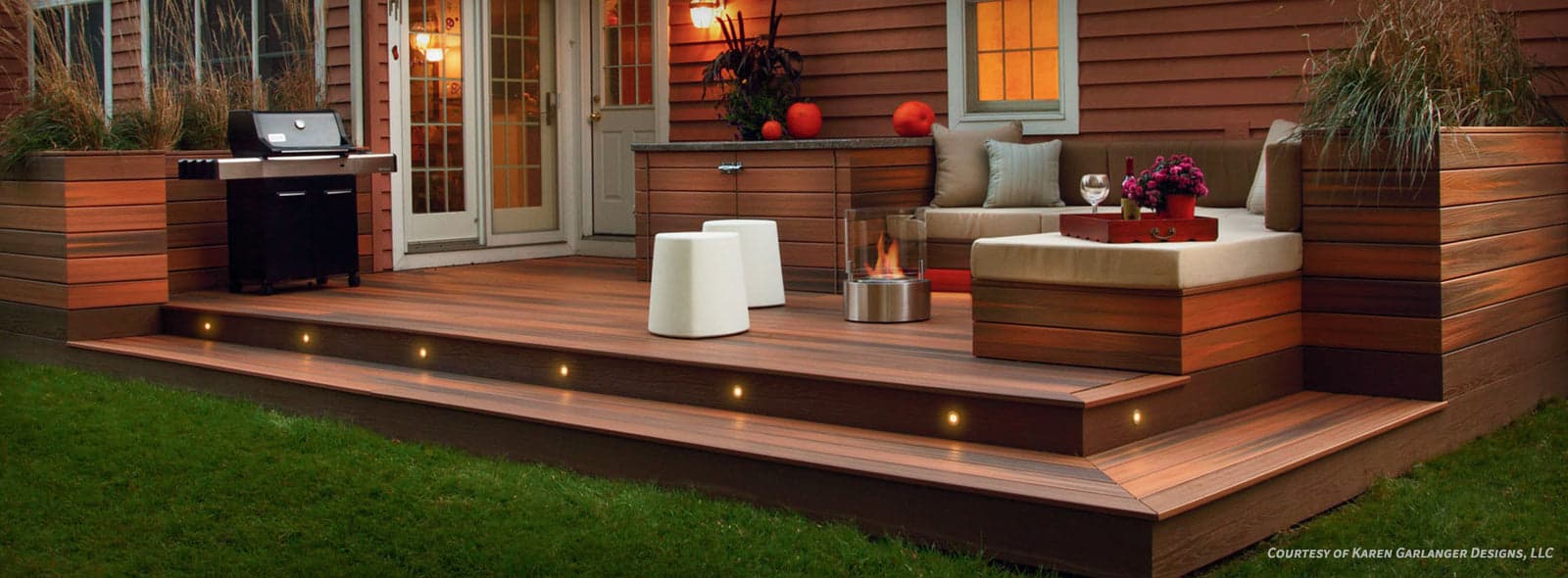
Understanding Fiberon Decking Lines
Fiberon offers several lines of capped composite decking, each with distinct characteristics and price points. The choice of line will significantly influence your material budget.
Fiberon Concordia is the flagship line, featuring four-sided capped boards with deep, multi-tonal color blends. It is designed for premium aesthetics and durability. Fiberon Sanctuary is a mid-range option, with three-sided capped composite boards, cathedral grain patterns, and warm wood tones. Fiberon Good Life is an entry-level option, featuring a scalloped profile and a focus on essential performance and value.
When budgeting, consider the aesthetic goals for your project and how each Fiberon line aligns with them. The initial investment in a higher-tier line may offer enhanced appearance and potentially longer warranty periods.
Material Takeoff: Deck Boards, Fascia, and Risers
The primary material cost comes from the deck boards themselves. Fiberon offers boards in 1x5.5-inch profiles, available in 12, 16, and 20-foot lengths. (S1) To calculate the required quantity, first determine the total square footage of your deck surface. Then, factor in the board width and length to estimate the linear footage needed, allowing for cuts and waste.
A common rule of thumb for estimating waste is to add 5-10% to your total linear footage calculation, though complex layouts like diagonal patterns may require more. For a picture-frame border, you will also need square-edge boards and matching fascia boards. Fascia boards are used to finish the perimeter of the deck, while riser boards are used for stair treads. (S1)
Ensure you account for all these specialized components as they contribute to the finished look and overall material cost. For stairs, measure the total linear footage of risers needed.
Fasteners and Support System Materials
Fiberon decking can be installed using hidden clips or face screws. (S1) Hidden fasteners create a smooth, blemish-free surface, while face screws offer a more traditional appearance. The choice impacts both the aesthetic and the cost.
Beyond the decking itself, you will need materials for the structural support system. This typically includes lumber for joists, beams, and posts, along with concrete for footings.
Other essential accessories include joist tape for moisture protection, flashing, and any specialized hardware for railings or other deck features. These items, though often smaller in cost individually, add up in the overall budget.
Worked Example: Material Takeoff for a 10x12-foot Deck
We will assume 16-foot grooved-edge boards and 12-foot square-edge boards for the border and fascia.
1. **Deck Surface Area:** 10 ft * 12 ft = 120 sq ft.
2. **Linear Footage for Deck Boards:** Assuming 5.5-inch wide boards, each 16-foot board covers 5.5 inches * 16 feet = 0.73 sq ft per linear foot. Total linear feet for surface = 120 sq ft / (5.5 in / 12 in/ft) = 261.8 linear feet. Add 10% for waste: 261.8 * 1.10 = 288 linear feet. (288 linear feet / 16 ft/board) = 18 boards. (Note: This is an area-equivalent calculation. Actual purchase quantity may vary based on exact layout and cuts.)
3. **Picture Frame Border:** Perimeter is (10 ft + 12 ft) * 2 = 44 linear feet. We will use 12-foot square-edge boards. 44 linear feet / 12 ft/board = 3.67 boards, so purchase 4 boards.
4. **Fascia Boards:** The perimeter requiring fascia is 10 ft + 12 ft + 10 ft = 32 linear feet (assuming one side is against the house). Using 12-foot fascia boards: 32 linear feet / 12 ft/board = 2.67 boards, so purchase 3 boards.
5. **Stairs:** Let's assume three steps, each 4 feet wide. Each step requires one riser board. Total linear feet for risers = 3 steps * 4 ft/step = 12 linear feet. Purchase one 12-foot riser board.
Check manufacturer specifications for exact fastener count per square foot or linear foot.
This is a significant cost component to calculate separately.
This example provides a starting point for material quantities. Always consult detailed installation guides for precise measurements and specific product requirements.
Labor, Permits, and Contingency
Labor costs represent a substantial portion of any decking project budget. Obtain quotes from multiple qualified contractors, ensuring their estimates include site preparation, demolition of existing structures (if applicable), framing, decking installation, and cleanup. Be clear about what is included in their scope of work.
Local building permits are almost always required for deck construction or significant renovations. Research your local municipality's requirements and associated fees early in the planning process. Failure to obtain necessary permits can lead to fines and project delays.
Finally, always allocate a contingency fund, typically 10-20% of the total project cost. This fund acts as a buffer for unforeseen issues, such as unexpected soil conditions, material price fluctuations, or minor design changes. A contingency helps prevent the project from going over budget due to surprises.
Comparing Costs: Fiberon vs. Other Decking Materials
When evaluating Fiberon decking, it's useful to compare its overall cost with other decking materials. Hardwood options like Ipe offer a natural aesthetic but often come with higher material costs and require regular maintenance like oiling. PVC decking, another composite alternative, can have different price points and maintenance profiles.
Consider the long-term ownership costs, not just the upfront purchase price. The durability and low maintenance of Fiberon can offer value over time.
Before you order
- Have I chosen a specific Fiberon decking line (Concordia, Sanctuary, Good Life)?
- Have I calculated the total square footage of the deck surface?
- Have I estimated the linear footage of deck boards, including waste factor (5-10% for simple, more for complex layouts)?
- Have I accounted for square-edge boards for picture frames and fascia/riser boards for edges and stairs?
- Have I specified the type and quantity of fasteners (hidden clips or face screws)?
- Have I detailed the materials needed for the substructure (joists, beams, posts, footings)?
- Have I included other accessories like joist tape, flashing, and railing components?
- Have I obtained quotes for labor from at least two contractors?
- Have I researched and budgeted for local building permits and inspection fees?
- Have I allocated a contingency fund (10-20% of total project cost) for unforeseen expenses?
Confirm installation details, approved uses and warranty terms in the current instructions for the exact product and profile. Your installer should verify the substrate, structure and applicable project requirements.
Questions to help you decide
Does Fiberon decking require special fasteners?
Fiberon decking can be installed using either hidden clip systems or face screws. Hidden fasteners provide a clean, smooth deck surface, while face screws offer a visible attachment. The choice depends on your aesthetic preference and installation method. Always follow the manufacturer's specific fastening guidelines for your chosen Fiberon product line.
How do I estimate the amount of Fiberon fascia and riser boards needed?
Fascia boards are used to cover the rim joists around the perimeter of your deck. Measure the total linear footage of the exposed perimeter to determine the quantity. Riser boards are used for the vertical face of deck stairs. Measure the width of each stair step and multiply by the number of steps to get the total linear footage for risers. Remember to account for any necessary cuts and a small waste factor.
What is the typical joist spacing for Fiberon decking?
Always refer to the specific Fiberon installation guide for your chosen product line to confirm joist spacing requirements.
Request a Material Quote for Your Fiberon Decking Project
Ready to plan your Fiberon decking project? Provide your project dimensions, desired Fiberon profile, and ZIP code to request a material quote. We can help you confirm current availability and service options for your decking materials. Contact us today to get started.
Request a material quote →