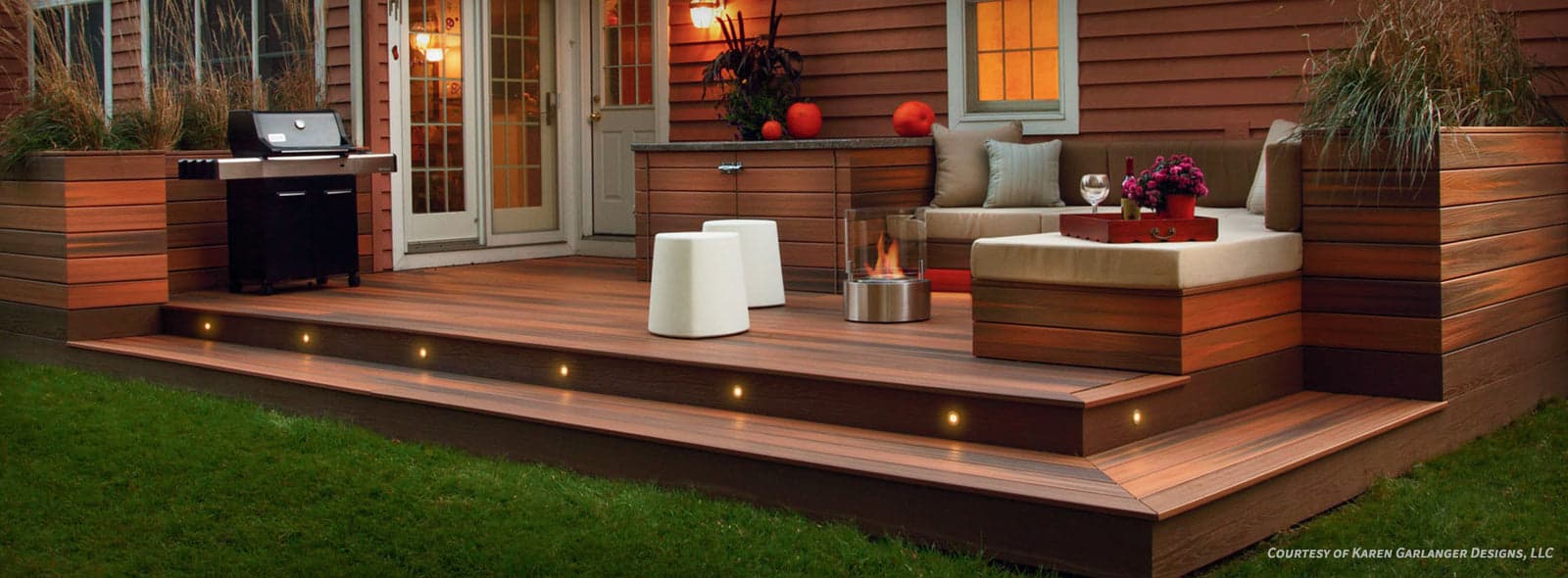
Understanding the Vacation Home Challenge
Vacation homes often endure periods of vacancy, exposing the deck to weather without regular oversight. This means the chosen decking material must be resilient to moisture, UV exposure, and temperature fluctuations. It also needs to resist common issues like mold and mildew growth, which can accelerate in humid conditions when not routinely cleaned. The goal is to minimize the tasks required upon arrival, allowing more time for relaxation and enjoyment.
Traditional wood decking, while attractive, typically requires periodic staining, sealing, or painting to protect against weathering and rot. This maintenance cycle can be challenging to manage from a distance or during short visits. Fiberon composite decking, by contrast, is engineered to sidestep these frequent maintenance tasks, making it a suitable option for properties where hands-on care is less practical.
Why Fiberon Composite Decking Suits Vacation Homes
Fiberon is a capped wood-plastic composite decking that offers a combination of durability and reduced maintenance. The capping layer provides protection against stains and fading, which is beneficial for decks exposed to sun and occasional spills without immediate cleanup. This means the deck's appearance can remain more consistent over time, even with intervals between visits.
A key advantage of Fiberon decking is its "no maintenance cycle" claim, meaning it does not require staining, sealing, or sanding. The recommended upkeep is an annual soap-and-water wash. For a vacation home, this translates to fewer chores and more time to enjoy the property. The material is also made with recycled content, contributing to its durability and resistance to rot and insects.
Fiberon offers different lines, each with varying levels of capping and warranty. The Fiberon Concordia line features four-sided capping, providing comprehensive protection, while Fiberon Sanctuary is three-sided capped. Fiberon Good Life, an entry-level option, offers a scalloped profile and the same no-stain, no-seal ownership benefits. The choice between these lines may depend on the specific exposure conditions of your vacation home and your budget.
For properties in areas with significant sun exposure, the fade resistance of Fiberon's capping can help maintain the deck's color over many seasons. The material's resistance to moisture absorption also helps mitigate issues like warping or splintering that can occur with natural wood in fluctuating climates.
Planning Your Vacation Home Decking Project
When planning a Fiberon deck for a vacation home, consider the typical intervals between your visits. If the property is unoccupied for several months, selecting a board with robust capping will offer greater peace of mind. Assess the exposure to sun, rain, and potential organic debris like leaves or pine needles, as these factors will influence the cleaning frequency and the type of maintenance needed.
Consider the overall aesthetic you want to achieve. Fiberon offers various colors and finishes, from multi-tonal blends in Concordia like Ipe and Graphite, to warm wood tones in Sanctuary such as Chestnut and Moringa, and more honest colors in Good Life like Cabin and Beach House. These options allow you to match the deck to the architectural style of your vacation home and its surrounding landscape.
It is also important to plan for proper ventilation beneath the deck, especially in humid environments. Good airflow helps prevent moisture buildup and potential mold growth on the underside of the boards or the substructure. Consult the manufacturer's installation guidelines for specific spacing requirements for joists and between boards to ensure adequate ventilation.
A Worked Example: Small Lake House Deck
Imagine a small lake house with a 10-foot by 12-foot deck that sees use primarily during summer weekends and occasional fall visits. The owners want a low-maintenance solution that blends with the natural surroundings and requires minimal work upon arrival.
For this project, the Fiberon Sanctuary line in "Chestnut" might be a suitable choice. Its three-sided capping offers good protection against stains and fading, and the warm, natural wood tone complements the lake house setting. The deck will be built using standard 12-foot length boards to minimize waste. The deck is a simple rectangle, so a straight lay will be used, running parallel to the house.
**Deck Dimensions:** 10 feet wide x 12 feet long = 120 square feet.
**Board Profile:** Fiberon boards are 1 inch x 5.5 inches.
**Calculation:** To cover 10 feet in width with 5.5-inch boards, you would need approximately 10 feet * 12 inches/foot / 5.5 inches/board = 21.8 boards. Round up to 22 boards for full coverage. Since the deck is 12 feet long, each board will be a full 12-foot length. Therefore, 22 boards of 12-foot length Fiberon Sanctuary Chestnut would be needed for the main deck surface. This calculation does not include any waste factor or specific cutting for features like stairs or railings, which would require additional material.
Additionally, matching Fiberon fascia boards would be specified to finish the rim joists, ensuring a cohesive look for the deck's perimeter.
Maintenance and Care for Infrequent Use
While Fiberon decking is low maintenance, it is not maintenance-free. For a vacation home, planning for an annual cleaning is a practical approach. This typically involves a simple wash with soap and water to remove dirt, pollen, and any organic debris that may have accumulated. This routine helps preserve the deck's appearance and prevents buildup that could lead to staining.
If the deck is under trees, consider sweeping or blowing off leaves and needles before they decompose and potentially stain the surface. For areas prone to heavy rain or humidity, a more thorough cleaning might be needed once or twice a year. Always refer to Fiberon's specific cleaning instructions to ensure compatibility with cleaning products.
For any stubborn spots or accidental spills that occur during your visits, address them promptly. Although Fiberon has a stain warranty, immediate cleaning is always the best practice. Keeping a compatible deck cleaner at the vacation home can be helpful for quick spot treatments.
Complementary Products for Your Vacation Home Deck
Beyond the decking boards themselves, consider other products that enhance the functionality and appearance of your vacation home deck. Railing systems, for instance, are crucial for safety and can be chosen to complement the Fiberon decking. Options range from composite railings that match the decking to aluminum or cable rail systems that offer different aesthetics and levels of transparency.
Outdoor lighting can extend the usability of your deck into the evening hours. Integrated post cap lights or stair riser lights can provide ambient illumination and improve safety. For privacy or shade, consider pergolas or privacy screens that can be incorporated into the deck design. These additions can transform a simple deck into a more versatile outdoor living space, even if used only seasonally.
For the substructure, using pressure-treated lumber for joists and beams is a common practice. Ensuring the substructure is well-built and protected will contribute to the longevity of your entire deck system. Consider using appropriate deck flashing and joist tape to protect wooden components from moisture, especially in areas with significant rainfall or snow melt.
Before you order
- Consider the typical duration and frequency of your visits to the vacation home.
- Evaluate the climate and environmental exposure (sun, rain, humidity, organic debris).
- Choose a Fiberon line (Concordia, Sanctuary, Good Life) based on desired durability, aesthetics, and budget.
- Select a color and finish that complements the vacation home's style and surroundings.
- Plan for proper deck ventilation to prevent moisture buildup.
- Budget for an annual cleaning and have appropriate cleaning supplies on hand.
- Consider complementary railing systems, lighting, and other outdoor features.
- Verify substructure requirements and consider protective measures for wood components.
Confirm installation details, approved uses and warranty terms in the current instructions for the exact product and profile. Your installer should verify the substrate, structure and applicable project requirements.
Questions to help you decide
How often does a Fiberon deck at a vacation home need cleaning?
For vacation homes, an annual soap-and-water wash is generally sufficient to maintain a Fiberon deck. However, if the property is in an area with heavy tree cover or high humidity, you might consider cleaning it twice a year, or after any significant accumulation of debris, to keep it looking its best.
Will Fiberon decking resist fading if the vacation home is in a sunny location?
Fiberon composite decking is engineered with a protective cap layer designed to resist fading. This capping helps maintain the deck's color even with prolonged sun exposure.
Can I leave planters or outdoor furniture on a Fiberon deck at a vacation home for extended periods?
While Fiberon decking is durable, it's generally a good practice to periodically move planters or heavy furniture, especially during long periods of vacancy. This allows the deck surface underneath to dry out and prevents potential moisture trapping or uneven weathering that could occur over many months. Ensure planters have proper drainage to avoid standing water.
Ready to Plan Your Vacation Home Deck?
Request a material quote with your project dimensions, desired Fiberon profile, and ZIP code. We can confirm current availability and service options for your project.
Request a material quote →