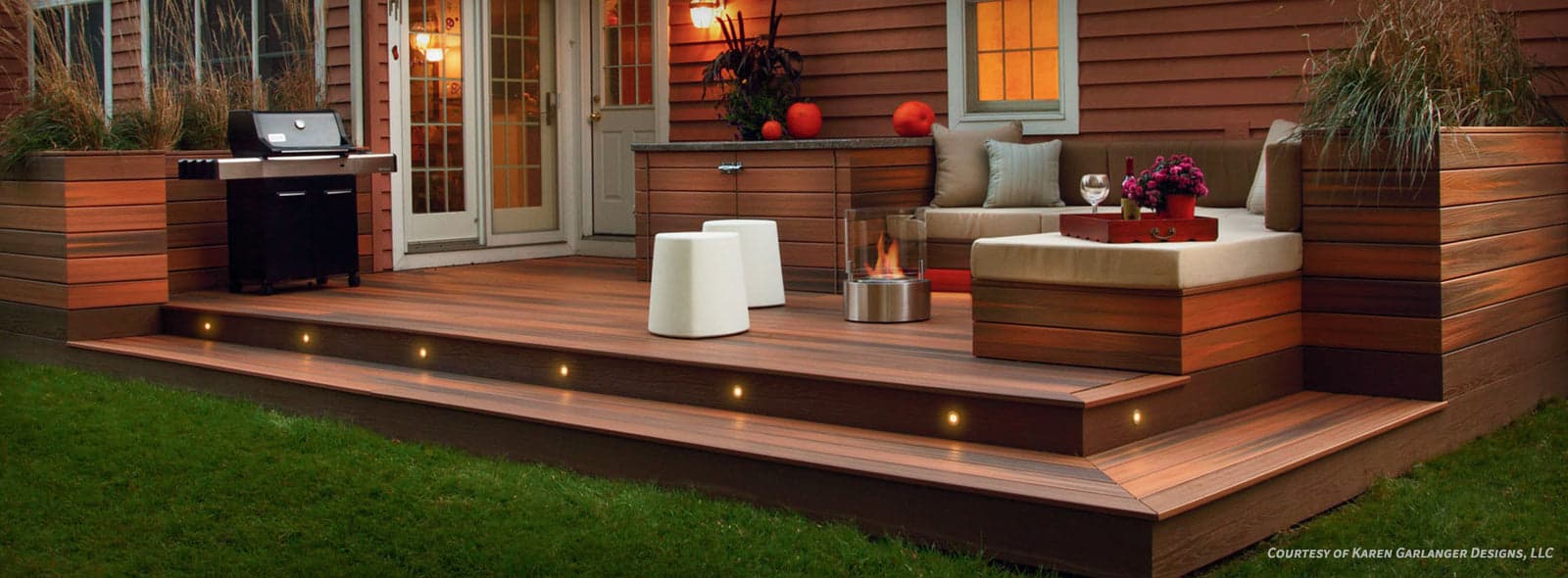
Understanding Fiberon Decking Material and Composition
Fiberon decking is a capped wood-plastic composite material. This means each board consists of a wood and plastic core, encapsulated by a durable outer layer, or 'cap.' This cap is engineered to resist staining and fading. The material composition includes 94% recycled content by weight, utilizing locally sourced recycled lumber and plastics, and manufactured in the USA.
This composition offers a balance of natural wood aesthetics with enhanced durability and reduced maintenance compared to traditional wood decking. The recycled content also aligns with sustainability considerations for your project. Understanding this core material helps contextualize the performance characteristics and maintenance recommendations.
Board Profiles and Dimensions: Grooved vs. Square Edge
Fiberon decking boards are available in a standard profile of 1 inch by 5.5 inches. Within this dimension, you'll typically find two edge profiles: grooved and square. Grooved-edge boards are designed for use with hidden fastening systems, which create a clean, fastener-free deck surface. Square-edge boards are intended for face fastening, often used for perimeter boards, stairs, or other areas where hidden fasteners are not suitable or desired.
When planning your project, it's essential to specify the correct edge profile for each part of your deck. For instance, a typical deck might use grooved boards for the main field and square-edge boards for picture-frame borders or stair treads. Mixing and matching these profiles correctly ensures a cohesive and functional installation.
Available lengths for Fiberon decking boards are 12, 16, and 20 feet. This range allows for flexibility in design, helping to minimize seams on longer runs or optimize cuts for smaller sections. Consider your deck's overall dimensions and desired layout when selecting board lengths to reduce waste and improve the finished appearance.
Fastening Systems: Hidden Clips and Face Screws
Hidden fastening systems involve clips that fit into the grooves on the side of the boards, attaching them to the joists from underneath. This method results in a smooth, uninterrupted deck surface, enhancing aesthetics and comfort.
Face fastening, using screws driven through the face of the board into the joist, is a more traditional method. It's often used for square-edge boards in applications like fascia, stair risers, or the first and last boards of a deck where hidden fasteners may not be practical. When face-fastening, it's important to use screws approved for composite decking to prevent splitting and ensure proper hold. Ensure you understand which fastening system is compatible with your chosen board profile and project design.
Structural Requirements: Joist Spacing Guidelines
Proper joist spacing is critical for the structural integrity and long-term performance of any deck.
These guidelines ensure adequate support for the decking boards, preventing excessive deflection or movement under load. Deviating from these specifications can compromise the deck's stability and may void product warranties. Always consult the most current installation guides from Fiberon or a qualified professional to confirm joist requirements for your specific project.
Maintenance and Longevity Considerations
One of the advantages of Fiberon composite decking is its low-maintenance nature. The manufacturer specifies that annual soap-and-water washing is typically sufficient for cleaning. Unlike wood decking, Fiberon boards do not require staining, sealing, or sanding.
These warranties underscore the material's designed resistance to common outdoor elements and help define the expected performance and longevity of your deck. Always review the specific warranty terms for the product line you select to understand coverage details.
Worked Example: Planning a 12x16 Foot Fiberon Deck
Let's assume you are building a 12-foot by 16-foot rectangular deck. You've chosen Fiberon Sanctuary boards in Chestnut. The main deck area will use grooved boards for hidden fasteners, and you plan a picture-frame border using square-edge boards.
First, determine board lengths. For the 16-foot length of the deck, 16-foot boards will minimize seams. For the 12-foot width, you could use 12-foot boards. If you lay boards parallel to the 16-foot dimension, you'll need approximately 24 boards (11 feet / 5.5 inches per board = 24 boards). Each would be 16 feet long. For the picture frame, you'll need two 16-foot square-edge boards for the long sides and two 12-foot square-edge boards for the short sides (cut to fit inside the long border pieces).
Next, consider joist spacing. This example assumes perpendicular installation.
This hypothetical calculation provides a starting point. Always account for waste, cuts, and potential miscalculations by adding a small percentage (e.g., 5-10%) to your board quantity. Confirm all dimensions and fastening methods with a detailed project plan and the latest Fiberon installation guide.
Related products to consider for a complete project include:
Composite Decking: /decking/composite
Hardwood Decking: /decking/hardwood
Ipe Decking: /decking/hardwood/ipe
PVC Decking: /decking/pvc
Before you order
- Confirmed board profile: Grooved for hidden fasteners, Square-edge for face-fastening/trim?
- Selected appropriate board lengths (12 ft, 16 ft, 20 ft) to minimize waste and seams?
- Identified the specific Fiberon product line (Concordia, Sanctuary, Good Life) and its associated warranty?
- Planned for matching fascia, risers, and trim boards from the same Fiberon line?
- Understood the recommended cleaning and maintenance procedures for the chosen product?
- Reviewed the latest Fiberon installation guide for any specific project requirements or limitations?
Confirm installation details, approved uses and warranty terms in the current instructions for the exact product and profile. Your installer should verify the substrate, structure and applicable project requirements.
Questions to help you decide
What is the difference between grooved and square-edge Fiberon boards?
Grooved-edge Fiberon boards have a channel along their sides designed to accept hidden fastening clips, creating a smooth, fastener-free deck surface. Square-edge boards have straight edges and are typically used for face-fastening applications like perimeter boards, stair treads, or fascia, where screws are driven directly through the board's surface.
Can I use Fiberon decking for a diagonal deck layout?
Yes, Fiberon decking can be installed diagonally.
What kind of maintenance does Fiberon decking require?
Fiberon composite decking is designed for low maintenance. The primary recommendation is an annual cleaning with soap and water to remove dirt and debris. Unlike traditional wood decking, it does not require staining, sealing, or sanding, thanks to its durable capped surface.
Ready to Plan Your Fiberon Decking Project?
Request a material quote today! Provide your project dimensions, desired Fiberon profile, and ZIP code to confirm current availability and service options for your area. We're here to help you select the right materials.
Request a material quote →