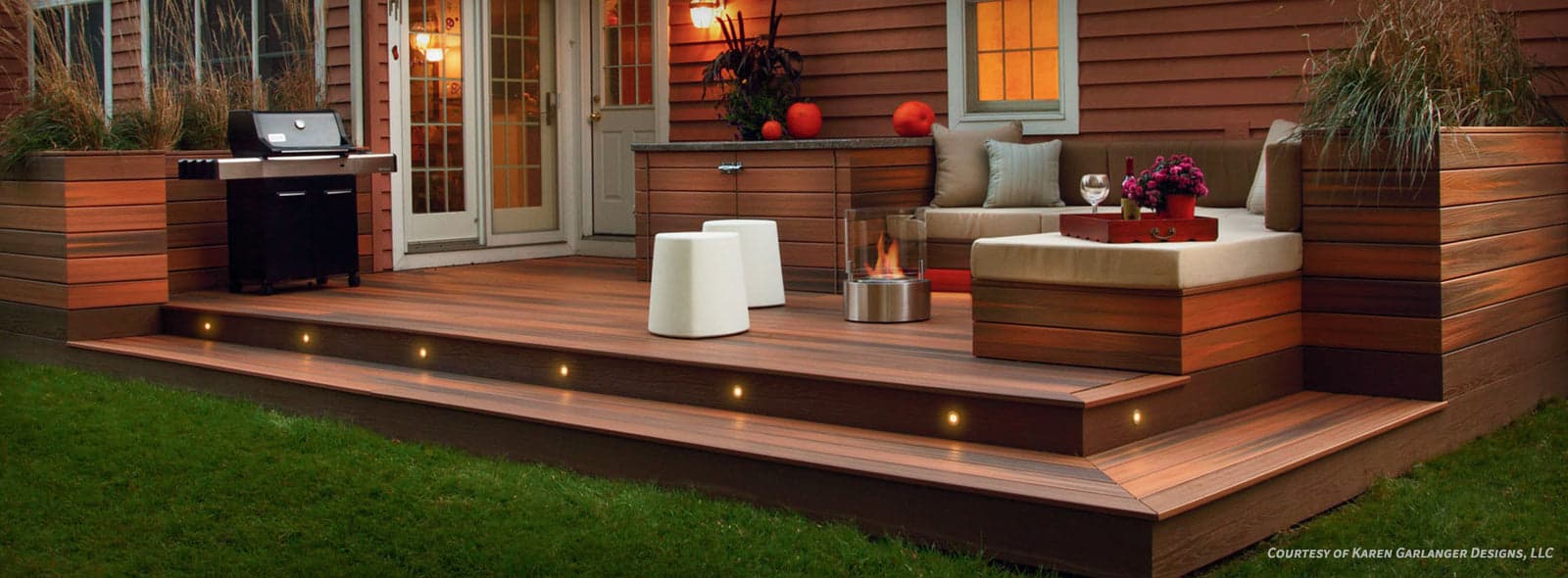
Why Exact Spacing Matters for Fiberon Decking
Fiberon decking boards are engineered to be stable, but they still experience thermal expansion and contraction. This means the boards will slightly lengthen and widen in warmer temperatures and shorten and narrow in colder conditions. Proper spacing accounts for this movement, preventing boards from pushing against each other (buckling) or pulling apart excessively, which could expose the substructure.
Beyond thermal movement, precise spacing also aids in drainage, allowing water to pass through the deck surface and reducing the risk of standing water. It also contributes to the overall aesthetic, creating a consistent, professional finish across your deck surface. Ignoring these requirements can void product warranties and lead to costly repairs down the line.
Understanding Fiberon Product Lines and Their Spacing Needs
Fiberon offers several decking lines, including Fiberon Concordia, Fiberon Sanctuary, and Fiberon Good Life. While all are capped composite, the specific material compositions and board profiles can subtly influence their thermal movement characteristics and, consequently, their recommended spacing. Always consult the most current installation guide for the exact Fiberon product you are using.
Key factors to consider from the product guide include the ambient temperature at the time of installation, the length of the boards, and whether you are using grooved-edge boards with hidden fasteners or square-edge boards with face screws. These details directly impact the recommended gap dimensions.
Joist Spacing and Deck Board Orientation
Before considering the gaps between individual deck boards, confirm your substructure meets Fiberon's joist spacing requirements. If installing boards diagonally, this maximum often reduces to 12 inches o.c. Adhering to these structural guidelines is foundational for proper deck board performance and stability, regardless of the gap dimensions.
The orientation of your deck boards – perpendicular or diagonal to the joists – also influences the fastening method and, indirectly, how expansion and contraction are managed. Diagonal layouts may require specific fastening techniques or slight adjustments to spacing to ensure long-term stability.
Hidden Fasteners vs. Face Screws: Impact on Gaps
Fiberon decking supports both hidden clip fastening systems and face screws. When using grooved-edge boards with a hidden fastening system, the clips themselves often set a consistent gap between boards automatically. This simplifies installation and ensures uniform spacing.
For square-edge boards, typically used for perimeter boards or stairs, face screws are employed. In these cases, you will need to manually establish the recommended gap using spacers. This method requires careful measurement and consistent application to achieve the desired result.
Worked Example: Planning Spacing for a Fiberon Sanctuary Deck
3. **Calculate Number of Boards:** For a 12-foot (144-inch) width, you would need 144 inches / 5.6875 inches per board = approximately 25.32 boards. Since you cannot use a partial board for full coverage, you would plan for 26 boards. The actual final gap might be slightly adjusted across the width to maintain consistency.
This eliminates the need for manual spacers between boards in the main field.
Before you order
- Identify your specific Fiberon decking product line (e.g., Concordia, Sanctuary, Good Life).
- Locate the most current Fiberon installation guide for that product.
- Determine the ambient temperature range during your installation period.
- Verify the recommended gap spacing for your product and temperature conditions.
- Decide on your fastening method (hidden clips or face screws) and understand its impact on gap setting.
- Plan for edge and butt joints, as these may have different spacing requirements.
- Account for any specific instructions related to board length or connection to other materials.
Confirm installation details, approved uses and warranty terms in the current instructions for the exact product and profile. Your installer should verify the substrate, structure and applicable project requirements.
Questions to help you decide
Can I use the same spacing for all Fiberon decking products?
No. While there may be commonalities, it is crucial to consult the specific installation guide for your chosen Fiberon decking line (e.g., Concordia, Sanctuary, Good Life). Different product compositions or board profiles can have varying thermal expansion properties, leading to different recommended gap sizes.
What happens if I don't follow the recommended spacing?
Incorrect spacing can lead to several problems. If gaps are too small, boards can buckle or cup when they expand in heat. If gaps are too wide, the deck may have an unsightly appearance, create tripping hazards, or compromise the integrity of the fastening system. It can also void your product warranty.
Does the installation temperature affect spacing?
Yes, significantly. Fiberon installation guides often provide different spacing recommendations based on the ambient temperature at the time of installation. Boards installed in colder temperatures will expand more as temperatures rise, requiring a larger initial gap than boards installed on a hot day. Always check the temperature chart in your product's guide.
Ready to Plan Your Fiberon Decking Project?
Request a material quote with your project dimensions, exact Fiberon profile, and ZIP code. We can help confirm current availability and service options for your decking needs.
Request a material quote →