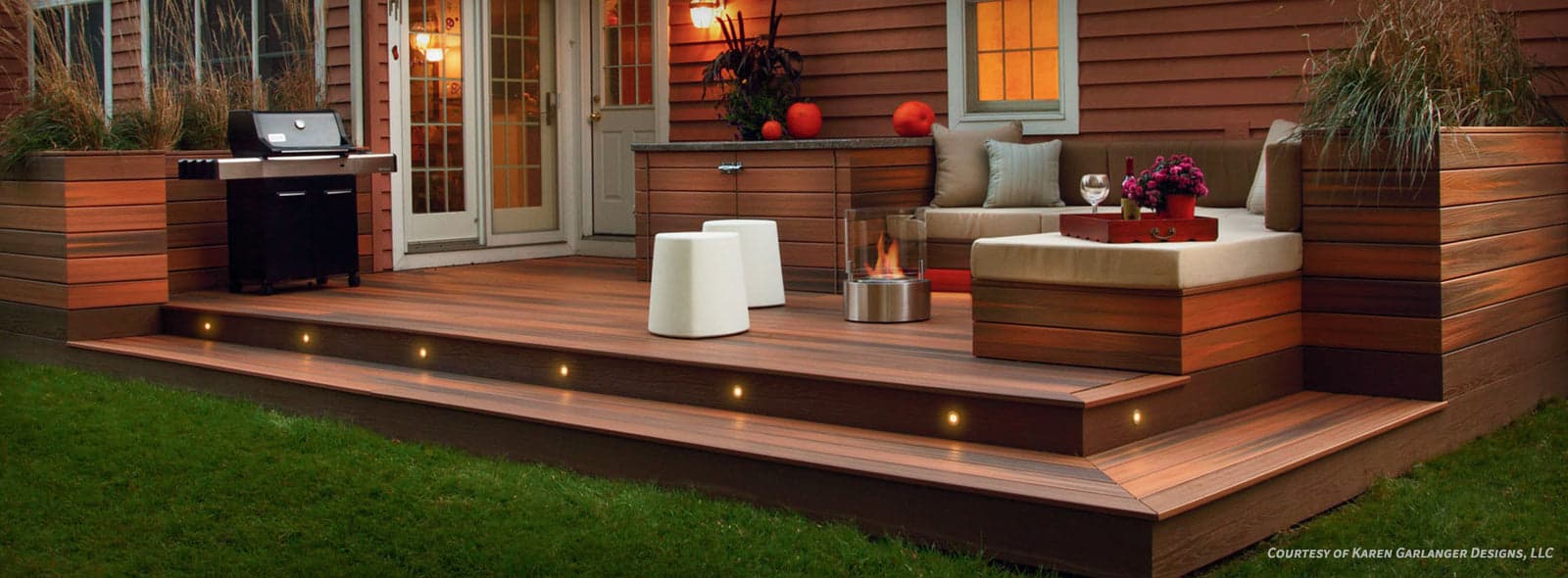
Understanding Shaded Deck Conditions
Shaded decks, by their nature, experience less direct sunlight, which impacts how moisture evaporates from the surface. This can lead to the deck staying damp for longer periods, potentially encouraging the growth of mold, mildew, or algae if not properly addressed. While Fiberon composite decking is engineered to resist these issues, planning for adequate ventilation and drainage is still important in shaded settings.
The reduced UV exposure in shaded areas may also influence the appearance over time, though Fiberon's capped composite construction is designed for color stability. The primary concern shifts from UV degradation to managing surface moisture and organic debris.
Fiberon Decking Lines for Shaded Applications
Fiberon offers several lines of capped composite decking, each with a different level of capping and aesthetic. All Fiberon lines are designed to resist staining and fading, making them suitable for shaded areas where organic growth might otherwise cause discoloration.
The Fiberon Concordia line features four-sided capping, offering a robust defense against moisture penetration and surface growth. The Fiberon Sanctuary line, with three-sided capping, presents a mid-range option combining durability with warm, natural wood tones.
All Fiberon boards are made with 94% recycled content, offering an environmentally conscious choice. The key is to select a line that aligns with your project's aesthetic goals and budget while ensuring the installation supports optimal performance in shaded conditions.
You can explore the different lines, including Fiberon Concordia, Fiberon Sanctuary, and Fiberon Good Life, to find the best fit for your project's design and performance needs.
Ventilation and Drainage for Shaded Decks
Proper ventilation underneath a deck is critical in any environment, but especially so for shaded decks. Stagnant, moist air underneath the deck can create a microclimate that hinders drying from above. Ensure your deck design includes open sides or adequate lattice work to allow for airflow. Avoid fully enclosing the under-deck area without specific ventilation provisions.
For drainage, ensure the ground beneath the deck slopes away from any structures, preventing water pooling. Consider using gravel or other permeable materials under the deck to help manage moisture. The deck boards themselves should be installed with the manufacturer-specified spacing to allow for water runoff and air circulation between boards, facilitating faster drying of the deck surface. These spacings help maintain structural integrity and contribute to proper board ventilation.
Cleaning and Maintenance in Shaded Areas
Fiberon decking requires minimal maintenance, typically a soap-and-water wash. In shaded areas, where organic debris and moisture can persist, a more frequent cleaning schedule may be beneficial. Regularly sweep or blow off leaves, dirt, and other organic matter to prevent it from accumulating and holding moisture on the deck surface.
For any visible mold, mildew, or algae, a gentle scrub with a soft-bristle brush and a solution of mild soap and water is usually sufficient. Always rinse thoroughly with water to remove any cleaning residue. Avoid harsh chemicals or pressure washers that can damage the board's surface. Refer to Fiberon's specific cleaning guidelines for approved products and methods to ensure compatibility and maintain your warranty.
While Fiberon's capped composite structure is highly resistant to staining, proactive cleaning in shaded environments helps preserve the deck's appearance and prevents the need for more intensive cleaning later.
Hypothetical Project: North-Facing Deck Under Mature Trees
Consider a hypothetical north-facing deck, 12 feet by 16 feet, located under a dense canopy of mature oak trees. This scenario represents a perpetually shaded environment with limited direct sun exposure and a consistent accumulation of leaves and debris.
For this project, we might select Fiberon Sanctuary decking in a warm chestnut tone. The three-sided capping offers good protection, and the natural aesthetic complements the wooded surroundings. We'd specify 16-foot grooved-edge boards for the main deck surface to minimize seams, along with square-edge boards for a picture-frame border. Matching fascia and riser boards would complete the system.
Installation would prioritize ventilation: the deck frame would be elevated at least 18 inches above grade, and the sides would be left open, allowing air to circulate freely beneath the deck. The ground beneath would be cleared of vegetation and covered with a permeable landscaping fabric and a layer of crushed gravel to deter moisture accumulation and weed growth. Board spacing would adhere strictly to Fiberon's recommendations for optimal drainage.
For ongoing maintenance, we'd recommend weekly sweeping during leaf-shedding seasons and a monthly wash with mild soap and water, paying particular attention to areas where leaves tend to collect. This proactive approach helps manage the unique conditions of a heavily shaded site.
Before you order
- Assess the specific shade conditions: How dense is the shade? Is it year-round or seasonal?
- Evaluate existing drainage: Does water pool near the deck area? Is the ground sloped away from the house?
- Consider under-deck ventilation: Are there existing obstructions to airflow? Can the under-deck area be left open?
- Select a Fiberon decking line: Which capping level and aesthetic best suits the project and budget?
- Plan for board spacing: Ensure installation adheres to Fiberon's specified gaps for drainage and airflow.
- Determine cleaning frequency: Adjust your maintenance schedule to account for slower drying and potential organic growth.
- Confirm cleaning product compatibility: Use only approved mild soaps and cleaning methods to protect the deck surface.
Confirm installation details, approved uses and warranty terms in the current instructions for the exact product and profile. Your installer should verify the substrate, structure and applicable project requirements.
Questions to help you decide
Can Fiberon decking get mold or mildew in shaded areas?
While Fiberon composite decking is designed to resist mold and mildew, any surface can develop organic growth if moisture and debris are consistently present. Shaded areas, which dry slower, can be more prone to this. Regular cleaning with mild soap and water, combined with good ventilation and drainage, helps prevent such growth and keeps your deck looking clean.
Does shade affect the color of Fiberon decking differently than sun?
Fiberon's capped composite decking is engineered for color stability and fade resistance, regardless of sun exposure. In shaded areas, the primary concern is not fading, but rather the potential for surface organic growth (like mold or algae) which can make the deck appear discolored. However, this is typically a surface issue that can be addressed with routine cleaning.
What is the best way to ensure good ventilation for a shaded Fiberon deck?
To ensure good ventilation, design your deck with open sides or use lattice with sufficient gaps to allow air to flow freely beneath the deck. Avoid fully enclosing the under-deck area. Also, ensure the ground beneath is clear of obstructions and slopes away from any structures to prevent water pooling, which contributes to stagnant, moist air.
Ready to Plan Your Shaded Fiberon Deck?
Request a material quote today. Provide your project dimensions, desired Fiberon profile, and ZIP code to confirm current availability and service options for your shaded deck project.
Request a material quote →