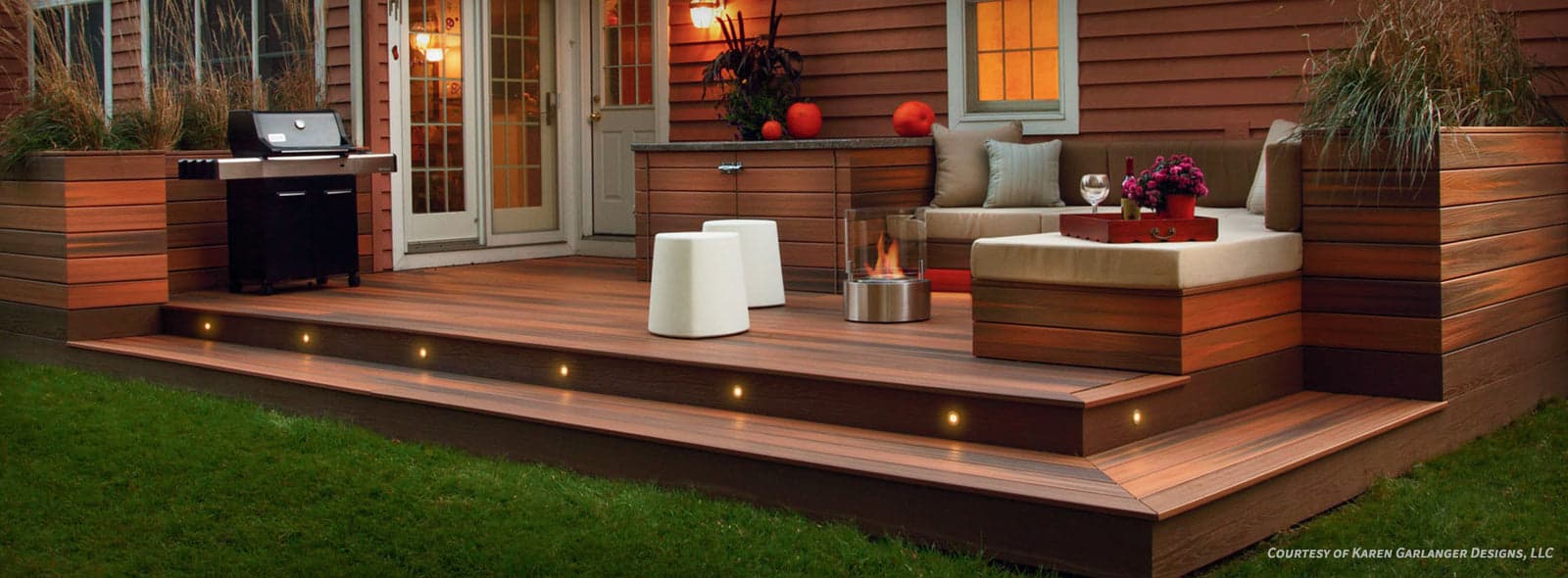
Understanding Commercial Suitability for Decking
Before selecting any decking material for a commercial application, it's crucial to confirm its suitability for high-traffic public spaces. While many decking products are designed for residential use, commercial settings impose different stresses, including heavier and more frequent foot traffic, potential for dragging furniture, and increased exposure to food and beverage spills. Fiberon decking is a capped wood-plastic composite, engineered to resist staining and fading, which are key concerns in a restaurant environment.
The capping technology provides a protective layer over the composite core, enhancing resistance to the elements and everyday wear. This makes Fiberon a viable option for patios where appearance retention is important for customer experience. Always verify local building codes and specific commercial use requirements, as these can vary significantly.
Designing for Seating Layout and Traffic Flow
A restaurant patio's layout must accommodate efficient traffic flow for staff and patrons, while also maximizing seating capacity comfortably. Consider the typical arrangement of tables and chairs, anticipating movement paths and potential pinch points. Fiberon decking, available in standard 1" x 5.5" board profiles and lengths up to 20 feet, allows for flexible design layouts, including straight runs or diagonal patterns.
When planning, account for adequate spacing between tables, accessibility requirements, and areas for service stations or planter boxes. The consistent dimensions of Fiberon boards can contribute to a uniform and professional appearance, which is important for a commercial setting.
Using a consistent board width can simplify this planning, allowing for modular arrangement of seating areas.
Maintenance and Cleanliness in a Restaurant Setting
For a restaurant patio, ease of cleaning and maintenance is paramount. Spills, food debris, and general dirt are inevitable. Fiberon decking is designed for low maintenance, requiring only an annual soap-and-water wash. This simplifies daily clean-up routines compared to traditional wood decking, which might require regular staining, sealing, or sanding. The capped surface is formulated to resist stains, which is particularly beneficial for a dining area prone to beverage and food spills.
While routine cleaning is straightforward, it's advisable to address spills promptly to prevent any potential long-term issues, especially with highly acidic or staining substances. This low-maintenance aspect can translate into operational savings and consistent aesthetic appeal for the restaurant.
Selecting Fiberon Decking Lines and Colors
Fiberon offers several lines, each with distinct features that can influence your patio's appearance and performance:
Fiberon Concordia: This flagship line features four-sided capped boards with multi-tonal color blends, offering a premium look. Colors like Ipe, Bordeaux, and Graphite provide sophisticated options that can complement various restaurant aesthetics.
Fiberon Sanctuary: A mid-range option with three-sided capping and cathedral grain, offering warm, believable wood tones such as Chestnut, Moringa, and Espresso. This line balances custom appearance with practicality.
Fiberon Good Life: An entry-level board with a scalloped profile and honest colors like Cabin and Beach House. It provides a cost-effective solution with the same low-maintenance benefits.
When choosing a color, consider the overall branding of the restaurant, the existing architecture, and the local climate. Lighter colors may show dirt more readily but can feel cooler underfoot in direct sun, while darker colors can hide minor scuffs but may absorb more heat. Requesting physical samples is crucial to assess how colors appear in different lighting conditions and against other design elements.
Fiberon offers a range of colors from coastal gray to tropical brown, ensuring options for diverse design preferences.
Explore Fiberon colors: [Fiberon Colors](/brands/fiberon#swatches)
Specification Review and Installation Considerations
Proper installation is critical for the longevity and performance of any commercial deck. Fiberon boards are available with grooved edges for hidden fasteners or square edges for face screws and picture framing. Hidden fasteners create a clean, seamless look, which can enhance the upscale feel of a restaurant patio.
Matching fascia and riser boards are available to complete the look and provide a finished edge. Always review the detailed installation guidelines provided by Fiberon to ensure compliance and optimal performance. These specifications are designed to ensure structural integrity and proper drainage, which are especially important in a commercial setting where safety and durability are key concerns.
Complementary products for your project: [Decking](/decking), [Hardwood Decking](/decking/hardwood), [IPE Decking](/decking/hardwood/ipe), [Composite Decking](/decking/composite), [PVC Decking](/decking/pvc)
Before you order
- Confirm local building codes and commercial use requirements for decking.
- Assess anticipated foot traffic and furniture movement to select a durable decking line.
- Plan seating layouts and traffic paths, allowing adequate clearance for patrons and staff.
- Consider the ease of cleaning and maintenance for daily operations.
- Select a Fiberon decking line and color that complements the restaurant's aesthetic.
- Obtain physical samples to evaluate color and texture in actual lighting conditions.
- Verify board profiles (grooved/square) and fastening methods (hidden/face screw) for installation.
- Ensure joist spacing and other structural elements meet Fiberon's specifications.
- Include matching fascia and riser boards for a complete finish.
Confirm installation details, approved uses and warranty terms in the current instructions for the exact product and profile. Your installer should verify the substrate, structure and applicable project requirements.
Questions to help you decide
Is Fiberon decking suitable for heavy commercial traffic?
Fiberon capped composite decking is engineered with a protective cap that enhances its resistance to stains and fading, making it a robust option for areas with consistent foot traffic like restaurant patios. While durable, all commercial applications should be reviewed against specific usage patterns and local building codes.
How do I maintain Fiberon decking on a restaurant patio?
Fiberon decking requires minimal maintenance. For a restaurant patio, routine cleaning with soap and water is generally sufficient. Promptly cleaning up food and beverage spills is recommended to maintain the deck's appearance. No staining, sealing, or sanding is required.
Can Fiberon decking withstand spills from food and drinks?
Yes, Fiberon decking's capped surface is designed to resist stains from common food and beverage spills. This feature is particularly beneficial for restaurant patios, where spills are frequent. For best results, clean spills as soon as possible.
Plan Your Restaurant Patio with Fiberon Decking
Ready to enhance your restaurant's outdoor dining space? Request a material quote for Fiberon decking. Provide your project dimensions, desired profile, and ZIP code to confirm current availability and service options. Our team can help you select the right Fiberon line and quantities for your commercial patio project.
Request a material quote →