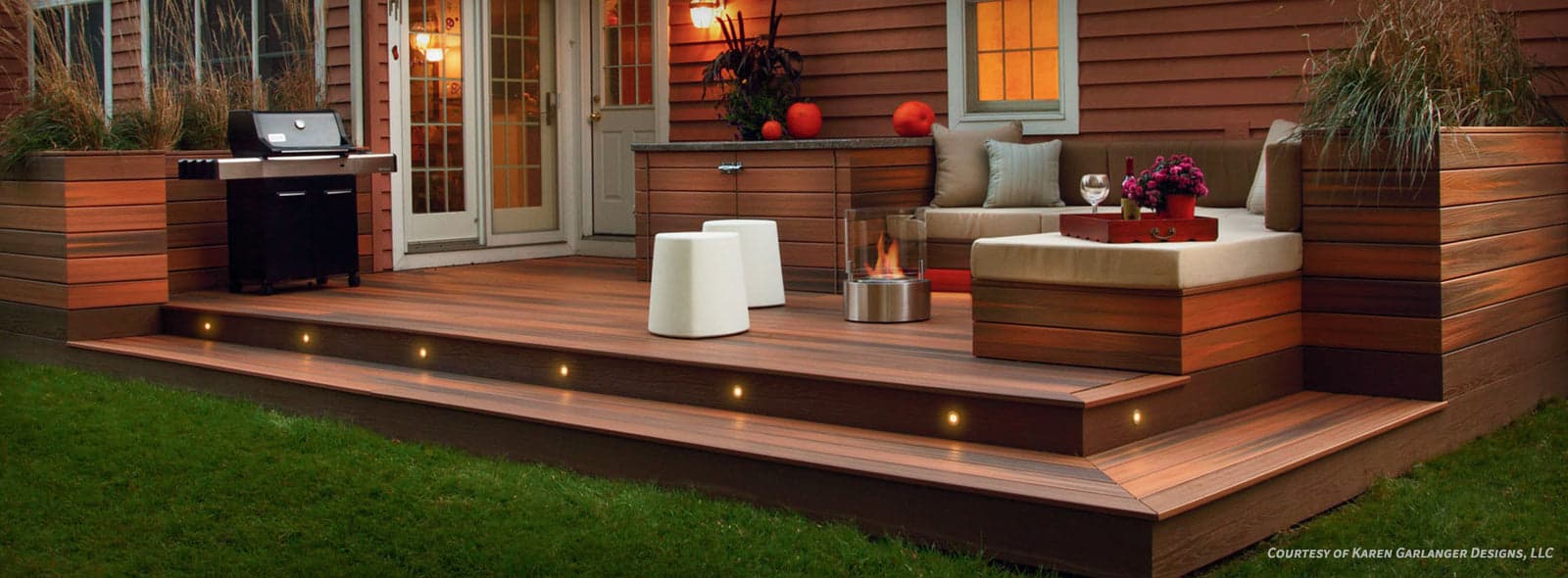
Why Product Identification is Crucial for Repairs
Fiberon decking is manufactured with specific profiles, capping layers, and color formulations. Even within the same color name, there can be subtle variations over time due to manufacturing processes or natural weathering of the existing boards. Attempting to replace a board without proper identification can result in:
Color Mismatch: Even if the color name is the same, different product lines or production batches can have slight variations.
Profile Incompatibility: Board dimensions, edge profiles (grooved for hidden fasteners vs. square-edge for face fastening), and even board thickness can vary between lines.
Texture Discrepancy: The surface texture and grain pattern can differ significantly, making a replacement board stand out.
Capping Layer Differences: Some Fiberon lines are three-sided capped, while others are four-sided. This affects durability and appearance over time.
Step 1: Locate Your Original Project Documentation
The most reliable way to identify your Fiberon decking is to consult your original purchase order, contractor's invoice, or architectural plans. These documents should specify the exact Fiberon product line (e.g., Concordia, Sanctuary, Good Life), the color name (e.g., Ipe, Chestnut, Cabin), and potentially the board dimensions and lengths purchased. If you saved any leftover boards, check for labels or stamps.
Often, original documentation will also include the date of purchase, which can be helpful if you suspect your deck was installed many years ago and product lines may have evolved. Keep these records in a safe place for future reference.
Step 2: Examine the Existing Decking Boards
If documentation is unavailable, a close examination of your existing deck boards can provide clues. Look for:
Determine which type your deck utilizes. (S1)
Surface Texture and Grain: Each Fiberon line has a distinct surface. Concordia features deep multi-tonal blends, Sanctuary has a cathedral grain, and Good Life has an honest, more classic look. (S1)
Capping: Observe if the board is capped on three sides or four. This can differentiate between lines like Concordia (four-sided capped) and Sanctuary (three-sided capped). (S1)
Color Characteristics: While subjective, note the primary hue and any subtle undertones or streaking. Fiberon's color names like "Ipe" (Concordia), "Chestnut" (Sanctuary), or "Cabin" (Good Life) are specific to their respective lines. (S1)
Board Underside: Some Fiberon boards, particularly the Good Life line, feature a scalloped profile on the underside, which can be a key identifier. (S1)
Step 3: Compare with Current Fiberon Product Lines
Once you have gathered observations from your existing deck, compare them against the current Fiberon product lines available through Lumber Plus. This comparison will help narrow down the possibilities.
Fiberon Concordia: Flagship line, four-sided capped, deepest multi-tonal color blends. (S1)
Fiberon Sanctuary: Mid-range, three-sided capped, cathedral grain, warm wood tones. (S1)
Fiberon Good Life: Entry-level, scalloped profile, honest colors. (S1)
Refer to online product catalogs or, ideally, visit a Lumber Plus location to view physical samples. Pictures online can vary due to screen settings, so seeing the actual material is best for color and texture matching.
Worked Example: Identifying a Damaged Board
Let's say you have a damaged board on a 12x10 foot deck. You remember it was installed about seven years ago, but have no paperwork. Here's how to approach identification:
1. Observe the damaged board: It has a rich, variegated brown color with subtle streaking, mimicking tropical hardwood. The surface feels smooth but has a visible, realistic wood grain. When you look at the cut end, you see the capping layer extends around all four sides of the board. The boards are installed with hidden fasteners, indicating a grooved edge.
2. Consult Fiberon product descriptions: The description of "four-sided capped boards with the deepest multi-tonal color blends" immediately points towards Fiberon Concordia. The color description aligns with options like "Ipe" or "Bordeaux" in the Concordia line. The grooved edge is consistent with hidden fastener installation. (S1)
3. Verify with samples: You'd then request physical samples of Fiberon Concordia in "Ipe" and "Bordeaux" to compare against your existing deck boards under natural light. This direct comparison is crucial for color and texture accuracy, especially considering potential weathering of your existing deck.
By systematically comparing observations with documented product characteristics, you can confidently identify the correct replacement board, minimizing visual discrepancies and ensuring a cohesive repair.
Before you order
- Have I located original purchase records or invoices for the deck?
- Have I identified the exact Fiberon product line (e.g., Concordia, Sanctuary, Good Life)?
- Have I identified the specific color name of my existing Fiberon decking?
- Have I confirmed the board profile (grooved-edge for hidden fasteners or square-edge for face fastening)?
- Have I noted any unique characteristics like multi-tonal blends, cathedral grain, or scalloped undersides?
- Have I considered the age of the deck and potential weathering effects on color?
- Do I have a physical sample of the current Fiberon product to compare against my existing deck?
- Have I measured the length of the damaged board(s) needed for replacement?
Confirm installation details, approved uses and warranty terms in the current instructions for the exact product and profile. Your installer should verify the substrate, structure and applicable project requirements.
Questions to help you decide
Can I mix different Fiberon product lines on my deck?
While technically possible, it is not recommended to mix different Fiberon product lines for replacement boards within the same visible area. Different lines have varying profiles, capping layers, textures, and color formulations, which would likely result in a noticeable visual mismatch. For a cohesive appearance, always try to match the existing line and color.
What if my Fiberon deck color has faded slightly over time?
When replacing a board, a new board of the exact same color and line may initially appear slightly different. Over time, the new board will weather to blend in more. To minimize the initial contrast, you might consider replacing boards in less prominent areas, or if replacing multiple, distributing them to avoid a stark block of new material. Always confirm the current color availability and compare physical samples.
How do I determine the correct length for replacement boards?
First, measure the exact length of the damaged board you need to replace. Fiberon decking is typically available in 12, 16, and 20-foot lengths. (S1) You may need to purchase a longer board and cut it to size. Plan your cuts carefully to minimize waste. If multiple boards are damaged, consider if a single longer board can yield several replacement sections efficiently.
Ready to Repair Your Fiberon Deck?
Provide your project dimensions, the exact Fiberon profile and color you've identified, and your ZIP code to request a material quote. We can confirm current availability and service options to help you complete your deck repair.
Request a material quote →