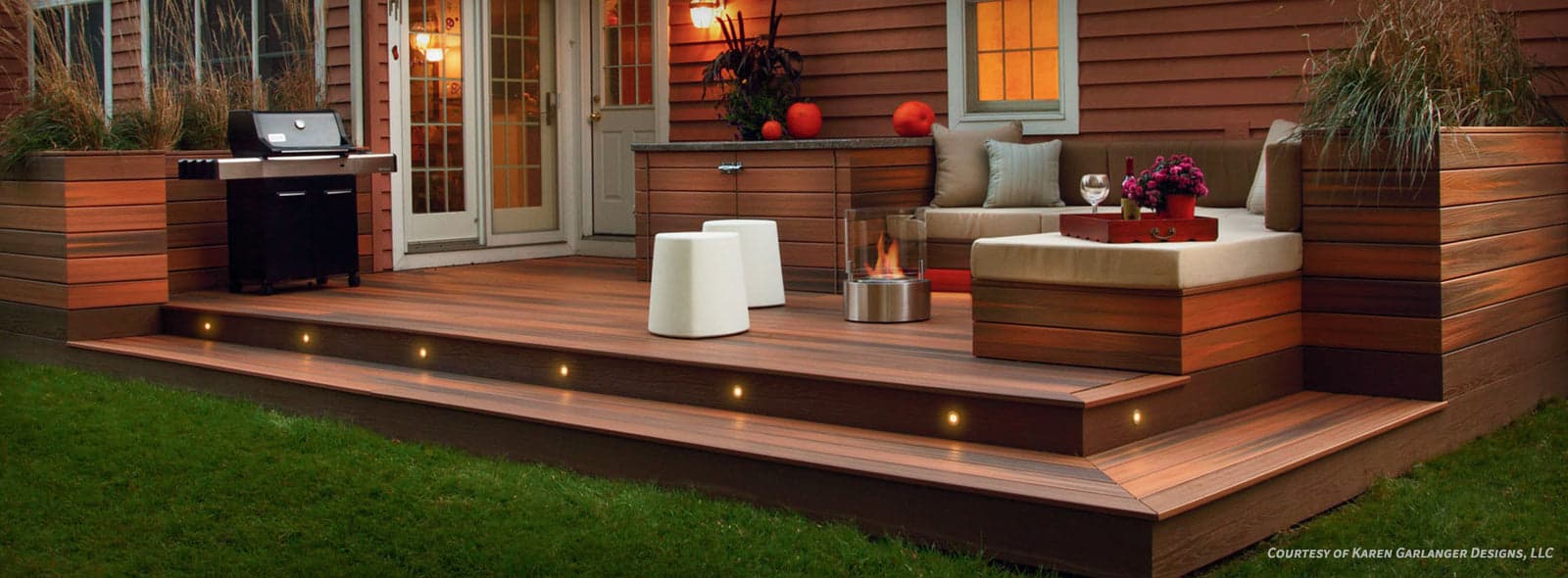
Understanding the Picture Frame Concept
A picture frame border refers to the perimeter boards of a deck laid perpendicular to the main field boards, creating a border that visually frames the deck surface. This technique can be used to define different zones on a large deck, provide a clean edge where the deck meets other surfaces, or simply add a refined design element. With Fiberon decking, you can choose a border in a complementary or contrasting color, or use the same color for a subtle, tailored look. The border also neatly conceals the cut ends of the field boards, contributing to a more finished appearance.
Substructure Requirements for Picture Frames
The most critical aspect of planning a Fiberon picture frame border is ensuring adequate support from the substructure. Unlike field boards, which typically run across joists, picture frame boards run along the perimeter and require continuous blocking. This blocking provides the necessary fastening surface for the square-edge Fiberon boards that are commonly used for borders.
For a single picture frame board, you will need to install blocking between the rim joist and the first interior joist, or between the outermost joist and an additional joist or beam. For wider borders, or those incorporating multiple picture frame boards, additional blocking will be required to support each board's edge. The blocking should be installed flush with the top of the joists to create a level surface for the decking. Proper spacing and secure attachment of this blocking are essential for the stability and longevity of the border. Ensure your blocking adheres to these guidelines for the border boards as well.
Consider the fastening method when planning your blocking. While hidden fasteners are common for field boards, square-edge boards used for picture frames are typically face-fastened. The blocking must be robust enough to accept these fasteners securely.
Choosing the Right Fiberon Boards: Grooved vs. Square-Edge
Fiberon offers decking in both grooved-edge and square-edge profiles. The choice between these is crucial for a picture frame design.
Grooved-edge boards are designed for use with hidden fastening systems, where clips fit into the grooves along the board edges, securing them to the joists. These are ideal for the main field of the deck, creating a clean, fastener-free surface.
Square-edge boards, on the other hand, have solid edges without grooves. These are typically used for face-fastening applications, such as stair treads, fascia, and crucially, picture frame borders. Face-fastening involves driving screws directly through the board face into the substructure. This method provides strong attachment for perimeter boards that might experience more edge traffic or require a more robust connection.
For a consistent aesthetic, matching fascia boards are available across Fiberon's lines, including Concordia, Sanctuary, and Good Life. These can be used to finish the vertical edges of the deck, complementing the picture frame border. The availability of matching fascia and riser boards from stock simplifies ordering and ensures a cohesive look across the entire deck system.
Worked Example: A Single Picture Frame Border
Let's consider a hypothetical 10-foot by 12-foot rectangular deck where you want a single 5.5-inch wide Fiberon picture frame border. The main field boards will run parallel to the 12-foot dimension.
1. **Deck Dimensions:** 10 ft (width) x 12 ft (length).
2. **Border Width:** One Fiberon square-edge board, which is typically 1 inch thick by 5.5 inches wide.
3. **Substructure Modification:** Along the 10-foot ends and the 12-foot sides, you will need to add continuous blocking. This creates a solid surface for the picture frame board to be face-fastened to. For the corners, ensure sufficient blocking is in place to support the mitered or butt joints of the border boards.
4. **Field Board Calculation:** The interior area for the field boards will be reduced. The effective width for the field boards becomes 10 ft - (2 x 5.5 inches) = 10 ft - 11 inches = 9 ft 1 inch. The effective length for the field boards remains 12 ft, as the end picture frame boards will butt into the side picture frame boards.
5. **Board Quantity (Border):** You will need two 10-foot square-edge boards for the ends and two 12-foot square-edge boards for the sides. If using mitered corners, you might need slightly longer boards for the cuts. Assuming butt joints, you'd purchase two 12-foot and two 10-foot lengths. Fiberon boards come in 12, 16, and 20-foot lengths. So, for the 10-foot ends, you'd likely use a 12-foot board and cut it, leaving a small offcut. For the 12-foot sides, you'd use 12-foot boards directly.
6. **Fastening:** The picture frame boards will be face-fastened into the blocking. The field boards will be installed with hidden fasteners, with their ends butting cleanly against the inside edge of the picture frame.
This example simplifies the corner details (miter vs. butt joints) and assumes standard joist spacing. Always consult the specific Fiberon installation guide for precise fastening and spacing recommendations for your chosen product line.
Coordinating Fascia and Risers
The fascia boards cover the exposed rim joists and deck frame, providing a clean vertical finish. Fiberon offers matching fascia for all its decking lines, ensuring color and texture consistency with your deck surface. When planning a picture frame border, consider how the fascia will integrate visually.
Typically, the fascia is installed after the deck surface, including the picture frame, is complete. This allows the fascia to butt up against the underside of the picture frame board, creating a seamless transition. If your picture frame extends beyond the main deck structure, the fascia might need to wrap around it. Always ensure proper ventilation behind fascia boards as recommended by Fiberon to prevent moisture buildup. Risers, used for stairs, also come in matching Fiberon profiles and colors, allowing for a fully coordinated deck system.
Design Considerations and Trade-offs
**Aesthetics:** A picture frame can highlight the deck's perimeter, especially if you use a contrasting Fiberon color like Graphite for the border and Ipe for the field, or a subtle variation from the same color family. Consider the overall architectural style of your home and outdoor space.
**Complexity:** Adding a picture frame border increases the complexity of your deck build. It requires more precise cuts, additional blocking, and careful alignment. This might translate to increased labor time or cost if you are hiring a contractor.
**Material Waste:** Depending on the deck dimensions and board lengths, you might have more material waste from cuts, especially for mitered corners or smaller deck sizes. Plan your cuts carefully to minimize waste.
**Drainage:** Ensure that the design allows for proper water drainage from the deck surface. While Fiberon composite decking is designed to be low maintenance, standing water can still lead to issues over time. The spacing between boards, including border boards, is important for this.
Before you order
- Determine if a picture frame border aligns with your desired aesthetic and budget.
- Verify your substructure can accommodate additional blocking for border support.
- Select Fiberon square-edge boards for the picture frame perimeter.
- Choose a Fiberon grooved-edge board for the main deck field.
- Decide on a single or double picture frame border width.
- Plan for mitered or butt joints at the corners of the picture frame.
- Calculate the required lengths of square-edge and grooved-edge boards, accounting for waste.
- Select matching Fiberon fascia and riser boards for a cohesive finish.
- Consult the specific Fiberon installation guide for your chosen product line for detailed instructions on spacing and fastening.
Confirm installation details, approved uses and warranty terms in the current instructions for the exact product and profile. Your installer should verify the substrate, structure and applicable project requirements.
Questions to help you decide
Can I use grooved-edge Fiberon boards for a picture frame border?
While technically possible to face-fasten grooved-edge boards, square-edge boards are specifically designed and recommended for face-fastening applications like picture frames, stair treads, and fascia. Using square-edge boards ensures a solid, uniform edge and is generally preferred for this application.
Do I need special fasteners for picture frame boards?
Picture frame boards, being square-edge, are typically face-fastened directly through the board into the substructure. Fiberon recommends specific color-matched deck screws for this purpose to ensure durability and a finished appearance. Hidden fasteners are generally reserved for grooved-edge field boards.
How do I calculate the amount of blocking needed for a picture frame?
For a single picture frame board, you'll need continuous blocking along all perimeter edges where the picture frame will be installed. This blocking should be positioned to provide a solid fastening surface for the full width of the picture frame board. Measure the total linear feet of your deck's perimeter and add the necessary blocking lengths accordingly, accounting for corners and any interior picture frame elements.
Ready to Plan Your Fiberon Picture Frame Deck?
Request a material quote with your project dimensions, exact Fiberon profile choices, and ZIP code. We can help confirm current availability and service options for your decking project.
Request a material quote →