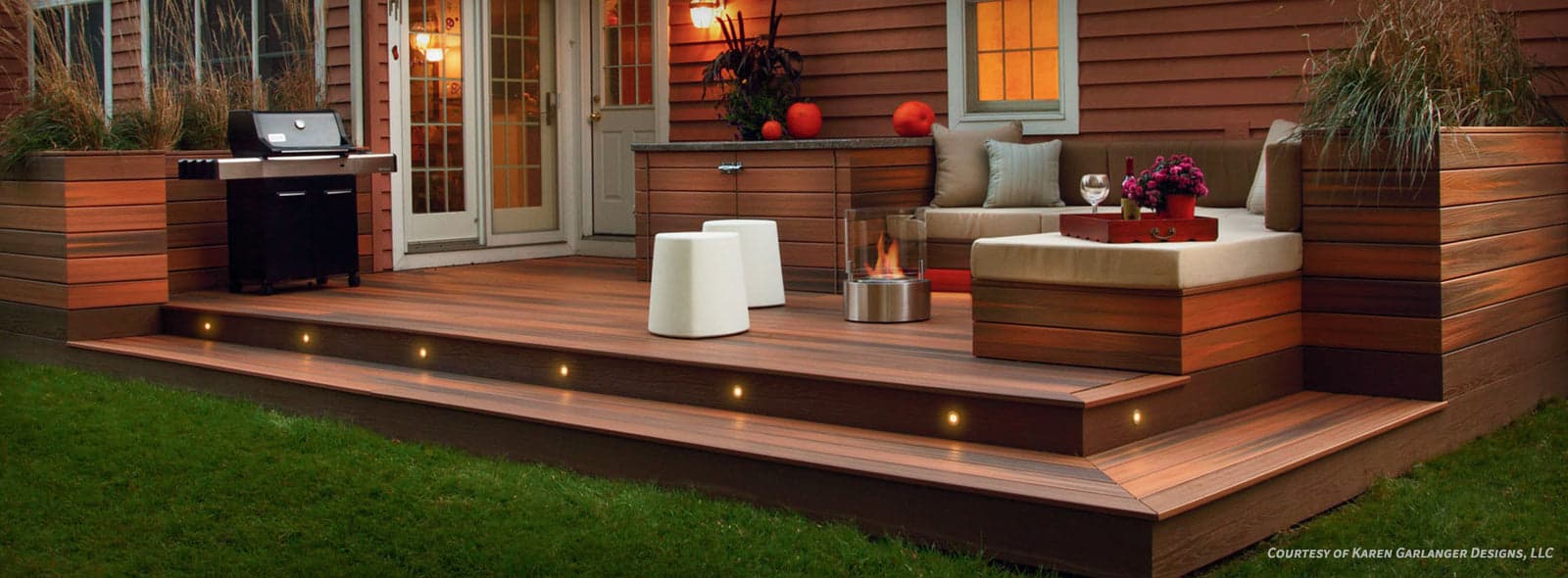
Understanding Outdoor Kitchen Appliances and Decking
Outdoor kitchens typically feature a range of appliances, including grills, side burners, refrigerators, and sinks. Each appliance has specific requirements, particularly those that generate heat. While Fiberon composite decking is engineered for outdoor use and durability, it is not designed to withstand direct, sustained high heat from cooking surfaces without proper protection or clearance.
The primary concern for any decking material near a grill or heat source is the risk of heat damage or fire. Composite decking, being a wood-plastic composite, can be susceptible to melting, scorching, or discoloration if exposed to extreme heat. Therefore, understanding and implementing adequate clearances and protective measures is crucial for a safe and lasting deck.
Clearances and Fire Safety with Grills and Heat Sources
When planning your outdoor kitchen, always refer to the manufacturer's installation instructions for all cooking appliances, especially grills. These instructions will specify minimum clearances to combustible materials, which include your Fiberon decking. These clearances are critical for fire safety.
For most grills and heat-generating appliances, it is generally recommended to place them on a non-combustible pad or surface that extends beyond the appliance's footprint. This might include concrete pavers, stone, or a metal grill mat specifically designed for deck protection. This protective layer acts as a barrier, shielding the Fiberon decking from direct heat, grease splatters, and embers. Ensure this protective surface is large enough to catch any potential drips or falling coals during use.
Additionally, consider the vertical clearance required above grills. Overhead structures like pergolas or deck roofs must also maintain specific distances from heat sources. Again, consult appliance manuals and local building codes for precise requirements.
Structural Support for Heavy Outdoor Kitchen Components
Outdoor kitchen islands, built-in grills, and stone countertops can be significantly heavier than standard deck furniture. Fiberon decking itself is a surface material and does not contribute structural support. The underlying deck frame must be designed to accommodate these concentrated loads.
Before finalizing your outdoor kitchen layout, work with a structural engineer or experienced deck builder to assess the total weight of your proposed kitchen components. This includes the appliances, cabinetry, countertops, and any stored items. The deck joists, beams, and footings beneath the kitchen area may require reinforcement, closer spacing, or larger dimensions than for other parts of the deck to safely support these increased loads.
It is important to plan for these structural enhancements during the initial design phase, as retrofitting a deck to support unexpected heavy loads can be complex and costly.
Material Selection and Appearance
Fiberon offers a range of capped composite decking options, including Concordia, Sanctuary, and Good Life lines. Each line provides distinct aesthetics and performance characteristics. Concordia features four-sided capping and deep multi-tonal blends, while Sanctuary offers three-sided capping with warm wood tones. Good Life is an entry-level option with a scalloped profile.
All Fiberon lines are capped composite, providing resistance to stains and fading, which is beneficial in a high-traffic area like an outdoor kitchen where spills are possible. The capped surface makes cleaning easier with a simple soap-and-water wash. Consider how the chosen color and grain pattern will complement your outdoor kitchen cabinetry and appliances. For example, a darker tone like Fiberon Concordia's Graphite or Fiberon Sanctuary's Espresso might provide a striking contrast or a cohesive look with stainless steel appliances. Samples are recommended to confirm color choices.
Fiberon also offers matching fascia and riser boards, allowing for a consistent finish around the perimeter of your deck and any steps leading to the kitchen area. This ensures a unified appearance for the entire outdoor living space.
Worked Example: Planning a Grill Area on a Fiberon Deck
Consider a hypothetical outdoor kitchen project where a built-in gas grill is to be integrated into a 10-foot by 12-foot Fiberon deck.
Let's assume the grill unit itself is 30 inches wide by 24 inches deep. This pad would sit directly on the deck frame, with the Fiberon decking installed around it. The deck joists in this area would need to be reinforced or spaced more closely to support the combined weight of the grill, its island, and the protective pad.
If the grill island is part of a larger countertop, ensure that the entire section of the deck supporting the island is designed for the concentrated load. The Fiberon decking would butt up against the edges of the non-combustible pad or island, requiring precise cuts for a clean finish. Square-edge Fiberon boards are often used for picture-framing or when butting against other surfaces, while grooved-edge boards are used with hidden fasteners in the main field of the deck.
Before you order
- Verify all outdoor kitchen appliance manufacturer clearances to combustible materials (decking, walls, overhead structures).
- Plan for a non-combustible protective pad beneath all heat-generating appliances (grills, side burners).
- Consult a structural professional to ensure the deck frame can support the weight of the outdoor kitchen components.
- Select Fiberon decking lines and colors that complement the outdoor kitchen design and offer good stain resistance.
- Consider matching Fiberon fascia and riser boards for a cohesive look.
- Plan for proper ventilation around the deck and beneath the outdoor kitchen structure if enclosed.
- Confirm local building codes for outdoor kitchen installations on decks.
Confirm installation details, approved uses and warranty terms in the current instructions for the exact product and profile. Your installer should verify the substrate, structure and applicable project requirements.
Questions to help you decide
Can I place a portable grill directly on my Fiberon deck?
It is generally not recommended to place a portable grill directly on Fiberon composite decking. The concentrated heat from a grill, especially charcoal grills or propane grills with inadequate heat shielding, can damage the composite material, leading to scorching, melting, or discoloration. Always use a protective, non-combustible grill mat or pad specifically designed for deck protection beneath any portable grill to create a barrier between the heat source and your decking.
How do I clean grease stains from Fiberon decking in an outdoor kitchen area?
Fiberon composite decking is designed to resist stains, including grease. For most grease splatters or food spills, a simple cleaning with soap and water, using a soft brush, is usually sufficient. For tougher stains, consult Fiberon's specific cleaning recommendations, which often involve using a deck cleaner suitable for composite materials. Prompt cleaning is always best to prevent any potential setting of the stain. Avoid abrasive cleaners or harsh chemicals, as these can damage the deck surface.
Does Fiberon decking come with fire resistance ratings for outdoor kitchens?
While Fiberon decking is a durable outdoor material, it is a wood-plastic composite and should be treated as a combustible material in the context of fire safety. Fiberon products do not carry specific fire resistance ratings that would allow them to be placed directly adjacent to or beneath high-heat cooking appliances without the use of proper clearances and non-combustible barriers. Always prioritize appliance manufacturer guidelines and local building codes for fire safety when designing an outdoor kitchen on a deck.
Ready to Plan Your Fiberon Outdoor Kitchen Deck?
Request a material quote with your project dimensions, desired Fiberon profile, and ZIP code. We can help confirm current availability and service options for your outdoor kitchen decking project.
Request a material quote →