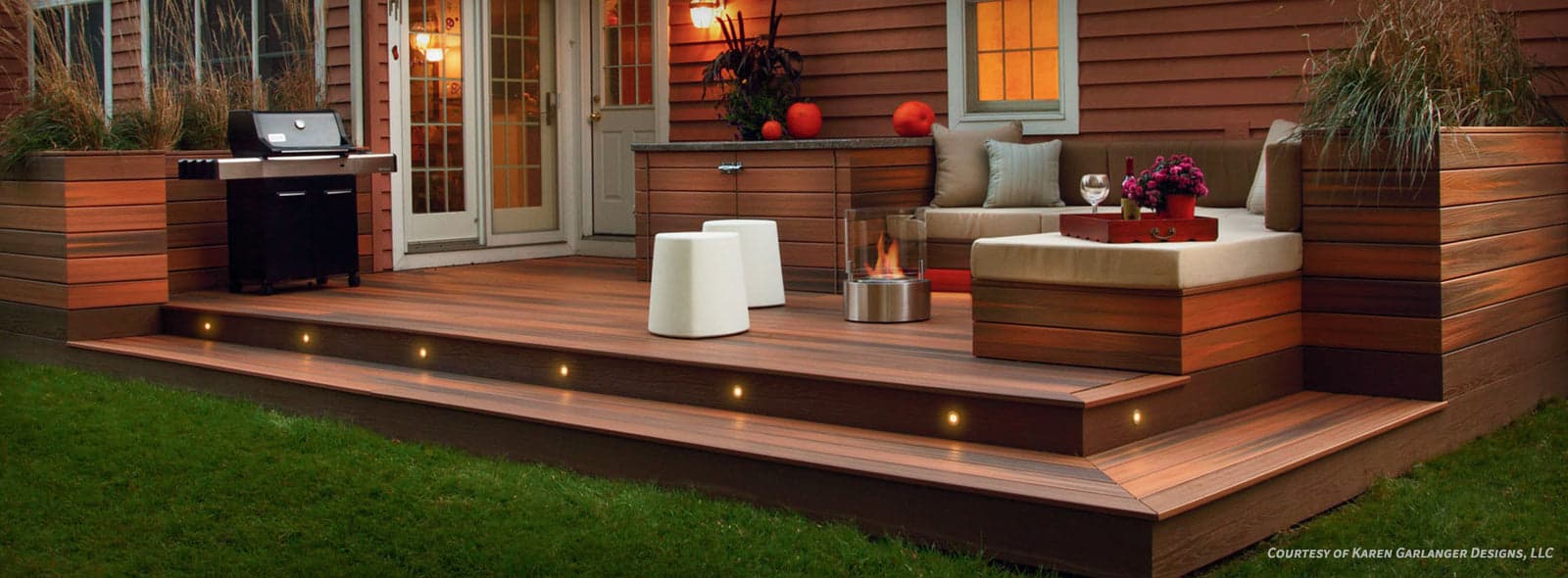
Understanding Fiberon Decking Lines and Their Initial Cost
Fiberon offers three distinct lines: Fiberon Concordia, Fiberon Sanctuary, and Fiberon Good Life. Each line is designed to meet different aesthetic and budgetary requirements, impacting the initial material cost.
Fiberon Concordia is the flagship line, featuring four-sided capped boards with deep, multi-tonal color blends. It is positioned as a premium option that aims to compete on appearance with higher-end brands while maintaining a competitive price point. This line typically represents the highest initial material cost within the Fiberon range.
Fiberon Sanctuary is a mid-range offering, characterized by three-sided capped composite boards with a cathedral grain pattern and warm, natural wood tones. It provides a balance between custom aesthetics and a more accessible price, making it a popular choice for many homeowners.
Fiberon Good Life is the entry-level line, designed to offer a cost-effective alternative to pressure-treated wood over the long term. It features a scalloped profile and honest colors, focusing on the core benefit of low maintenance at a lower initial price point.
Purchase Cost Components: Beyond the Board Price
The total purchase cost of your Fiberon deck project includes more than just the decking boards. Consider these additional components:
Fasteners: Hidden clips are commonly used with grooved-edge Fiberon boards for a clean, screw-free surface. Square-edge boards, used for borders or stairs, typically require face screws. The type and quantity of fasteners will add to the material cost.
Fascia and Riser Boards: Fiberon offers matching fascia and riser boards for a cohesive look, which are essential for finishing the deck edges and stairs. These are typically priced separately from the main decking boards.
Substructure Materials: Lumber for joists, beams, and posts forms the foundation of your deck. While not Fiberon products, these are a significant part of the overall material budget.
Other Accessories: Railing systems, lighting, and any other decorative elements will also contribute to the initial project cost.
Ownership Tasks: Traditional Wood vs. Fiberon Composite
The key distinction in ownership costs often lies in the required maintenance. Traditional wood decks, such as Ipe or other hardwoods, generally require regular staining, sealing, or painting to protect them from weathering and maintain their appearance. This can be an annual or biennial task, depending on climate and exposure.
Fiberon composite decking, by contrast, is designed for low maintenance. It does not require staining, sealing, or sanding. The recommended maintenance is a simple soap-and-water wash.
While traditional wood might have a lower initial material cost, the ongoing expense of sealers, stains, and the labor (either DIY time or professional service) can accumulate significantly over the years. This is where Fiberon aims to offer a long-term cost advantage, reducing the time and financial burden of upkeep.
Worked Example: Comparing Maintenance Time Over Five Years
Let's consider a hypothetical 12x16-foot deck (192 sq ft) to illustrate the difference in ownership tasks over five years. We will assume a traditional wood deck requires annual cleaning and sealing/staining, while a Fiberon deck requires only annual cleaning.
Traditional Wood Deck (e.g., Ipe, requiring annual sealing):
Annual Cleaning: Pressure washing or scrubbing (4-6 hours per year).
Annual Sealing/Staining: Application of sealer/stain, including drying time (8-12 hours per year).
Total Annual Maintenance Time: Approximately 12-18 hours.
Total Five-Year Maintenance Time: Approximately 60-90 hours.
Fiberon Composite Deck:
Annual Cleaning: Soap-and-water wash (2-3 hours per year).
Total Annual Maintenance Time: Approximately 2-3 hours.
Total Five-Year Maintenance Time: Approximately 10-15 hours.
This example highlights a potential saving of 50-75 hours of maintenance time over five years with Fiberon decking. This saved time can translate into significant financial savings if you value your time or if you would hire a professional for these tasks. This calculation does not include the cost of cleaning solutions or sealants, which would further increase the ownership cost of a traditional wood deck.
Considering the Warranty and Long-Term Performance
Fiberon decking comes with a stain and fade warranty, which varies by product line. These warranties provide assurance against common issues that can affect a deck's appearance over time.
The existence of a written warranty against stains and fading is a factor in the long-term value. While no material is entirely maintenance-free, these warranties indicate a manufacturer's confidence in the product's ability to retain its aesthetic qualities with minimal intervention.
This long-term performance contributes to the overall lifecycle value, as it reduces the likelihood of needing significant repairs or replacements due to material degradation or color changes, assuming proper installation and adherence to maintenance guidelines.
Before you order
- Determine your project's total square footage and required board lengths.
- Select the Fiberon line (Concordia, Sanctuary, Good Life) that aligns with your aesthetic and budget.
- Account for all accessory costs: fasteners, fascia, risers, and substructure materials.
- Estimate your annual time commitment for deck maintenance with traditional wood vs. Fiberon.
- Factor in the cost of cleaning products, stains, or sealants for traditional wood over time.
- Consider the warranty terms for your chosen Fiberon line as part of the long-term value.
- Evaluate your comfort level with ongoing maintenance tasks and how they fit into your lifestyle.
Confirm installation details, approved uses and warranty terms in the current instructions for the exact product and profile. Your installer should verify the substrate, structure and applicable project requirements.
Questions to help you decide
Does Fiberon decking really require no maintenance?
Fiberon decking does not require staining, sealing, or sanding like traditional wood. Its recommended maintenance is a simple annual cleaning with soap and water to remove dirt and debris. This significantly reduces the time and effort typically associated with deck upkeep.
Is Fiberon decking more expensive than wood initially?
The initial material cost for Fiberon decking can sometimes be higher than pressure-treated lumber, especially for the premium lines like Concordia. However, when you factor in the recurring costs and labor for staining, sealing, and repairing a wood deck over its lifespan, Fiberon often proves to be more cost-effective in the long run due to its low-maintenance nature.
What is the difference between 3-sided and 4-sided capping?
Capping refers to a protective layer that covers the composite core of the board. Three-sided capped boards have this layer on the top and two sides, while the bottom is uncapped. Four-sided capped boards have the protective layer on all four sides, offering enhanced protection against moisture and elements from all angles. Fiberon Concordia features 4-sided capping, while Sanctuary has 3-sided capping. Good Life is also capped for durability.
Ready to Plan Your Fiberon Deck Project?
Request a material quote today. Provide your project dimensions, desired Fiberon profile, and ZIP code to confirm current availability and service options for your decking materials.
Request a material quote →