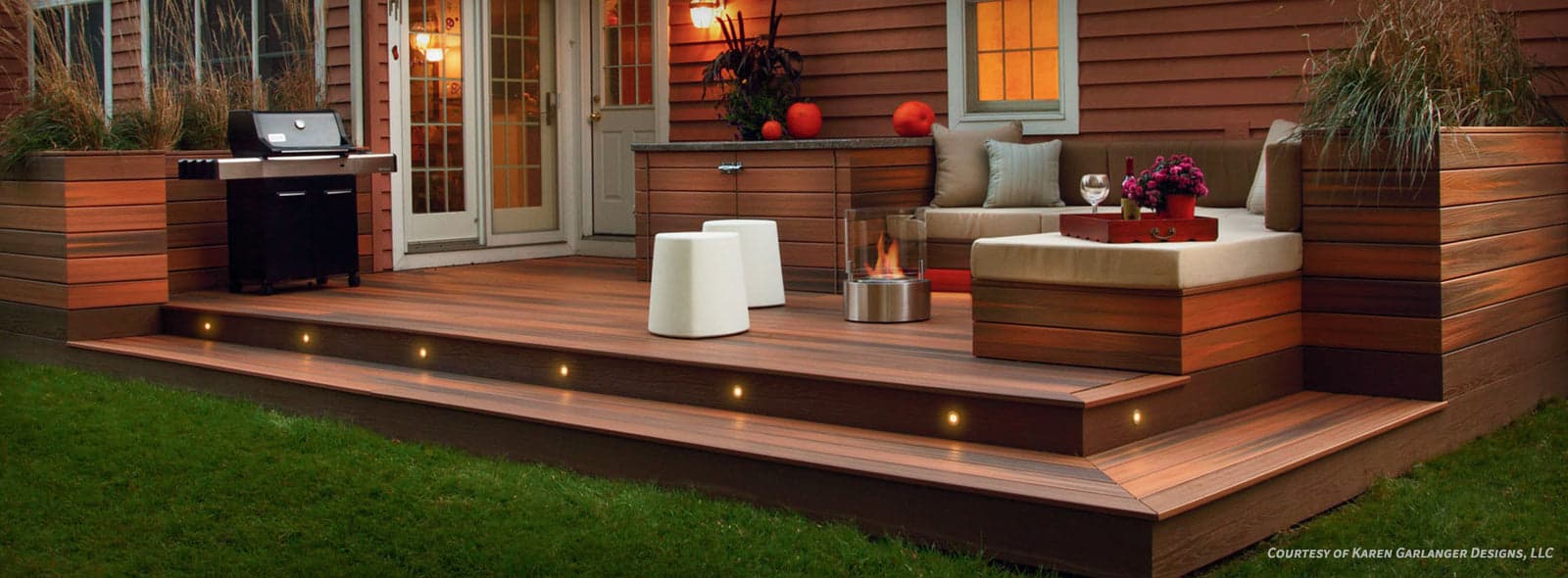
Understanding Grade and Elevation Changes
The first step in connecting your Fiberon deck to other landscape elements is to assess the existing grade and planned elevations. Decks are typically elevated structures, while patios, pathways, and lawns are often at or near ground level. Establishing the finished heights of all surfaces is critical for smooth transitions and proper water management.
Consider the desired relationship between the deck and adjacent surfaces. Do you want a flush transition to a patio, or a step down to a lawn? For accessibility, minimizing steps is often preferred. When a step is necessary, ensure it is a consistent, manageable height. For example, a 6-inch step down from a deck to a patio is often more comfortable than a series of uneven, small drops.
Planning for Drainage and Water Management
Effective drainage is paramount when combining different outdoor surfaces. Water should always be directed away from the house, the deck structure, and any adjacent foundations. Composite decking, such as Fiberon, is designed to withstand moisture, but prolonged standing water can still lead to issues with the underlying structure or adjacent materials.
When connecting to permeable surfaces like lawns or garden beds, ensure there's a slight slope away from the deck. For impervious surfaces like concrete or stone patios, consider installing a trench drain or ensuring a sufficient grade to channel water away. The space beneath the deck also needs ventilation and drainage to prevent moisture buildup. Always review manufacturer guidelines for proper deck ventilation and spacing between boards for water runoff.
Choosing Edge Treatments and Borders
The edge where your Fiberon deck meets another material is a key design element. Matching fascia and riser boards are available for Fiberon lines (Concordia, Sanctuary, Good Life), offering a cohesive finish for the deck's perimeter. These can be used to create a clean, finished look where the deck drops off to a lower grade or meets a vertical element.
When transitioning to a patio, a picture-frame border using square-edge Fiberon boards can define the deck area. For a softer transition to a garden or lawn, consider a low retaining wall or a border of pavers that visually bridges the gap between the deck and the natural landscape. The choice of edge treatment should complement the overall aesthetic and functional requirements of your outdoor space.
Material Compatibility and Visual Harmony
Selecting materials that complement your Fiberon decking is essential for visual harmony. Fiberon offers various color palettes, from the deep multi-tonal blends of Concordia to the warm naturals of Sanctuary and the honest colors of Good Life. For example, a deck in Fiberon Concordia's Graphite might pair well with light grey pavers, while a Chestnut Sanctuary deck could be enhanced by natural stone or warm-toned concrete.
Consider the textures as well. The capped composite surface of Fiberon decking provides a consistent, low-maintenance finish. When pairing with natural stone, brick, or even gravel, ensure the textures create an interesting contrast without clashing. The goal is to create zones that feel distinct yet flow together seamlessly.
Worked Example: Deck to Patio Transition
Imagine a new Fiberon deck (12 feet x 16 feet) is being built 18 inches above grade, and it needs to connect to an existing 10 feet x 10 feet flagstone patio that is 6 inches above grade. The house is on the 16-foot side of the deck.
1. **Elevation Difference:** The deck surface will be 18 inches above grade, and the patio surface 6 inches above grade. This means there is a 12-inch difference in height between the finished deck surface and the finished patio surface (18" - 6" = 12").
2. **Transition Design:** A single 12-inch step down is generally too high for comfortable use. Instead, a two-step transition is more practical. Two steps, each 6 inches high, would bridge the 12-inch difference. The first step would be level with the patio, and the second step would be a landing from the deck.
3. **Step Construction:** The steps would be framed with treated lumber, similar to the deck substructure, and then clad with Fiberon decking boards for the treads and Fiberon riser boards for the vertical faces. For example, using 12-foot Fiberon grooved-edge boards for treads and matching fascia for risers ensures a consistent look. If the steps are 4 feet wide, you would need enough board footage for two 4-foot treads and two 4-foot risers, plus any necessary supports.
4. **Drainage:** Ensure the patio slopes away from the base of the steps and the deck structure. The area beneath the deck will require proper ventilation and a clear path for water to drain away from the house foundation.
5. **Edge Finishing:** Fiberon fascia boards can be used along the exposed perimeter of the deck where it doesn't meet the patio, providing a clean, finished edge that matches the deck surface. For the patio edge, ensure the flagstones are securely set and edged to prevent movement.
Before you order
- Determine the exact finished height of your Fiberon deck relative to the adjacent landscape elements (patio, lawn, garden).
- Assess existing grade and identify any necessary regrading or landscaping changes to ensure proper drainage away from structures.
- Decide on the type of transition: flush, single step, multiple steps, or a gradual slope.
- Select appropriate edge treatments for each transition point (e.g., Fiberon fascia boards, retaining walls, pavers).
- Consider material compatibility and color harmony between your Fiberon decking and other landscape materials.
- Plan for proper ventilation beneath the deck and ensure water can drain freely from all surfaces.
- Consult local building codes and manufacturer guidelines for deck construction and spacing requirements.
Confirm installation details, approved uses and warranty terms in the current instructions for the exact product and profile. Your installer should verify the substrate, structure and applicable project requirements.
Questions to help you decide
Can Fiberon decking be installed directly on the ground?
Fiberon decking, like most composite decking, requires a properly constructed substructure (joists, beams, posts) that lifts it off the ground. This allows for ventilation, drainage, and structural integrity. Direct ground contact is not recommended as it can lead to moisture issues and compromise the deck's longevity.
How do I ensure proper drainage between my Fiberon deck and a concrete patio?
To ensure proper drainage, design a slight slope in your concrete patio away from the deck. You can also incorporate a trench drain along the edge where the deck meets the patio to collect and divert water. Ensure the deck structure itself allows for water to drain freely from beneath the boards and away from the house foundation.
What are my options for finishing the exposed edges of my Fiberon deck?
Fiberon offers matching fascia and riser boards for all its decking lines (Concordia, Sanctuary, Good Life). These boards are designed to cover the exposed rim joists and provide a clean, finished look to the deck's perimeter. They are available in colors that coordinate with your chosen decking boards, ensuring a cohesive appearance.
Plan Your Fiberon Deck Transition
Ready to integrate your Fiberon deck with your outdoor living space? Request a material quote with your project dimensions and desired Fiberon profile. Provide your ZIP code to confirm current availability and service options.
Request a material quote →