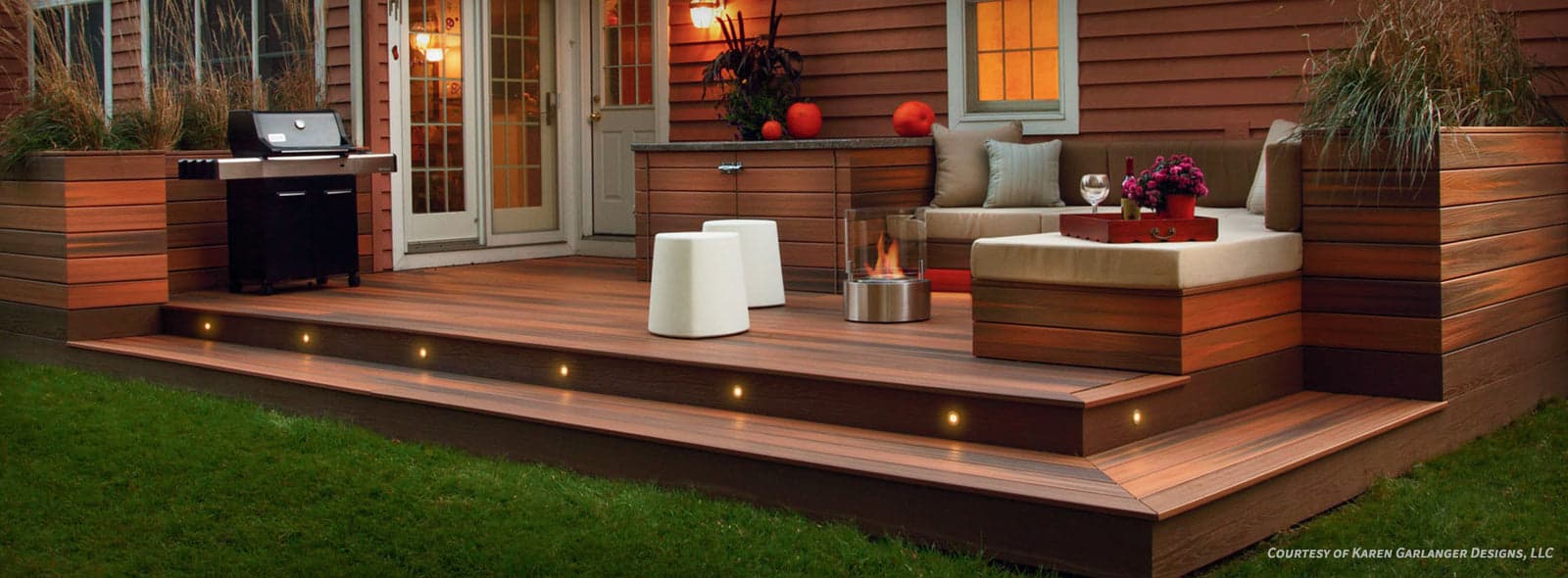
Understanding Fiberon's UV Resistance
Fiberon decking is a capped wood-plastic composite, meaning each board is enveloped in a protective layer that is formulated to resist staining and fading. This cap is designed to maintain the board's aesthetic over its lifespan, even when exposed to significant sunlight. The manufacturer provides a written stain and fade warranty, which can offer confidence when selecting Fiberon for sunny locations. This warranty applies to the material's ability to resist significant color change and staining, which is particularly relevant in areas with high UV index.
The recycled content, consisting of up to 94% by weight of locally sourced recycled lumber and plastics, forms the core of the board, which is then covered by this protective cap. This construction contributes to the material's stability and performance in various environmental conditions, including prolonged sun exposure.
Color Selection and Surface Temperature
While Fiberon's capping helps resist fading, the physical surface temperature of any decking material, including composite, will be influenced by its color and direct sun exposure. Darker colors absorb more sunlight and can become noticeably warmer underfoot compared to lighter colors. For a deck in full sun, this is a primary consideration for comfort.
Fiberon offers a range of colors across its Concordia, Sanctuary, and Good Life lines. For sun-exposed decks where cooler surface temperatures are a priority, consider lighter shades. For example, 'Beach House' from the Good Life line or 'Graphite' from Concordia (which, despite being a deeper tone, may have different thermal properties than very dark browns) might be cooler options than very dark browns like 'Espresso' or 'Ipe'. It is highly recommended to obtain physical samples of your preferred colors and, if possible, observe them in direct sunlight at different times of the day to gauge their potential warmth.
Keep in mind that screens may shift color, and the actual board appearance and thermal feel can differ. A physical sample kit from your branch is the best way to confirm color and sheen.
Integrating Shade Solutions
For decks in full sun, even with lighter decking colors, integrating shade solutions can significantly enhance comfort and usability. Consider incorporating permanent or temporary shade structures into your deck design.
Options include pergolas, awnings, shade sails, or even strategically placed large umbrellas. A pergola, for instance, can provide partial shade while still allowing light and air circulation. If you opt for a permanent structure, coordinate its design and attachment points with your deck frame and layout during the planning phase. This approach allows you to enjoy the benefits of a sun-exposed deck while providing respite from intense heat during peak hours.
Worked Example: Planning for a 12' x 16' Sun Deck
Imagine you are planning a 12-foot by 16-foot deck that will receive full afternoon sun in a warm climate. Your primary goal is to minimize surface heat while maintaining an attractive appearance. You've narrowed down your Fiberon choices to two options: 'Beach House' (a lighter grey-tan from the Good Life line) and 'Chestnut' (a medium brown from the Sanctuary line).
To evaluate, you request physical samples of both. You place them on a surface in your yard that mimics the deck's sun exposure. After a few hours in direct afternoon sun, you find that 'Beach House' is noticeably cooler to the touch than 'Chestnut'. This real-world observation confirms that the lighter color is a better choice for your comfort goal.
For the 12' x 16' deck, using 16-foot Fiberon boards (1" x 5.5" profile) running parallel to the 12-foot dimension, you would need 26 boards (16 feet / 5.5 inches = ~34.9 boards for width, so 26 boards for 16' length covering 12' width, given board width is 5.5 inches; 12 feet is 144 inches; 144 / 5.5 = 26.18, so 27 boards if no cuts are assumed). If boards run parallel to the 16-foot dimension, you would need 35 boards (16 feet / 5.5 inches = ~34.9, so 35 boards for 12' width). Always verify with a detailed material takeoff.
You also decide to include a freestanding pergola over a 10-foot by 10-foot section of the deck. This allows for a shaded seating area, offering a cool retreat without completely covering the entire deck. The combination of a lighter decking color and a planned shade structure provides a balanced solution for your sun-exposed deck.
Maintenance for Sun-Exposed Fiberon Decking
One of the advantages of Fiberon composite decking is its low maintenance requirements. For sun-exposed decks, this means you won't need to worry about staining or sealing to protect against UV damage, unlike traditional wood decks. The annual maintenance cycle involves a simple soap-and-water wash.
Regular cleaning can help remove any accumulated dirt or pollen, which can contribute to surface heat absorption. By keeping the deck surface clean, you maintain its intended appearance and potentially prevent any dark buildup that could increase surface temperature. This straightforward maintenance routine is a significant benefit for decks in full sun, where the focus can remain on enjoyment rather than intensive upkeep.
Before you order
- Review Fiberon's specific warranty details for stain and fade resistance in full sun conditions.
- Order physical samples of preferred Fiberon colors and test their surface temperature in direct sunlight.
- Consider lighter decking colors to potentially reduce heat absorption underfoot.
- Plan for integrated shade solutions (e.g., pergolas, awnings, umbrellas) for comfort during peak sun hours.
- Confirm board profile (grooved/square) and lengths (12, 16, 20 ft) needed for your layout.
- Factor in matching fascia and riser boards for a cohesive finish.
- Understand the recommended fastening methods (hidden clip or face screw) for your project.
Confirm installation details, approved uses and warranty terms in the current instructions for the exact product and profile. Your installer should verify the substrate, structure and applicable project requirements.
Questions to help you decide
Does Fiberon decking fade in direct sunlight?
Fiberon decking is manufactured with a durable cap layer designed to resist fading and staining, even with prolonged exposure to direct sunlight.
Will Fiberon decking get hot in the sun?
Like any surface exposed to direct sunlight, Fiberon decking can absorb solar radiation and become warm. Darker colors will generally absorb more heat and feel warmer underfoot than lighter colors. If surface temperature is a primary concern for your sun-exposed deck, consider selecting lighter color options and integrating shade solutions like pergolas or awnings.
What is the best way to clean a Fiberon deck in full sun?
Fiberon decking requires minimal maintenance. For sun-exposed decks, an annual cleaning with soap and water is typically sufficient. This helps remove dirt, pollen, and other debris that can accumulate and potentially affect surface temperature or appearance. Avoid harsh chemicals or abrasive cleaners, as these can damage the board's cap.
Ready to Plan Your Sun-Exposed Fiberon Deck?
Request a material quote with your project dimensions, exact Fiberon profile preferences, and ZIP code to confirm current availability and service options. Consider requesting physical samples to evaluate colors in your specific sunlight conditions.
Request a material quote →