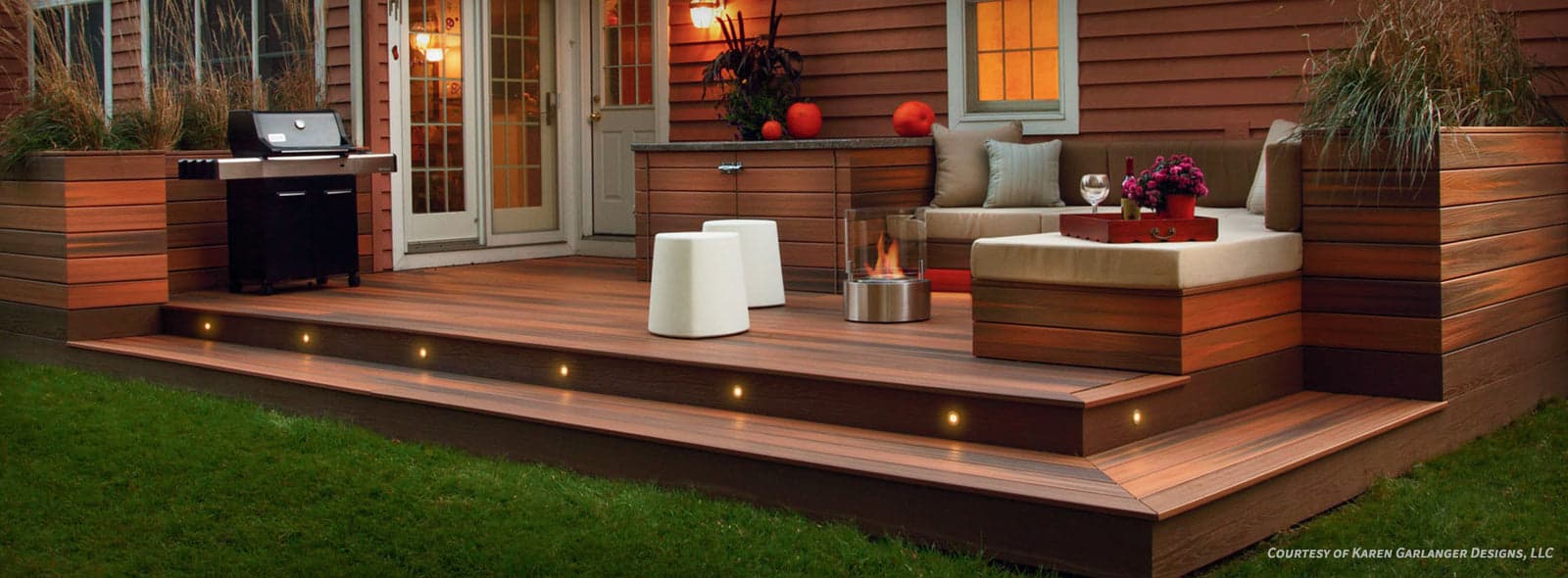
Understanding Fiberon Fascia and Trim Profiles
Fiberon offers dedicated fascia and riser boards designed to complement their decking lines. These are typically available in dimensions different from standard deck boards, specifically for vertical applications. Fascia boards are used to cover the rim joists and deck frame, providing a clean visual edge. Riser boards are used for the vertical face of deck stairs.
The standard Fiberon board profile is 1" x 5.5". These dimensions are crucial for proper coverage and a finished look. It's important to confirm the exact dimensions available for your chosen Fiberon line.
Fiberon's product lines, such as Concordia, Sanctuary, and Good Life, each offer specific color palettes and finishes. When selecting fascia, aim for a direct match in color and texture to the main decking boards for a seamless transition. Some designers opt for a contrasting fascia color to create a border effect, but this choice should be deliberate and considered early in the design phase.
Matching Fiberon Decking Lines with Fascia
Fiberon ensures that matching fascia and riser boards are available for their various decking lines, enabling a cohesive look. For example, if you choose Fiberon Concordia decking in 'Ipe' or 'Graphite', you would typically select Concordia fascia in the corresponding color. This consistency is a key advantage of using a full system from one manufacturer.
The Concordia line features four-sided capped boards with multi-tonal color blends. Sanctuary, a mid-range option, offers three-sided capped composite with cathedral grain and warm wood tones. Good Life, an entry-level option, has a scalloped profile and honest colors. Each line has its own aesthetic, and the fascia is designed to carry that aesthetic through to the edges of the deck.
While direct color matching is the most common approach, consider the overall design. For a deck with a picture-frame border using square-edge Fiberon boards, the fascia color should align with the border boards for a unified appearance.
Fastening Fascia Boards Securely
Fascia boards are primarily decorative, but proper fastening is essential for durability and appearance. Unlike deck boards, which bear foot traffic, fascia boards are typically face-fastened to the rim joist. This means screws will be visible, so choosing appropriate fasteners is important.
Use color-matched composite deck screws that are designed for use with Fiberon products. These screws are engineered to blend with the board color and minimize mushrooming or cracking. Spacing and placement of fasteners should follow manufacturer guidelines to allow for normal expansion and contraction of the material. Over-tightening can cause buckling or damage.
Ensure the substructure is sound and provides adequate backing for the fascia. Any gaps behind the fascia can lead to an uneven appearance or make the board susceptible to damage. In some cases, a trim head screw may be used for a less visible fastener, but always confirm compatibility with Fiberon and local building practices.
Planning for Expansion and Contraction
Like all decking materials, Fiberon composite boards will experience some expansion and contraction with temperature changes. While Fiberon is designed to minimize this, it's still a factor to consider when installing fascia. Proper gapping between fascia boards and at corners is critical to prevent buckling or warping.
The manufacturer's installation instructions will provide specific recommendations for spacing. These gaps are often small but necessary. Do not assume that fascia can be installed tightly against adjacent surfaces. This is particularly important in climates with significant temperature swings.
For mitered corners on fascia, ensure the cuts are precise and any necessary expansion gaps are maintained. Some installers prefer a butt joint with a small gap to simplify installation and manage expansion.
Worked Example: Calculating Fiberon Fascia Needs
Let's consider a hypothetical rectangular deck measuring 16 feet by 10 feet, with a single set of stairs that are 4 feet wide with 3 risers. For this example, we'll use Fiberon Good Life fascia, which is typically available in 0.5" x 11.75" x 12 ft. and 20 ft. lengths.
First, calculate the linear feet of fascia needed for the deck perimeter. Two sides are 16 feet, and two sides are 10 feet. Total perimeter = (2 * 16 ft) + (2 * 10 ft) = 32 ft + 20 ft = 52 linear feet.
Next, calculate the linear feet for the stair risers. With a 4-foot wide stair and 3 risers, you need 3 * 4 ft = 12 linear feet for the risers. Total fascia/riser material needed = 52 ft (perimeter) + 12 ft (stairs) = 64 linear feet.
Now, determine the number of boards to purchase, accounting for cuts and potential waste. Using 20-foot fascia boards: (3 * 20 ft boards) = 60 ft. This leaves a 4-foot section. You could purchase a fourth 20-foot board to avoid short pieces, or consider if a 12-foot board could be used for the remaining section and potentially some stair risers. In this case, three 20-foot boards and one 12-foot board would yield 72 linear feet, providing ample material for cuts and waste. Always round up to ensure sufficient material.
Before you order
- Identify your Fiberon decking line (Concordia, Sanctuary, Good Life).
- Confirm the exact color and finish of your primary deck boards.
- Determine if you want matching or contrasting fascia.
- Measure the total linear feet of fascia and riser boards required, including for stairs.
- Check available fascia and riser board dimensions and lengths for your chosen Fiberon line.
- Plan for fastening: verify compatible color-matched composite screws.
- Account for expansion gaps as per Fiberon installation guidelines.
- Consider ordering a small percentage extra for cuts and unforeseen needs.
Confirm installation details, approved uses and warranty terms in the current instructions for the exact product and profile. Your installer should verify the substrate, structure and applicable project requirements.
Questions to help you decide
Can I use standard Fiberon deck boards as fascia?
While it might seem convenient, standard Fiberon deck boards (typically 1" x 5.5") are generally thicker and narrower than dedicated fascia boards (often 0.5" x 11.75"). Using them as fascia can result in a bulkier appearance and may not cover the rim joist adequately without additional blocking. Dedicated fascia boards are engineered for this vertical application and often have a smoother, cleaner edge profile for a finished look.
Are Fiberon fascia boards available in all decking colors?
Fiberon strives to offer matching fascia and riser boards for all their primary decking colors across lines like Concordia, Sanctuary, and Good Life. This ensures a cohesive design. However, it's always best to confirm the availability of specific colors and profiles with your supplier when placing your order, as product offerings can vary.
What kind of fasteners should I use for Fiberon fascia?
For Fiberon fascia, it is recommended to use color-matched composite deck screws that are designed to penetrate composite materials without pre-drilling (unless specified by the manufacturer for specific conditions). These fasteners help to minimize visible screw heads and prevent damage to the board. Always follow Fiberon's installation instructions for screw type, spacing, and depth to ensure a secure and aesthetically pleasing installation.
Ready to Plan Your Fiberon Deck Edges?
Request a material quote for your project dimensions, exact Fiberon profile, and ZIP code. Confirm current availability and service options for your chosen fascia and trim.
Request a material quote →