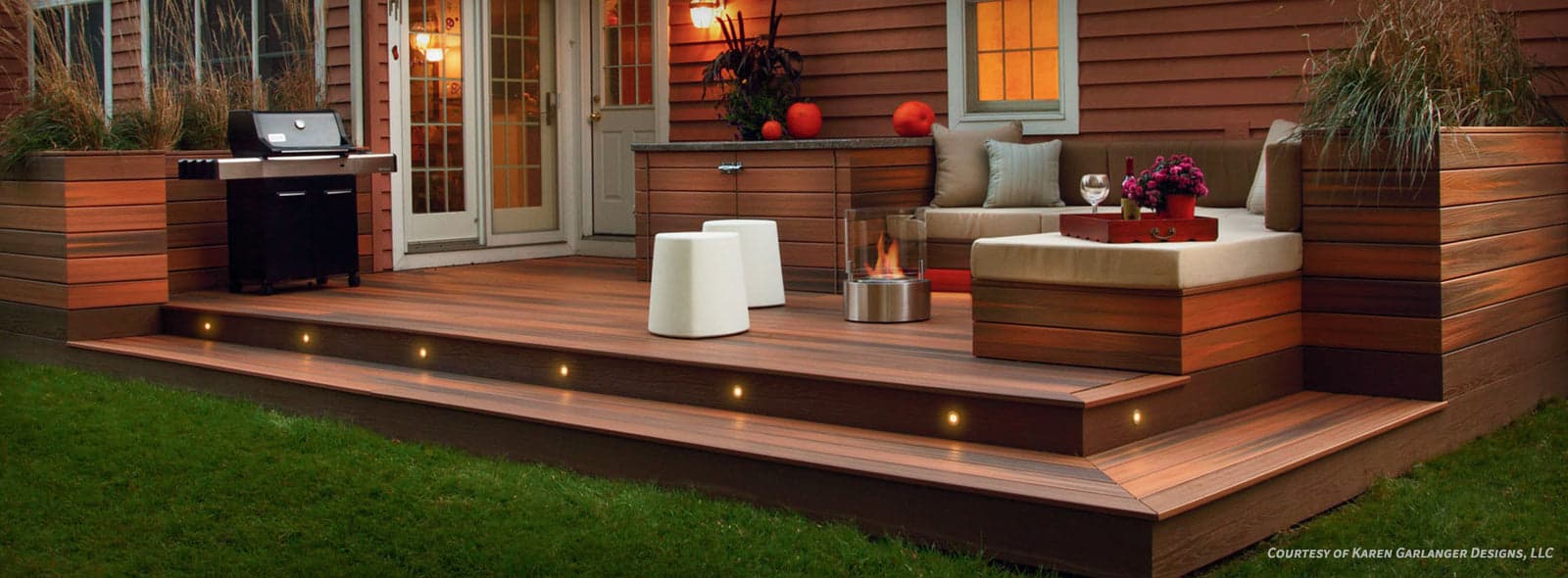
Confirming the Fiberon Decking Line and Color
The first step in planning your Fiberon decking order is to finalize the specific product line and color. Fiberon offers distinct collections, each with unique features and aesthetics. For example, Fiberon Concordia is known for its multi-tonal color blends and four-sided capping, while Fiberon Sanctuary features warm wood tones and three-sided capping. Fiberon Good Life provides an entry-level option with honest colors and a scalloped profile. Your contractor should confirm the chosen line and color against your design vision and any physical samples reviewed.
Verify the exact shade name, such as "Ipe" or "Graphite" for Concordia, "Chestnut" or "Moringa" for Sanctuary, or "Cabin" or "Beach House" for Good Life. This precision avoids ordering errors, as colors can vary between lines even if names are similar. Confirming this detail early ensures the aesthetic outcome matches your expectations. Remember to review physical samples, as screen representations can differ.
Board Profiles: Grooved vs. Square Edge
Fiberon decking boards are available in two primary profiles: grooved-edge and square-edge. Grooved-edge boards are designed to be used with hidden fastening systems, which create a seamless deck surface without visible screws. These are often preferred for main deck areas where a clean look is desired. Square-edge boards, on the other hand, are typically face-fastened and are commonly used for picture-frame borders, stair treads, or fascia boards where a finished edge is needed.
Discuss with your contractor where each profile will be used. A typical deck might use grooved-edge boards for the main field and square-edge boards for perimeter framing, stairs, and risers. Ensuring the correct quantities of each profile are ordered is essential for a complete and aesthetically consistent installation. Mismatched profiles can lead to installation challenges or an undesired visual outcome.
Board Lengths and Quantity Calculation
Fiberon decking boards are available in various lengths, commonly 12, 16, and 20 feet. Efficient material planning involves selecting board lengths that minimize waste and reduce the number of visible seams on your deck. Your contractor's layout plan should dictate the optimal lengths for each section of the deck.
For example, a deck section that is 18 feet long might best utilize a 20-foot board with a 2-foot offcut, rather than two 12-foot boards with 6 feet of waste. Discuss the cutting plan with your contractor. They should provide a detailed material takeoff that accounts for the deck dimensions, any diagonal layouts (which require more material), and an appropriate waste factor. This calculation should specify the exact number of boards needed for each length.
Consider a hypothetical deck measuring 10 feet by 16 feet. If you plan to run boards parallel to the 10-foot dimension, you would need 16-foot boards. The width of each Fiberon board is 5.5 inches. To cover 10 feet (120 inches), you would divide 120 by 5.5, which equals approximately 21.8 boards. Since you cannot purchase partial boards, you would round up to 22 boards. Therefore, you would need 22 boards of the 16-foot length. This calculation assumes no picture framing or diagonal patterns, which would alter the quantity and lengths required.
Fascia and Riser Boards
Beyond the main decking boards, Fiberon offers matching fascia and riser boards to provide a finished look for the deck's perimeter and staircases. Fascia boards are typically used to cover the rim joists, creating a clean edge around the deck. Riser boards are used on stairs to enclose the vertical space between treads.
It is important to coordinate the color and profile of these trim pieces with your main decking boards. Confirm the dimensions and quantities required for all fascia and riser applications with your contractor. This ensures a cohesive appearance for the entire deck project. Mismatched trim can detract from the overall aesthetic, so ordering these components together from the same product line is recommended.
Fastening Systems and Accessories
Fiberon decking can be installed using either hidden clips or face screws. Hidden clips provide a smooth, fastener-free surface, while face screws are visible but offer a secure attachment, often used for square-edge boards or specific structural requirements. Your contractor will determine the appropriate fastening method based on the chosen board profile and installation guidelines.
Discuss the type and quantity of fasteners needed. For hidden fastening, ensure the correct clips are specified. For face-fastening, confirm the type, color, and quantity of screws. Additionally, consider any other accessories like deck lighting, railing systems, or post wraps that might be part of your project. While not always Fiberon-branded, these elements should be factored into the overall material plan to ensure compatibility and a complete order.
Joist Spacing and Structural Considerations
Proper joist spacing is critical for the structural integrity and long-term performance of your Fiberon deck. Your contractor should confirm that the existing or planned substructure meets these requirements.
This discussion is essential for both new deck builds and renovations where an existing frame might be reused. The substructure must be sound and properly spaced to support the decking and anticipated loads. Any deviations from manufacturer guidelines for joist spacing could compromise the deck's stability and appearance. Ensure your contractor has reviewed the structural plans and confirmed compliance with Fiberon's installation specifications.
Before you order
- Confirm the exact Fiberon decking line (Concordia, Sanctuary, Good Life) and color selection.
- Verify the quantities of grooved-edge boards for the main deck area.
- Verify the quantities of square-edge boards for picture framing, stairs, and fascia.
- Finalize the specific board lengths (12, 16, 20 ft) to optimize cuts and minimize waste.
- Confirm the quantities and dimensions of matching fascia and riser boards.
- Identify the chosen fastening system (hidden clips or face screws) and required quantities.
- Discuss any additional accessories like railings, lighting, or post wraps.
- Review the joist spacing and structural plan to ensure compliance with Fiberon guidelines.
- Confirm a project timeline for material delivery and installation.
- Establish a clear communication plan for any order modifications or unforeseen issues.
Confirm installation details, approved uses and warranty terms in the current instructions for the exact product and profile. Your installer should verify the substrate, structure and applicable project requirements.
Questions to help you decide
What is the difference between Fiberon Concordia, Sanctuary, and Good Life lines?
Fiberon Concordia is the flagship line with four-sided capping and deep, multi-tonal color blends. Fiberon Sanctuary is a mid-range option with three-sided capping and warm, believable wood tones. Fiberon Good Life is an entry-level line with a scalloped profile and honest colors, offering a cost-effective alternative to wood. Each line carries a written stain and fade warranty, with varying durations.
Why is it important to confirm board lengths with my contractor?
Confirming board lengths with your contractor is crucial for efficient material use and to minimize waste. A detailed layout plan allows for selecting optimal board lengths (12, 16, or 20 feet) that reduce cuts and the number of seams on the deck surface. This planning can also impact the overall project cost by reducing unnecessary material purchases.
Do I need special fasteners for Fiberon decking?
Fiberon decking can be installed using either hidden clips or face screws. Grooved-edge boards are typically designed for hidden clips, which create a smooth, fastener-free deck surface. Square-edge boards are usually face-fastened. Your contractor will specify the appropriate fastening system and the correct type and quantity of fasteners based on your chosen board profile and installation method.
Ready to Order Your Fiberon Decking?
Provide your project dimensions, exact Fiberon profile selections, and ZIP code to request a material quote. We can confirm current availability and service options for your project.
Request a material quote →