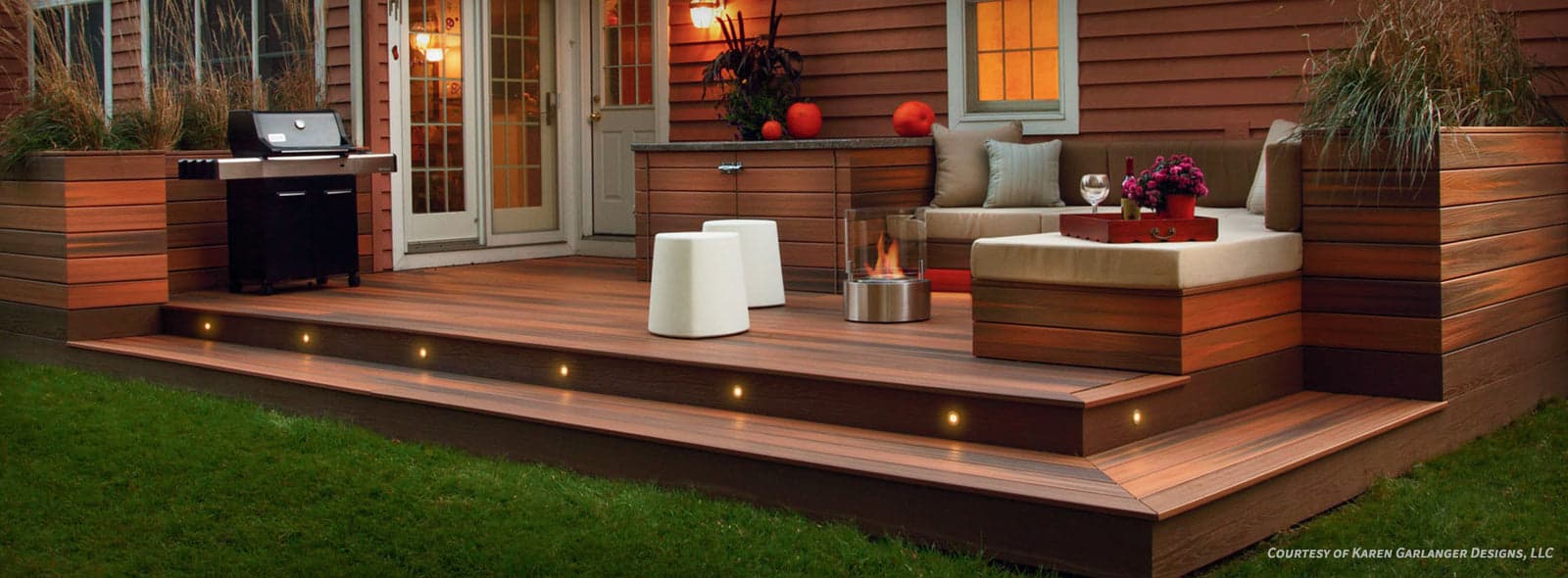
Understanding Fiberon's Composition and Coastal Suitability
Fiberon composite decking is made from a blend of recycled wood fibers and plastics, encased in a durable cap. This capping layer is a critical feature for coastal applications, as it provides a barrier against moisture, UV radiation, and general weathering. The material's resistance to rot, decay, and insect infestation is inherently beneficial in humid, coastal settings where these issues can accelerate the deterioration of traditional wood.
The various Fiberon lines, such as Concordia, Sanctuary, and Good Life, all feature this protective capping, though with differences in their specific composition and coverage (e.g., three-sided vs. four-sided). This capping helps maintain the board's aesthetic and structural integrity against the daily challenges of a coastal climate, including salt spray and intense sunlight.
The primary advantage in a coastal setting is the significantly reduced maintenance compared to wood, freeing homeowners from frequent staining or sealing tasks to combat salt and moisture.
Impact of Salt Exposure on Composite Decking
Coastal homes are constantly exposed to salt-laden air and occasional salt spray, which can be corrosive to many building materials. Fiberon's capped composite structure is formulated to resist the corrosive effects of salt, preventing it from penetrating the core of the board. The polymer cap acts as a shield, making the surface resistant to salt-induced discoloration or degradation that might affect uncapped composites or natural wood.
Regular cleaning with soap and water is generally recommended for Fiberon decking. In coastal areas, this simple maintenance routine becomes even more important to rinse away accumulated salt deposits and prevent potential buildup, which could lead to surface residue over time. This proactive cleaning helps preserve the deck's appearance and performance.
Selecting Compatible Fasteners and Hardware
In coastal environments, the choice of fasteners and hardware is as crucial as the decking material itself. Standard galvanized screws or clips may corrode quickly when exposed to salt air, leading to structural compromise and unsightly rust stains on the deck surface. For Fiberon decking, which supports both hidden clip and face screw fastening methods, selecting corrosion-resistant options is essential.
When using hidden fastening systems, ensure the clips and any associated components are also made from appropriate corrosion-resistant materials. For face-fastening, screws explicitly rated for outdoor, coastal use should be chosen. Always confirm compatibility with Fiberon's installation guidelines and the specific product line.
Similarly, any other hardware used in conjunction with the deck, such as ledger board connectors, joist hangers, or railing components, should be specified for coastal or marine environments to ensure long-term integrity and prevent premature failure.
Warranty Considerations for Coastal Properties
These warranties typically cover manufacturing defects that lead to staining or fading under normal use. When planning a deck for a coastal home, it's important to review the specific warranty terms carefully.
While Fiberon products are designed for durability in various climates, understanding any exclusions or conditions related to extreme environmental factors, such as prolonged saltwater submersion or specific maintenance requirements, is prudent. Generally, the standard cleaning and maintenance protocols outlined by Fiberon are sufficient to maintain warranty validity, even in coastal settings. Always retain proof of purchase and installation details, and adhere to manufacturer recommendations for cleaning and care.
Worked Example: Decking a Coastal Veranda
Consider a coastal home planning a 12-foot by 20-foot veranda deck. The homeowner prioritizes low maintenance and a natural wood aesthetic without the upkeep.
For this 240 square foot deck (12 ft x 20 ft), using 20-foot Fiberon Sanctuary boards (1 inch x 5.5 inch profile) minimizes seams. For a 20-foot length, this means 26 boards each 20 feet long. Total lineal footage: 26 boards * 20 feet/board = 520 lineal feet. The project will require approximately 520 lineal feet of Fiberon Sanctuary decking. For edge finishing, matching Fiberon fascia boards are chosen, also in 'Chestnut'.
All underlying structural hardware, such as joist hangers and ledger board fasteners, will also be stainless steel to resist salt corrosion. The homeowner understands the need for annual soap-and-water cleaning to remove salt residue and keep the deck looking its best.
This approach ensures both the decking material and the fastening system are appropriate for the demanding coastal environment, contributing to the longevity and reduced maintenance of the veranda.
Before you order
- Confirm Fiberon product line (Concordia, Sanctuary, Good Life) and its specific capping details (3-sided vs. 4-sided).
- Verify the chosen Fiberon product's warranty terms for coastal applications.
- Plan for regular cleaning to remove salt residue (annual soap-and-water wash).
- Consider matching Fiberon fascia and riser boards for a cohesive, low-maintenance finish.
- Ensure proper deck ventilation to prevent moisture buildup beneath the deck surface.
- Review local building codes for any specific requirements related to coastal construction materials and fasteners.
Confirm installation details, approved uses and warranty terms in the current instructions for the exact product and profile. Your installer should verify the substrate, structure and applicable project requirements.
Questions to help you decide
Can Fiberon decking be installed directly on a beachfront property?
Yes, Fiberon decking is designed to withstand harsh outdoor conditions, including those found on beachfront properties. Its capped composite construction resists moisture, UV damage, and the corrosive effects of salt air. However, it is crucial to use marine-grade, corrosion-resistant fasteners and hardware to ensure the longevity of the entire deck system in such environments.
Does salt water affect the color of Fiberon decking?
Fiberon decking features a durable polymer cap that is formulated to resist fading and staining, including from salt exposure. While prolonged contact with standing saltwater or heavy salt spray should be cleaned regularly to prevent residue buildup, the capping helps maintain the board's color and appearance. The warranty specifically addresses stain and fade resistance.
What kind of maintenance is required for Fiberon decking in a coastal area?
Maintenance for Fiberon decking in coastal areas is minimal compared to wood. The primary recommendation is an annual cleaning with soap and water to remove dirt, debris, and any accumulated salt residue. This simple routine helps preserve the deck's appearance and ensures its long-term performance. Avoid abrasive cleaners or harsh chemicals, which could damage the surface.
Plan Your Coastal Deck with Fiberon
Ready to build a durable, low-maintenance deck for your coastal home? Request a material quote today. Provide your project dimensions, desired Fiberon profile, and ZIP code to confirm current availability and service options for your location. You can also explore our full range of composite decking options, including Trex and TimberTech, or consider natural hardwood options like Ipe for comparison.
Request a material quote →