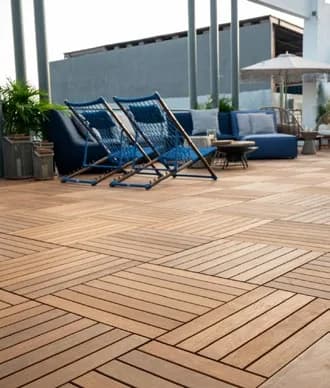
Understanding Your Existing Substrate
Before selecting deck tiles, thoroughly inspect your existing surface. This could be a concrete slab, a rooftop membrane, an old patio, or even compacted gravel. Identify the material, its current condition, and any areas where it deviates from a level plane. Look for cracks, spalling, pooling water, or signs of settling. The type of substrate dictates what repair or leveling methods are feasible.
A key measurement is the overall fall or slope across the area, typically expressed as a percentage or inches per foot, which is often necessary for drainage. Beyond this intentional slope, measure any localized irregularities, such as humps, depressions, or waves. Small undulations might be manageable with certain systems, while larger variations often require more significant intervention.
Minor Unevenness: When Leveling Systems Can Help
Pedestal systems are often designed with adjustable height mechanisms that can compensate for slight dips and rises. These pedestals support individual deck tiles or a sub-frame, allowing for fine-tuning of the finished elevation.
Similarly, some interlocking deck tile systems have a degree of flexibility in their base structure that can conform to very minor undulations without significant impact on the overall appearance. However, relying on the tile's inherent flexibility to bridge gaps or significant unevenness can lead to instability, cracking, or premature wear. It's crucial that the primary support points of the tile or its underlying structure are adequately supported.
Significant Unevenness: When Repair is Essential
When the existing surface has significant unevenness—variations exceeding 1/4 inch over 10 feet, large cracks, or areas of standing water—repairing the substrate is often a necessary first step. Attempting to install deck tiles directly over a severely uneven surface can lead to a host of problems:
Rocking or unstable tiles: Tiles may shift, creating tripping hazards and an uncomfortable walking surface.
Drainage issues: Depressions can trap water beneath the tiles, potentially leading to mold, mildew, or damage to the substrate or the deck tile material itself.
Structural stress: Uneven support can place undue stress on the deck tile material or its connectors, leading to premature failure.
Aesthetics: Even with a leveling system, a severely uneven base can result in an inconsistent finished appearance.
Common repairs include patching concrete, self-leveling compounds for minor but widespread irregularities, or even re-sloping the entire area with new concrete or mortar beds for significant issues. Consult a qualified contractor to assess structural integrity and recommend appropriate repair methods for substantial damage or unevenness.
Worked Example: Leveling a Concrete Patio for Deck Tiles
Consider a hypothetical 10-foot by 12-foot concrete patio that you wish to cover with 24 x 24 Ipe deck tiles.
Here's a possible approach:
1. Repair the depression: Use a concrete patching compound or a self-leveling underlayment specifically designed for exterior use to fill the 4-foot by 4-foot depressed area, bringing it up to within 1/8 inch of the surrounding patio surface. Allow ample curing time.
2. Install a pedestal system: Once the repair is cured, install an adjustable pedestal system.
3. Calculate materials: For a 10x12 foot area, you need 120 square feet of coverage. Since each 24x24 tile covers 4 square feet, you would need 120 / 4 = 30 tiles. Account for cuts and waste, typically adding 5-10% extra, so plan for 32-33 tiles.
This approach ensures the underlying surface is sound and stable, allowing the deck tile system to perform as intended and provide a beautiful, level outdoor space. You can explore our selection of Ipe deck tiles here: [https://www.lumberplus.com/deck-tiles/ipe](https://www.lumberplus.com/deck-tiles/ipe).
Planning for Drainage and Maintenance
Regardless of the leveling method chosen, always consider drainage. Deck tiles are designed to allow water to pass through and drain away from the surface. If the underlying substrate does not have proper slope, water can collect, leading to potential problems.
When using pedestal systems, ensure there is sufficient clearance beneath the tiles for water to flow freely to existing drains or off the edge of the area. This also allows for air circulation, which helps prevent moisture buildup. For interlocking tiles, ensure any gaps between tiles or the design of the base allows for effective water shedding.
Consider future access for maintenance. If the substrate requires periodic inspection or repair, choose a deck tile system that allows for individual tiles to be removed and reinstalled without disrupting the entire surface.
Selecting Your Deck Tiles and Supporting System
Lumber Plus offers a range of hardwood deck tiles suitable for various outdoor projects. Our Ipe deck tiles are known for their deep chocolate tones and exceptional hardness, while Garapa offers warm golden tones. Cumaru provides a rich reddish-brown grain with tropical hardwood character. These are available in common sizes like 12 x 12 and 24 x 24.
When planning for an uneven surface, the choice of deck tile material and size should be coordinated with the supporting system. Larger tiles like our 24 x 24 format can sometimes bridge very minor undulations more effectively than smaller 12 x 12 tiles, but they also require a more consistently supported base.
Explore our full selection of deck tiles: [https://www.lumberplus.com/deck-tiles](https://www.lumberplus.com/deck-tiles). Consider Ipe: [https://www.lumberplus.com/deck-tiles/ipe], Garapa: [https://www.lumberplus.com/deck-tiles/garapa], or Cumaru: [https://www.lumberplus.com/deck-tiles/cumaru] for your project. Remember to verify the specific installation requirements for your chosen deck tile and any associated leveling or pedestal system.
Before you order
- Measure the total area and identify all high and low points on the existing surface.
- Determine the maximum deviation from level across the entire project area and in localized spots.
- Identify the existing substrate material (concrete, membrane, etc.) and its condition.
- Assess if existing drainage is adequate and will remain so after deck tile installation.
- For deviations greater than 1/4 inch over 10 feet, plan for substrate repair (patching, self-leveling, re-sloping).
- For minor deviations, evaluate if an adjustable pedestal system or flexible interlocking tile base can compensate.
- Confirm the load-bearing capacity of the existing substrate and any proposed leveling system.
- Verify compatibility between your chosen deck tiles and any pedestal or interlocking base system.
- Plan for access to the substrate for future maintenance or repairs, if necessary.
Confirm installation details, approved uses and warranty terms in the current instructions for the exact product and profile. Your installer should verify the substrate, structure and applicable project requirements.
Questions to help you decide
Can I install deck tiles directly on a cracked concrete patio?
Installing deck tiles directly over a significantly cracked concrete patio is generally not recommended. Cracks can indicate underlying structural issues or poor drainage, which could worsen over time and affect the stability and longevity of your deck tile installation. It's best to repair the cracks and address any underlying issues with the concrete before installing deck tiles.
How much unevenness can a pedestal system handle?
The amount of unevenness a pedestal system can handle depends on the specific product. Many adjustable pedestal systems are designed to compensate for variations of several inches, allowing you to create a level surface over a sloped or undulating substrate. However, very sudden or sharp changes in elevation may still require some substrate preparation to ensure proper support for each pedestal base and prevent excessive stress on the system. Always refer to the manufacturer's specifications for the pedestal system you plan to use.
Do I need to maintain the existing slope for drainage if I use deck tiles?
Yes, maintaining an adequate slope for drainage is crucial. Deck tiles are a permeable surface, meaning water will pass through them to the substrate below. If the underlying surface does not have a proper slope, water can pool, leading to moisture issues, potential damage to the substrate or the underside of the tiles, and even pest problems. Even with a pedestal system, the overall finished surface should be designed to shed water efficiently.
Ready to Transform Your Uneven Outdoor Space?
Request a material quote today with your project dimensions, exact deck tile profile, and ZIP code to confirm current availability and service options. Our team can help you plan for a stable and beautiful deck tile installation.
Request a material quote →