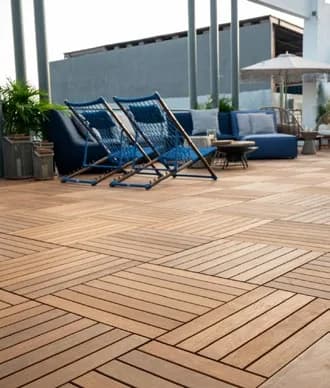
Understanding Hardwood Deck Tile Colors
Hardwood deck tiles offer a range of natural colors that can enhance any outdoor setting. Unlike synthetic materials, the color of hardwood is inherent to the species and can evolve over time, especially when exposed to UV light and weather. Understanding these natural variations is key to a successful project.
Ipe deck tiles are known for their deep chocolate tones. This rich, dark appearance can create a sophisticated and grounding effect, often making a space feel more enclosed and intimate. Garapa deck tiles feature warm golden tones, which tend to brighten outdoor areas, making them feel more expansive and open. Cumaru deck tiles present a rich reddish-brown grain, offering a warm, inviting hue that can complement a variety of architectural styles.
The natural variation within each species means that no two tiles are exactly alike. This characteristic contributes to the unique beauty of a hardwood deck, providing a nuanced and organic aesthetic that can be difficult to replicate with manufactured products.
The Impact of Natural Light on Deck Tile Appearance
The way light interacts with your deck tiles is a critical factor in color perception. A tile that looks perfect indoors under artificial light might appear significantly different outdoors under direct sunlight, overcast skies, or at dusk.
For example, a dark Ipe tile might absorb more light, appearing even deeper in color on a bright, sunny day, potentially creating a striking contrast with lighter surroundings. Conversely, a golden Garapa tile will reflect more light, brightening the space and potentially appearing lighter than expected. Cumaru's reddish-brown tones can take on different characteristics depending on the light angle, sometimes appearing more red, other times more brown.
Consider the orientation of your outdoor space. A north-facing balcony will receive less direct sunlight than a south-facing terrace, influencing how colors are perceived throughout the day. Observing physical samples at different times of day and under various weather conditions is essential to truly understand their appearance.
Considering Finish: Natural vs. Sealed
The finish applied to hardwood deck tiles also plays a role in their final appearance and color. Many hardwood deck tiles are initially supplied in their natural, unfinished state. In this condition, the wood will naturally weather and lighten to a silvery-gray patina over time if left untreated. This natural aging process is often desired for its low-maintenance appeal and classic aesthetic.
Alternatively, deck tiles can be sealed with a penetrating oil finish. This process helps to preserve the original color of the wood, enhancing its natural tones and offering some protection against moisture. For instance, an oil finish on Ipe will deepen its chocolate tones, while on Garapa, it will accentuate its golden hue. Cumaru's reddish-brown will become more vibrant.
It is important to understand that even with an oil finish, some color change will occur over time. Regular reapplication of a suitable finish is typically required to maintain the desired color and protection. The choice between a natural, weathered look and a maintained, sealed finish depends on your aesthetic preference and willingness to commit to ongoing maintenance.
Worked Example: Selecting Deck Tiles for a 10' x 12' Balcony
Let's consider a hypothetical 10-foot by 12-foot urban balcony, facing west, with a desire to create a spacious and inviting feel. The client wants to avoid a dark, enclosed look, but also values the durability of hardwood.
Option 1: Garapa Deck Tiles (24" x 24"). The warm golden tones of Garapa are ideal for brightening a space and making it feel larger. The 24-inch by 24-inch tile size minimizes seams, contributing to a more expansive visual. A natural finish would allow the tiles to weather gracefully to a light gray, further enhancing the spacious feel, while an oil finish would maintain the warm golden color, which would be vibrant in the afternoon sun.
Calculation for Garapa (24" x 24" tiles): The balcony is 120 inches by 144 inches. Dividing by 24 inches per tile, we need 5 tiles along the 10-foot side (120/24 = 5) and 6 tiles along the 12-foot side (144/24 = 6). This means 5 x 6 = 30 full tiles are needed. Since these dimensions align perfectly with the tile size, no cuts for the main area are required, and there would be no significant waste from the main layout. This provides an area of 120 square feet.
Option 2: Cumaru Deck Tiles (12" x 12"). Cumaru's reddish-brown grain offers warmth. Using 12-inch by 12-inch tiles could create a more detailed pattern, which might be suitable for defining zones on a larger balcony. However, for a desire to make the space feel larger, the smaller tile size and more visible seams might work against this goal. The reddish tones would be enhanced by the afternoon sun, providing a rich, inviting glow.
Calculation for Cumaru (12" x 12" tiles): For a 10-foot by 12-foot balcony (120 inches by 144 inches), we would need 10 tiles along the 10-foot side (120/12 = 10) and 12 tiles along the 12-foot side (144/12 = 12). This means 10 x 12 = 120 full tiles are needed. This provides an area of 120 square feet.
Pairing Deck Tiles with Complementary Materials
The color and finish of your deck tiles should harmonize with other elements of your outdoor space. Consider the color of your building's facade, railings, outdoor furniture, and any planters or decorative items.
For a contemporary look, the deep tones of Ipe can be striking against light-colored stucco or metal railings. Garapa's golden hues pair well with natural stone, light wood accents, or vibrant plantings. Cumaru's reddish-brown can complement brickwork, terracotta, or warm-toned fabrics.
When integrating lighting, softer, warmer light temperatures can enhance the natural tones of hardwood, while cooler, brighter lights might emphasize the grain and texture. Ensure any embedded lighting or accent lighting is selected to complement, rather than detract from, your chosen deck tile color.
Before you order
- Obtain physical samples of Ipe, Garapa, and Cumaru deck tiles.
- Observe samples in your project location at different times of day (morning, noon, evening).
- Observe samples under various weather conditions (sunny, overcast).
- Consider how the chosen color will interact with the building facade, railings, and existing outdoor furniture.
- Decide between a natural, weathered finish or a sealed, maintained finish.
- Factor in the size of your space: lighter colors can make smaller areas feel larger.
- Think about the overall atmosphere you want to create (e.g., intimate, expansive, vibrant).
- Review maintenance requirements for your chosen finish.
Confirm installation details, approved uses and warranty terms in the current instructions for the exact product and profile. Your installer should verify the substrate, structure and applicable project requirements.
Questions to help you decide
Do hardwood deck tiles change color over time?
Yes, natural hardwood deck tiles, including Ipe, Garapa, and Cumaru, will naturally weather and change color over time when exposed to UV light and the elements. If left untreated, they typically fade to a silvery-gray patina. Applying a suitable penetrating oil finish can help to preserve their original color, but reapplication is usually necessary to maintain this appearance.
Can I mix different hardwood deck tile colors?
While it is technically possible to mix different hardwood deck tile colors, it requires careful planning to achieve a cohesive design. Consider creating distinct zones or patterns with contrasting colors, or using different species to delineate areas. Always test samples together in your space to ensure the combination meets your aesthetic goals. Be aware that different species may have different weathering characteristics.
How does the size of deck tiles affect the perception of color and space?
The size of deck tiles can influence how color is perceived and how large a space feels. Larger tiles, such as 24 x 24 inches, typically result in fewer seams, which can create a more expansive and uninterrupted visual, making a space feel larger. Smaller tiles, like 12 x 12 inches, create more visual lines and can add a sense of detail or texture, which might make a space feel more intricate or less open depending on the layout and color choice.
Ready to Choose Your Deck Tile Color and Finish?
Request a material quote with your project dimensions, desired deck tile profile, and ZIP code to confirm current availability and service options. Explore our full range of deck tiles, including Ipe, Garapa, and Cumaru, to find the perfect match for your outdoor vision.
Request a material quote →