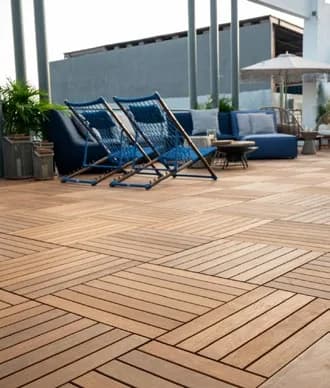
The Importance of Physical Samples
A physical deck tile sample allows for a tangible assessment that digital representations cannot replicate. You can feel the surface texture, observe the natural grain patterns, and critically, see how the color interacts with the light in your actual outdoor environment. This is particularly crucial for natural wood deck tiles, where variations in tone and grain are inherent to the material.
For instance, an Ipe deck tile, known for its deep chocolate tones, might appear different on a shaded balcony compared to a sun-drenched rooftop terrace. Similarly, the warm golden tones of Garapa could shift depending on whether it's placed next to a light-colored stucco wall or a darker brick facade. Samples help you anticipate these nuances before committing to a larger order.
Deck tiles are available in various species, each with distinct characteristics. Ipe offers deep chocolate tones, Garapa presents warm golden tones, and Cumaru features rich reddish-brown grain. These descriptions are valuable, but seeing the actual material under your project's specific conditions provides the most accurate impression. The available sizes, such as 12" x 12" and 24" x 24", also impact the visual rhythm and scale of your installation, which can be better visualized with a physical piece.
Assessing Samples in Varied Lighting
Light plays a significant role in how any material appears. What looks perfect indoors or under artificial light may look entirely different outdoors. When evaluating your deck tile samples, observe them at different times of day and under various weather conditions.
Place the samples directly in your project area. Watch how the color changes from morning sun to midday brightness and into the late afternoon. Consider how they look on a sunny day versus an overcast one. A material's undertones can become more prominent or subdued depending on the light, which can impact the overall aesthetic of your space. For example, the reddish-brown hues of Cumaru might deepen in direct sunlight and appear slightly softer in indirect light.
Comparing with Adjacent Materials and Finishes
Your new deck tiles will not exist in isolation. They will interact visually with existing elements such as exterior walls, railings, outdoor furniture, planters, and even interior flooring visible from the outdoor space. Bring your deck tile samples into proximity with these elements.
Consider the existing color palette and textures. Does the deck tile complement or clash with your home's siding? How does it look next to your patio furniture or the potted plants you plan to include? A harmonious selection will integrate the deck tiles seamlessly into your overall design, creating a cohesive and inviting outdoor environment. This step is crucial for achieving a balanced aesthetic.
Understanding Texture and Foot Feel
The texture of a deck tile affects both its appearance and how it feels underfoot. Some materials might have a smoother finish, while others retain a more pronounced grain. With a physical sample, you can touch the surface and get a sense of its tactile qualities.
This is particularly relevant if the deck will be a high-traffic area, or if you anticipate walking on it barefoot. While specific performance claims are not made without testing, a visual and tactile inspection can help you gauge the general feel. Consider how the texture might influence cleaning or maintenance, as grooves and pronounced grain patterns can sometimes hold dirt differently than smoother surfaces.
Worked Example: Selecting Deck Tiles for a 10' x 12' Balcony
Imagine you are planning to install deck tiles on a 10-foot by 12-foot balcony. The existing railing is dark bronze, and the adjacent interior flooring is a light-colored tile. You're considering three options: Ipe, Garapa, and Cumaru, in both 12" x 12" and 24" x 24" sizes.
1. **Order Samples:** Request samples for Ipe, Garapa, and Cumaru, ideally in both available sizes (12" x 12" and 24" x 24").
2. **Balcony Placement:** Place all samples on the balcony. Observe them throughout the day: morning, midday, and late afternoon. Note how the deep chocolate tones of Ipe appear against the dark bronze railing in direct sun versus shade. See if the warm golden tones of Garapa brighten or clash with the interior's light tile.
3. **Adjacent Elements:** Hold the samples against the balcony wall and near any existing outdoor furniture. Does the rich reddish-brown of Cumaru complement your planned accent cushions? How do the different sizes affect the perceived scale of the balcony? A 12" x 12" tile might create a busier pattern for a small space, while a 24" x 24" tile could make it feel more expansive.
4. **Foot Feel:** Walk on the samples (if safe to do so) to get a sense of their texture. Consider the overall impression. After this process, you might find that the 24" x 24" Garapa tiles offer the brightness you desire, and their golden tones harmonize well with both the railing and interior flooring, making the balcony feel larger and more inviting.
For a 10' x 12' balcony, the total area is 120 square feet. If you choose 24" x 24" (4 square feet per tile) Garapa tiles, you would need 30 tiles for area coverage. However, always consider cuts and waste. A 10-foot side (120 inches) would take 5 full 24-inch tiles. A 12-foot side (144 inches) would take 6 full 24-inch tiles. This ideal grid of 5x6 tiles would be 30 tiles. Always confirm the exact assembly requirements and permitted edge cuts with your project plan to determine the precise purchase quantity, as edge cuts may not always yield reusable offcuts.
Reviewing Product Specifications and Labels
Beyond visual and tactile assessment, carefully review the product information and labels that accompany your samples. These documents provide essential details about the material, such as the wood species (e.g., Ipe, Garapa, Cumaru), dimensions (e.g., 12" x 12" or 24" x 24"), and other relevant specifications. Ensure these details align with your project requirements and expectations. This information is critical for confirming that the aesthetic qualities you observe in the sample are consistent with the product's documented characteristics.
For example, the species name will confirm the origin and general characteristics of the wood, while the dimensions are crucial for planning your layout and calculating quantities. Always verify that the sample you are evaluating matches the product you intend to order, as variations can occur between different production batches or product lines.
Final Decision and Planning
Once you have thoroughly evaluated your samples under various conditions and reviewed the specifications, you will be better equipped to make a confident decision. This detailed assessment helps minimize surprises and ensures that the installed deck tiles will meet your aesthetic and functional expectations. Remember that your choice will impact the overall look and feel of your outdoor space for years to come.
The decision to use a specific material, like Ipe for its classic look, or Garapa for its brightness, should be reinforced by how it truly appears in your project environment. This careful sample review is an investment in the success and satisfaction of your outdoor living project.
Before you order
- Have I reviewed the samples at different times of day?
- Have I reviewed the samples under various weather conditions (sunny, overcast)?
- Have I compared the samples against existing exterior finishes (walls, railings)?
- Have I compared the samples against planned or existing outdoor furniture and decor?
- Have I physically touched the samples to assess their texture?
- Have I confirmed the species and dimensions listed on the sample label match my desired product?
- Does the sample's appearance align with my overall design vision for the outdoor space?
Confirm installation details, approved uses and warranty terms in the current instructions for the exact product and profile. Your installer should verify the substrate, structure and applicable project requirements.
Questions to help you decide
How many samples should I request?
It is generally recommended to request samples of all the deck tile species and sizes you are seriously considering. This allows for direct comparison and a comprehensive evaluation of your options. For example, if you are torn between Ipe, Garapa, and Cumaru, and also considering both 12" x 12" and 24" x 24" sizes, you would ideally want samples of each combination.
What if the sample doesn't perfectly match the final product?
Natural wood products like Ipe, Garapa, and Cumaru deck tiles will naturally have variations in color and grain. Samples are representative of the material, but slight differences are to be expected in a larger order. This is part of the character of natural wood. The goal of sample review is to understand the general range and characteristics, not to find an exact replica.
How long should I keep the samples for evaluation?
Keep your samples for at least a few days to a week. This allows you ample time to observe them under various lighting conditions, compare them with other materials, and consider your decision without rushing. The longer you have them, the more opportunities you'll have to see them in different scenarios that mimic real-world use.
Ready to Transform Your Outdoor Space?
Request a material quote for your deck tile project. Provide your project dimensions, desired profile, and ZIP code to confirm current availability and service options for Ipe, Garapa, and Cumaru deck tiles. Explore our full range of deck tiles and related products today.
Request a material quote →